Health & Fitness
After High Levels Of Bacteria Found, No-Swim Advisory Issued At Bird Key Park In Sarasota
Bird Key Park visitors are asked to stay out of the water due to a high level of the enterococcus bacteria, the Department of Health said.


SARASOTA, FL — Sarasota County health officials have issued a no-swim advisory for Bird Key Park in Sarasota after a high level of the enterococcus bacteria was found in the water, the Florida Department of Health in Sarasota County said in a news release.
The bacteria level found during water quality testing Monday was outside acceptable limits, the DOH said. The beach remains open, but wading, swimming and water recreation isn’t recommended when no-swim advisories are in place.
“When these bacteria are found at high levels in recreational waters, there is a risk that some people may become ill,” Tom Higginbotham, environmental administrator for the DOH in Sarasota County, said. “People, especially those who are very young, elderly or who have a weak immune system that swallow water while swimming can get stomach or intestinal illnesses. If water contacts a cut or sore, people can get infections or rashes.”
Find out what's happening in Sarasotafor free with the latest updates from Patch.
Some bacteria are naturally present in the environment. However, the Environmental Protection Agency (EPA) has found a link between health and water quality, according to the DOH.
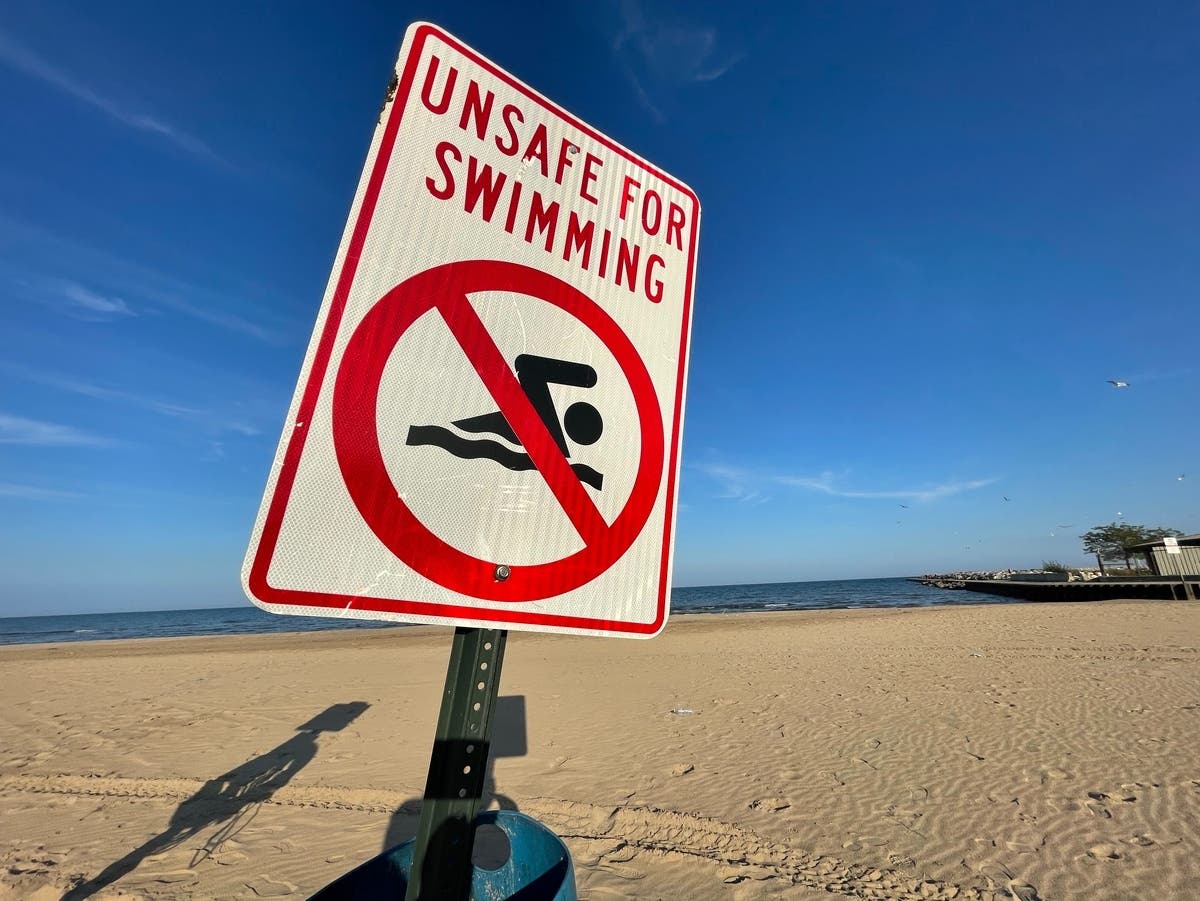
Signage advising the public not to swim or engage in water recreation will stay in place until follow-up water testing results meet the EPA’s recreational water quality standards.
Find out what's happening in Sarasotafor free with the latest updates from Patch.
The Sarasota County health department has resampled water at the beach and results will be available Friday.
Enterococcus bacteria can come from a variety of natural and human-made sources. These include pet waste, livestock, birds, land-dwelling and marine wildlife, stormwater runoff and human sewage from failed septic systems and sewage spills.
No sewage spills have been reported within one mile of the posted beach in the past two weeks, the DOH said.
The rapid-response team from Sarasota County has determined the cause of the elevated bacteria levels is likely due to natural sources. The team observed a wrack line of decaying algae along the shoreline. Wrack lines, which provide food for shorebirds and wildlife, act as natural bacteria reservoirs, the agency said.
While the beach remains open, residents and visitors are urged not to wade, swim or engage in water recreation until the advisory is lifted.
People also shouldn’t eat shellfish, such as crabs and shrimp, collected in the immediate area of any beach with a no-swim advisory in place. Finfish caught live and healthy can be eaten if filleted.
Sarasota County has conducted beach water quality monitoring since August 2002 through the Healthy Beaches monitoring program. The water samples are analyzed for enterococci, which may cause human disease, infections or rashes, the DOH said.
Get more local news delivered straight to your inbox. Sign up for free Patch newsletters and alerts.