Schools
Technical Education Programs Continue to Grow
Despite a number of budget-related challenges, Sarasota County's Career and Technical Education programs continue to make a positive impact on local students preparing to enter college and the workforce.
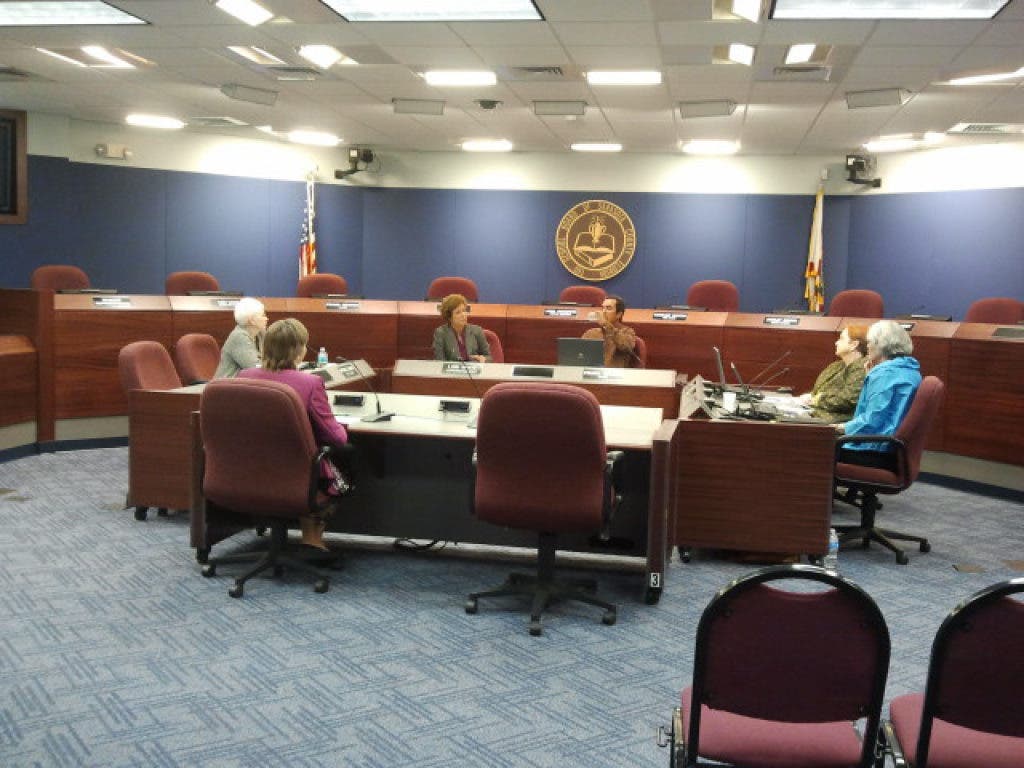
The Sarasota County School Board met with Career and Technical Education Director Mellissa Morrow on Tuesday to discuss goals, challenges and successes of the program.
Morrow opened the discussion by highlighting several milestones the CTE program has achieved in five years:
- Since 2006, the program has made tremendous progress in collaborating with Manatee County schools, as well as the State College of Florida, to expand programs offered to local students. In addition, Morrow noted that Suncoast Polytechnical High School opened in Sarasota in 2008, offering another avenue for local students to pursue a technical education track.
- In 2007, CTE labs in district high schools underwent a transformation in which they were redesigned and rebuilt to emulate the professional environments of the industries their students are preparing to enter. Furthermore, in 2007, construction began at SCTI to provide new labs and an improved technical center. The first phase of the new and improved SCTI opened for business in 2010, and improvements are still being made to the campus to date.
“Our goal,” said Morrow, “is to provide students with the most state of the art education available. To do this, it has been necessary to bring the labs at SCTI, as well as in our high schools and middle schools, completely up to date.”
Find out what's happening in Sarasotafor free with the latest updates from Patch.
After discussing these milestones, Morrow outlined CTE’s agenda, which includes:
- Middle School CAPE Academy planning in alignment with the Florida Career and Professional Education (CAPE) Act.
- Expansion of STEM (Science, Technology, Engineering, and Mathematics) initiatives.
- Continued progress on the SCTI rebuild.
As increasing numbers of students and parents begin to see the value of career and technical education prior to entering college or the workforce, the CTE has increased efforts to include programs in local middle schools, thus enabling students to explore various career possibilities, determine aptitudes, and develop basic technical skills as they prepare to enter high school.
Find out what's happening in Sarasotafor free with the latest updates from Patch.
School Board Chair, Frank Kovach, noted the shift in perception regarding vocational education in public schools.
“We have some of our best and brightest students taking CTE courses – students who wouldn’t have even considered taking that path a few years before,” he said.
“Students who graduate from our career programs are better prepared for college and for careers than those who do not,” Morrow added.
Morrow said that all eight Sarasota County middle schools have at least one CTE program based on the programs offered in five participating high schools.
Out of the approximately 8,000 students who currently attend middle school in the Sarasota school district, Morrow said that 4,216 are enrolled in CTE programs, which are semester-long elective courses.
Morrow said that the CTE’s ultimate goal for its middle school programs is to provide more project-based applications for students, thus reinforcing and strengthening their understanding of core content. CTE also aims to increase participation in career and technical student organizations and to provide options for extended learning, leadership development, community service, and competitions at both the local and state level.
In addition to addressing the tremendous strides that were made in the past five years and the ambitious goals outlined for the future, Morrow also addressed the challenges that CTE faces – primarily the challenge of sustainability.
CTE, like virtually every other area of the public education system, has suffered budget cuts that Morrow said “reduce the program’s ability to provide strong project-based training.” Cut, she said, hurt particularly in the area of consumable supplies and financial allotments for equipment repair and maintenance.
“Ever since we underwent the process of rebuilding our labs and providing new technology, we’ve been on a continuum of newly purchased equipment,” said Morrow. “However, we are approaching the point where this equipment and technology requires repairs and maintenance, but we have no allocation in the budget.”
Morrow also noted the challenge of keeping teachers trained and up to date on all of their certifications with annually updated software. Another problem the CTE faces is the issue of teacher mobility and the high turnover rate.
“There are programs that have seen three different teachers over the course of three years,” said Morrow. “Such a high turnover rate makes it difficult to sustain programs and recruit students.”
Despite these challenges, the CTE program has met a promising degree of success in several areas.
In the last four years, almost 2,900 high school students have earned industry certification credentials, which Morrow indicated have resulted in generating significant funding for CTE programs. Additionally, investments in the Newtown campus have led to a significant rise in enrollment in SCTI’s full-time programs.
SCTI recently acquired innovative simulation equipment for its health science programs that exposes students to real-life medical scenarios.
“One of our greatest goals is to complete the new SCTI technical center,” said Morrow. “This sends a message to our community that we value technical education and are committed to providing cutting-edge educational programs to our students. “
School Board Chair Frank Kovach voiced his support of CTE initiatives.
“I want to make sure that CTE remains a priority and that we’re making decisions that are best for our students. It is imperative that CTE stays at the forefront, even as we make budget cuts,” Kovach said.