Community Corner
Yoga 101: Finding Deviasana
This most divine posture will give you strength and energy.
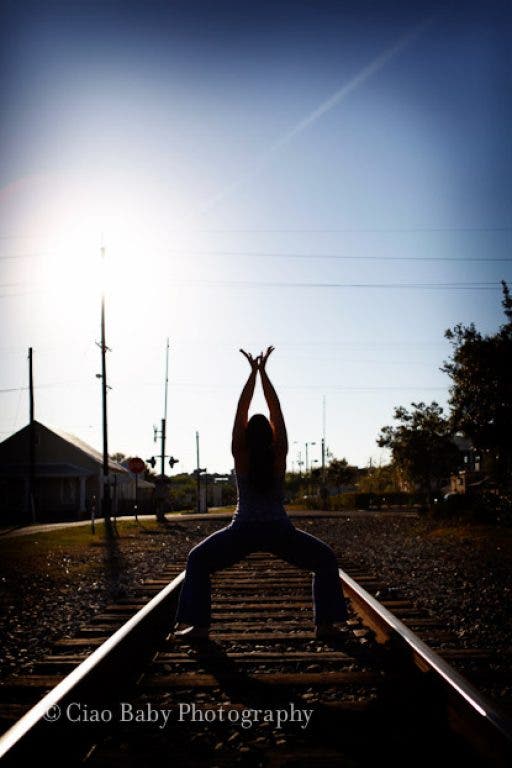


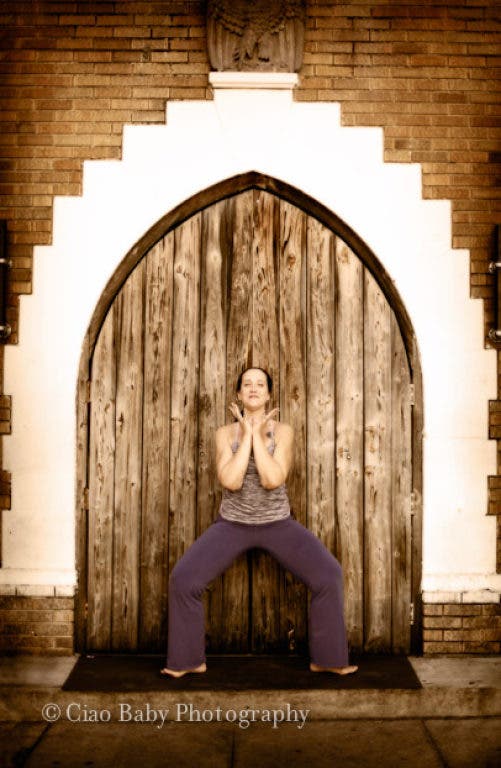
The last posture I explained to you was tadasana, the mountain posture. I decided to follow this with deviasana, the goddess or horse stance, because it is a great complement to follow.
Like tadasana, deviasana is a symmetrical. It also is a very grounding posture. The entire body can develop strength by doing this posture in full, properly.
Before we begin, if something doesn’t feel right or you are having pain, come out the posture immediately! Please, don’t do this posture if you experience pain.
Find out what's happening in Seminole Heightsfor free with the latest updates from Patch.
That being said, tension is different. It’s easy to differentiate between pain and tension as you begin to understand your body and your limitations. Here’s the rule I go by in my own practice advice from a teacher of mine, the great Lilias Folan. She says, “ No pain in yoga [but maybe] a little sweet discomfort.”
So in this posture, you will feel tension build in your feet legs, hips, shoulders and arms. You will feel discomfort. No pain. Let that be our mantra.
Find out what's happening in Seminole Heightsfor free with the latest updates from Patch.
So let’s break down deviasana.
- Begin in tadasana and cultivate your dirgha pranayama.
- Always find the connection with your breath before you dive into a new posture. Take a few minutes of your time to get your mind centered.
- With eyes open step out with your right foot, to the right, opening up arms as you do. You will now be in a star shaped pose.
- Drop your arms for the time being and let them relax at your side. Your feet need to be wider than hips, but not too wide.
- Your heels turn in, toes point out. It’s a slight turning out of toes, as you can see in the photo. Bend your knees so that they are slightly over knees or hovering over toes.
If you become unbalanced easy, don’t stand with your feet so far apart. Sometimes we have to play around with the stance to see what fits us and what we are trying to feel in a certain pose.
For deviasana, we want that symmetry as we open the body up, so even pressure in the feet, the heels, get the weight of the body.
- In this squatted stance I encourage you to lift your toes to engage the arches of the feet and really feel those heels and thighs working. Tuck your tailbone slightly as you pull in your navel.
- Remember that at the bottom or end of every exhalation you want to draw navel in slightly to cultivate an internal heat called agni and this will help remind you to tuck that tail bone.
- Raise your arms and bend your elbows so that the elbows line up with shoulders.
- Spread your fingers wide palms face in front of your, lining up the hands over elbows for Prana Mudra.
- Don’t forget to breathe! In the nose, out of the nose.
The spine wants to be long, that is why we tuck the tail bone slightly, like in tadasana, so that it’s elongating all the way up towards the crown of the head.
Apana vayu engages in the feet (rooting/downward wind or energy) and the opposing force of rooting is rising, prana vayu (upward /rising energy or wind).
We will have a whole discussion on the panca vayus (five winds that help us move and breath though life). In deviasnaa, rooting and rising energies are the easiest sensations to connect with and feel when we first begin new postures.
- Keep thinking tadasana from the waist up. Tailbone down and gently draw shoulders down the back.
- Find your breath and let it wash away and the tension or “sweet discomfort” you might begin to feel in the thighs (inner and outer), the hips , shoulders and arms and the belly.
- Give your mind peace by breathing slowly and consistently, sama vritti.
- Begin to focus on an object in the room or close your eyes an think of one thing a color, a landscape, anything that calms the breath and the mind from going crazy with thought.
The intensity of deviasana is deceptive but begins to reveal itself to you’re the longer you hold it. I think most of the time the mind is challenged when you hold a posture for a long period of time, so find solace in knowing that if your mind begins to try to divert your focus away from your breath, away from the sensations your body is feeling, you are not alone.
- Hold the posture 30 seconds, then come out of it for 30 seconds, then go back in for another 30.
Deviasana is a full body strengthener, working the legs, belly, spine, arms, and your mind.
If you are pregnant, this is an awesome posture to practice, as it will do all the things it does but also helps strengthen your pelvic floor. (Please check with your doctor before doing any exercise.)
- When you are finished, lie on your mat and take savasana for three to five minutes.
For now, take it one posture at a time. Practice your pranayama, tadasana and now deviasana. Enjoy the experiences of that tension, let go with every inhalation and you might find l lot of energy invoked by the divine power of deviasana.
Namaste!