Crime & Safety
2 FL Men Used Federal PPP Funds To Buy Mercedes, Lamborghini: FBI
A Dade City and a Miami man are accused of fraudulently getting federal coronavirus funds to buy fancy cars.


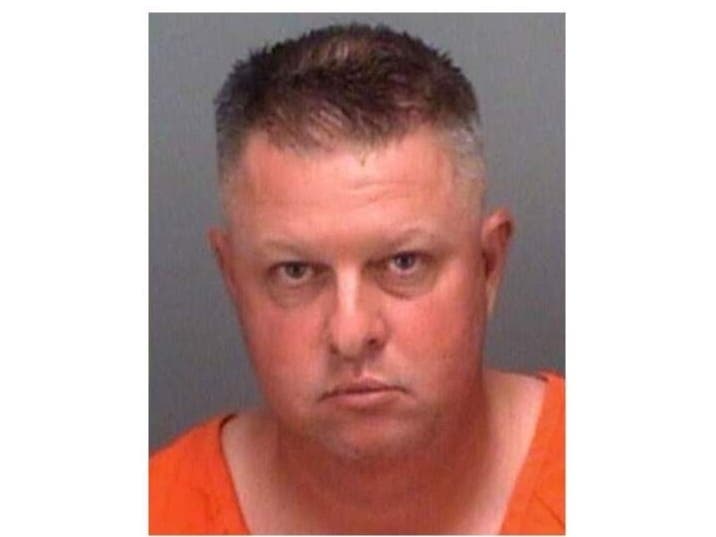

DADE CITY, FL — While small businesses owners throughout Tampa Bay were forced to furlough employees, give up their salaries and temporarily close their doors after failing to qualify for federal coronavirus relief funds, a Dade City man was driving around town in a new $106,000 2020 Mercedes he bought with funds from the Paycheck Protection Program.
His audacity finally caught up with him last week when United States Attorney Maria Chapa Lopez unsealed a criminal complaint in federal court in Tampa, charging Keith William Nicoletta, 48, with bank fraud and illegal monetary transactions.
In a joint investigation with the FBI and the IRS, Nicoletta is accused of fraudulently obtaining more than $1.9 million in federal emergency relief funds. If convicted, he faces a maximum penalty of 40 years in federal prison.
Find out what's happening in Tampafor free with the latest updates from Patch.
According to the complaint, in May 2020, Nicoletta applied to receive funding from the Paycheck Protection Program.
The PPP is part of the Coronavirus Aid, Relief and Economic Security Act enacted in March to provide emergency financial assistance to millions of Americans suffering economic impacts of the coronavirus pandemic.
Find out what's happening in Tampafor free with the latest updates from Patch.
Under the CARES Act in March, Congress authorized up to $349 billion in potentially forgivable loans for small businesses to help with payroll costs, rent and utilities. Another $300 billion in PPP was approved in April.
The PPP allows the interest and principal to be forgiven if the business spends the proceeds on these expenses within a set time-period and uses at least a certain percentage of the loan toward payroll expenses so they don't have to lay off or furlough workers.
Nicoletta’s PPP loan application falsely claimed that he owned a local scrap metal business with 69 employees and monthly payroll expenses exceeding $760,000—or more than $9 million annually.
In truth, Nicoletta reported no wages to the State of Florida for any employees for 2019 or 2020.
Once Nicoletta received the PPP funds, the FBI said he immediately laundered the money, transferring it between various accounts at different financial institutions. He also withdrew more than $100,000 in cash. Nicoletta then purchased a 2020 Mercedes for more than $106,000 and a 2020 special edition Ford F-250 pickup valued at more than $66,000, and wired $537,000 to a property management company in south Florida. None of the money was used to pay any employees.
Patch attempted was unable to contact Nicoletta for comment.
But, angry small business owners had plenty to say about people who falsely obtained federal coronavirus relief funds while legitimate businesses struggling to keep their doors open were rejected.
The CARES Act represents the largest financial assistance bill ever created. To date more than four million businesses and nonprofit organizations have received more than $530 billion in funding from the program.
The U.S. Department of Treasury reports 1.6 million businesses got on average $250,000 in these forgivable PPP loans.
However, a survey done by the National Small Business Association shows 52 percent of small businesses that applied for the loans did not get them.
Instead, millions of dollars may have been distributed to businesses like Nicoletta's that simply don't exist. Just days after the U.S. Small Business Administration started accepting PPP applications from banks, the SBA said complaints of fraud began pouring in.
"With the passage of the CARES Act, the FBI has seen fraudsters shift their efforts toward exploiting the various programs aimed at relieving the detrimental economic effects of COVID-19," said Assistant FBI Director Calvin A. Shivers during a Senate Judiciary Hearing.
"Of particular interest are criminals fraudulently applying for Paycheck Protection Program loans or targeting PPP funds once they have been disbursed," he said. "The FBI has received numerous complaints from business owners unable to legitimately apply for a PPP loan because their Employer Identification Numbers were already used for fraudulent loan applications. There have also been reports of fraudulent websites claiming to facilitate PPP loans, which gather all the personally identifiable information necessary to apply for a PPP loan only to not follow through with the assistance, but likely use the information for their own nefarious purposes."
Nicoletta isn't the only Florida man who saw a chance to live the high life on the federal government's dime.
Miami resident David T. Hines, 29, is accused of using a $3.9 million PPP loan he obtained to buy himself a $318,000 2020 Lamborghini Huracan sports car. He's been charged with one count of bank fraud, one count of making false statements to a financial institution and one count of engaging in transactions in unlawful proceeds.
In the days and weeks following the disbursement of PPP funds to Hines, he did not make the payroll payments that he claimed on his loan applications. He did, however, spend an inordinate amount of time and money at Miami Beach resorts.
Shivers said the FBI has formed a PPP Fraud Working Group in coordination with the Justice Department’s Fraud Section and the Small Business Administration Office of Inspector General.
"Through the efforts of our field offices and the PPP Working Group, nearly 100 investigations have been initiated since the inception of the program, with over $42 million in potential fraud identified and over $900,000 recovered," he said.
He admits, however, that the numbers and sophistication of the schemes make prosecution difficult.
"The FBI has worked to counter the threats posed by fraud schemes and illicit finance activities since its inception—these threats are pervasive and have become more frequent and sophisticated over time," Shivers said. "Moreover, they adversely affect the United States by destabilizing our financial system and institutions and harming people at higher risk (including older adults and people with underlying medical conditions)."
As of August 2020, federal prosecutors have filed at least 34 PPP fraud cases involving more than 50 defendants.
Anyone who suspects PPP fraud can contact the U.S. Small Business Administration Office of Inspector General here.
Get more local news delivered straight to your inbox. Sign up for free Patch newsletters and alerts.