Politics & Government
Rent Control To Go On Nov. 8 Tampa Ballot; City Council Votes 6-1
In a controversial vote that goes against state law, the Tampa City Council will ask voters to declare a housing state of emergency.


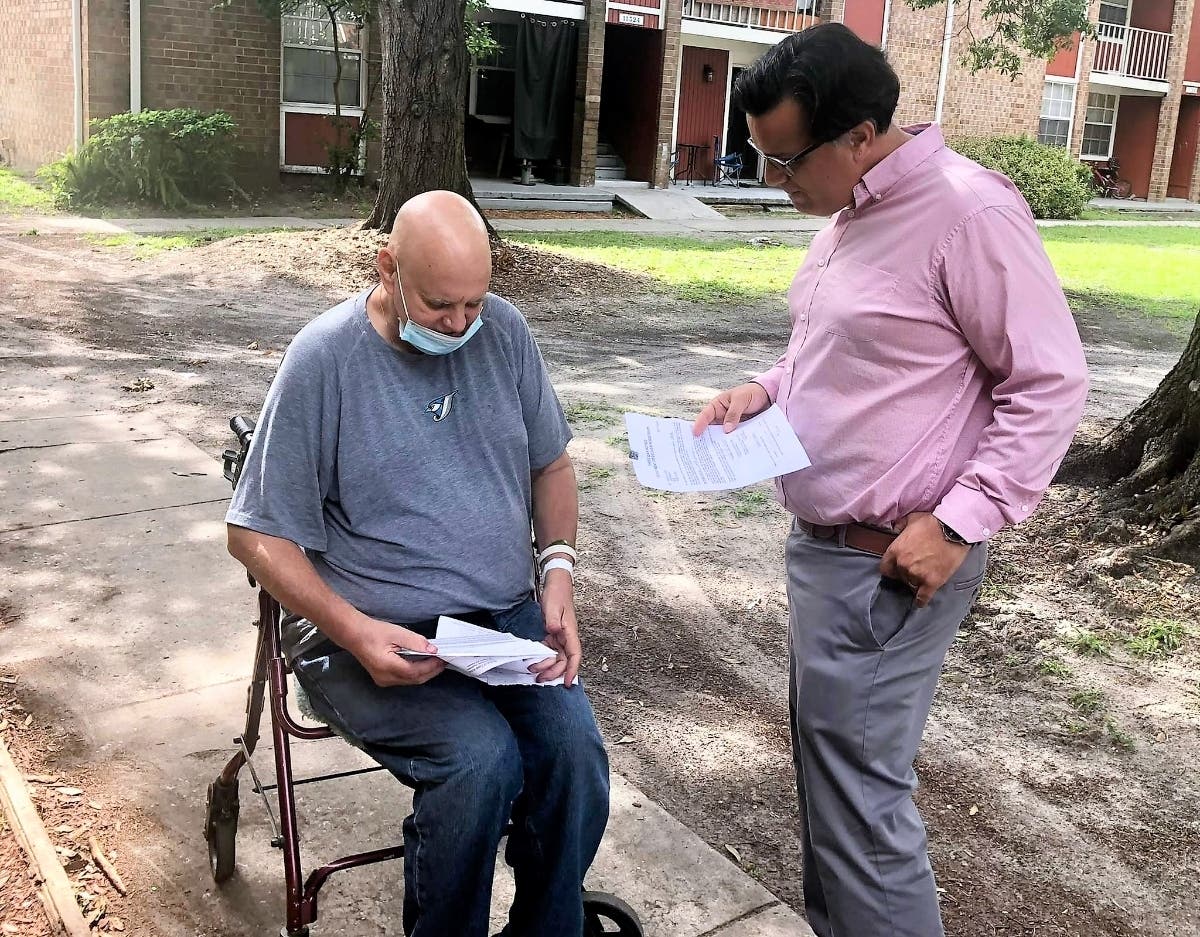
TAMPA, FL — With 30,000 evictions filed in Tampa Bay since the beginning of the coronavirus pandemic, monthly apartment rents tripling and thousands of residents facing eviction, the Tampa City Council said there's no doubt that the city has a housing emergency. So, on Thursday morning, the council voted to make it official.
In a 6-1 vote, the council will put a referendum on the Nov. 8 ballot asking residents to allow the city to declare a state of emergency that will allow the city to take measures to control rents, protect tenants and penalize unscrupulous landlords.
The controversial vote comes after hearing from residents of two low-income apartment complexes in Tampa during the July 14 meeting who have been evicted from their apartments even though their rents are being paid through Our Florida, a state emergency rental assistance program. The apartment complexes, which are under new ownership, have tacked on unexplained fees as justification for the evictions.
Find out what's happening in Tampafor free with the latest updates from Patch.
See related story: Hundreds Of Tampa Residents Living In Squalor Face Eviction
For months, residents have been streaming into the city council chamber during the public comment portion of the council meeting, begging the council to halt the flood of evictions by declaring a state of emergency that would allow the city to adopt an ordinance to control rents, require a 120-day notice of a rent increase, create a landlord complaint registry and give tenants facing evictions the right to legal counsel.
Find out what's happening in Tampafor free with the latest updates from Patch.
The city council, however, has hesitated to take action due to a 34-year-old state ordinance that prohibits cities and counties from passing rent stabilization ordinances.
Florida is one of 33 states that have passed preemption laws that prevent local governments from adopting rent regulations, affordable housing policies or tenant protections.
It's a law that needs to change, said state Rep. Diane Hart, D-Tampa.
She said she hoped the Legislature would take the initiative and declare a housing state of emergency during this year's legislative session.
That would have allowed the Florida attorney general to step in and prosecute the price gouging and other unscrupulous practices by landlords, she said.
She vowed to continue fighting to overturn the preemption law that prevents the city from taking action. But, in the meantime, she urged the city council to take matters into its own hands.
"Let's figure out how to get something done for the people of our community. They're suffering, and I will do everything I can to help," Hart said. "If the council thinks a ballot is needed to get us there, I will support it."
Craig Birchfield of the Tampa Tenants Union said these measures have already been implemented in other cities and tested in the courts.
"We, the working class, had enough and heard enough of the legal risk to the city because of the state's preemption of rent control," he said. "A housing state of emergency, which is what we're in, is more than enough coverage to make that move. What's lacking is political courage and will."
Although cities in other states may have taken such steps to supersede state preemption laws, it hasn't been done in Florida, said city council attorney Morris Massey.
The Orange County Commission is the first to consider placing a referendum on the Nov. 8 ballot to adopt rent controls for one year. That measure is set for a public hearing and final vote on Aug. 9.
But Massey said a county ordinance has a lot more impact than a city ordinance. He warned that the city could face legal challenges if it tries to usurp state law.
Council member Orlando Gudes, who made the motion to take the issue to the voters, said the council has no other alternative.
"We have a bunch of people living in undesirable places and now their rents are tripling," he said. "I’ve heard enough all day, all year about this housing problem. I’m putting it on the ballot."
He said the median rent in Tampa has increased to $2,098 per month, while salaries have not gone up and residents are facing high inflation rates.
"Tampa is seeing one of the highest growth rates in the country," Gudes said. "While growth is good, it has unattended consequences. The inventory of homes has dropped 29 percent in the last year, and that lack of housing has the greatest impact on Tampa's most vulnerable residents."
The sole holdout was council member Bill Carlson, but he emphasized it wasn't because he's against rent control.
He said the state's preemption law requires municipalities and counties to conduct a housing study to justify the need to place a measure on the ballot to declare a state of emergency. That's something Orange County has done, but Tampa has not.
Then, if the referendum is passed by voters, said Carlson, state law requires a one-year moratorium before it can take effect.
"Economics 101 tells me that would be devastating for people who are already about to get kicked out of their homes," Carlson said. "You know what landlords are going to do if they know a 12-month moratorium is coming up. They're going to double or triple the rates even higher, and more people are going to get kicked out."
He said a better option is to work with legislators to change the state law that preempts the city from taking action.
"We might not have the votes in the Legislature, but I'd like all of us to redirect our efforts to change this law in Tallahassee to allow us to do what the people want."
Gudes disagreed.
"People talk of legal fights. We have attorneys to fight those," said Gudes. "I look at what we can do to help the people. They elected us to do a job, and I'm going to do my job. We just have to have the will and the courage to do it."
Massey said he will bring back the first draft of an ordinance for a first public hearing on Aug. 4 followed by a second public hearing Aug. 22 to meet the Aug. 23 deadline to place a referendum on the Nov. 8 ballot.
Get more local news delivered straight to your inbox. Sign up for free Patch newsletters and alerts.