Politics & Government
Artemis 1 Launch Postponed A Second Time Over Fuel Leak: NASA
NASA delayed the second attempt for the Artemis I launch after a fuel leak. Officials say the next try is late this month or October.


CAPE CANAVERAL, FL — NASA officials scrubbed a second attempt at launching Artemis I on Saturday after a hydrogen fuel leak. Officials say the next try for launch is late this month or October.
NASA had rescheduled the launch of the Artemis I mission — the first step toward returning people to the moon after a five-decade absence — after an engine-cooling problem delayed the agency's first attempt Monday.
"Teams attempted to fix an issue related to a leak in the hardware transferring fuel into the rocket, but were unsuccessful," NASA said in a statement Saturday.
Find out what's happening in Tampafor free with the latest updates from Patch.
Engineers could not overcome the hydrogen leak in a quick disconnect, an interface between the liquid hydrogen fuel feed line and the Space Launch System rocket, NASA's blog said. Mission managers decided they will not attempt a launch in early September.
Over the next several days, teams will decide whether to perform work to replace a seal either at the pad, where it can be tested under cryogenic conditions, or inside the Vehicle Assembly Building.
Find out what's happening in Tampafor free with the latest updates from Patch.
If the rocket needs to be moved back to the Vehicle Assembly Building, a launch won't be possible until mid-October, NASA administrator Bill Nelson told CNN on Saturday. The longer launch delay would be due to NASA’s SpaceX Crew-5 mission, which is due to launch on Oct. 3 and the early October launch window for Artemis I closes on Oct. 4.
The next window launch for Artemis opens on Oct. 17.
The rocket was scheduled to launch at 2:17 p.m. ET from the Kennedy Space Center at Cape Canaveral, Florida.
See related story: Launch Of Artemis Scrubbed Due To Engine Concerns, New Date Pending
This will be the first integrated test of NASA’s multibillion-dollar Artemis 1, space launch system rocket, Orion spacecraft and the ground systems at the Kennedy Space Center.
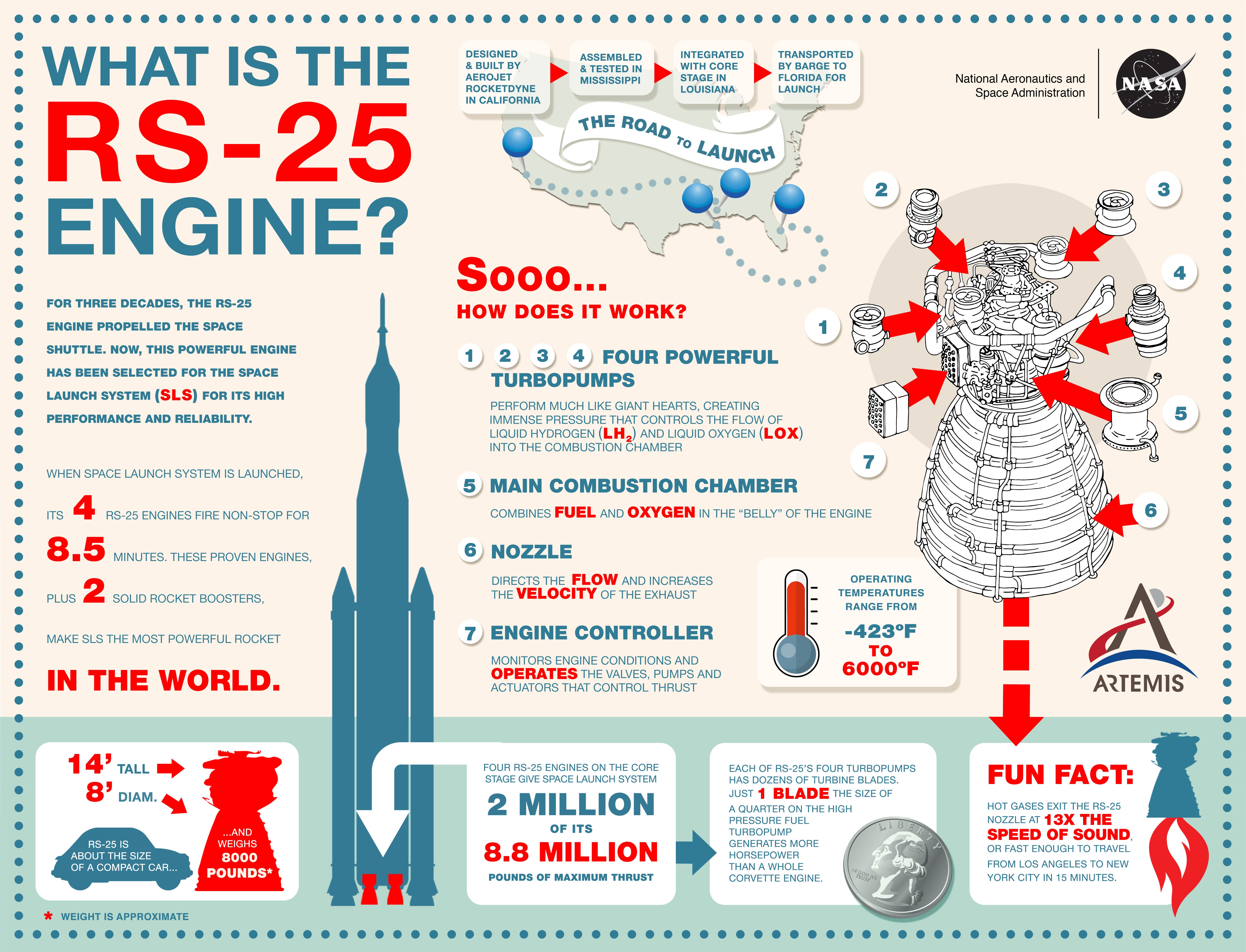
NASA said the liftoff scheduled Monday was scrubbed 14 minutes into the two-hour launch window due to a problem with one of its four engines not cooling properly.
On Thursday, the mission management team reviewed data and the overall readiness of the space launch system, and gave a thumbs-up for Saturday's launch.
NASA Administrator Bill Nelson said he wasn't surprised the first launch attempt was scrubbed.
When he was an astronaut on the 24th flight of the space shuttle, the launch was scrubbed four times on the pad. "We don't launch until it's right," Nelson said. "You don't want to light the candle until it's ready to go."
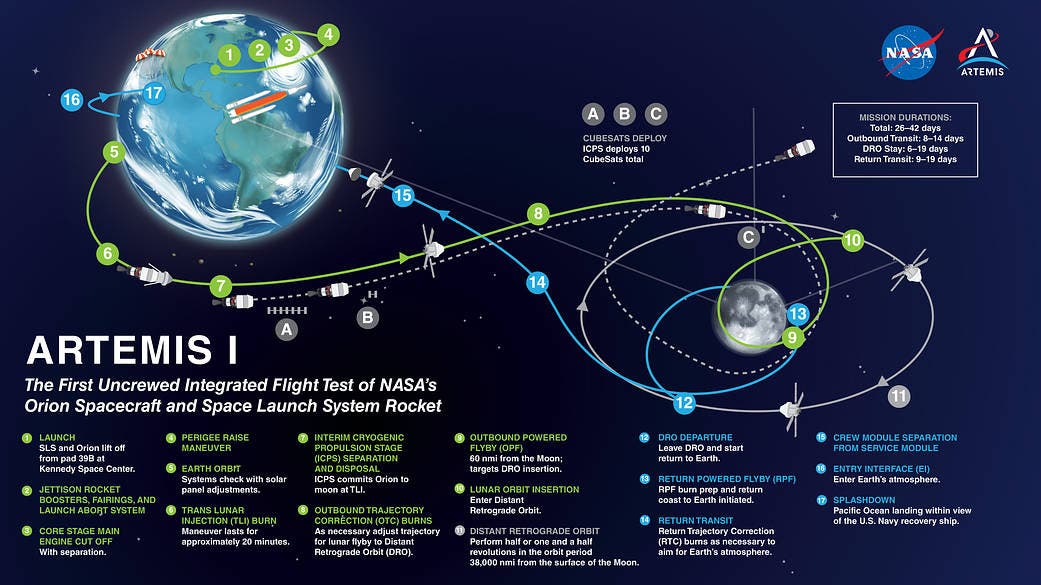
The Artemis 1 unmanned flight test is the first in a series of increasingly complex missions that will provide the foundation for humans to someday routinely travel to the moon and beyond.
During the Artemis 1 flight, Orion will launch atop the most powerful rocket in the world and fly farther than any spacecraft built for humans has ever flown.
Over the course of its 42-day mission, it will travel 280,000 miles from Earth and 40,000 miles beyond the far side of the Moon, remaining in space longer than any human spacecraft has previously without docking to a space station.
NASA's Artemis 1 moon mission will be the agency's first big step toward returning astronauts to the moon. Astronauts Neil Armstrong and Edwin "Buzz" Aldrin became the first humans to land on the moon on July 20, 1969; in all there were six missions where astronauts landed on the moon.
He said the flight will pave the way for future missions, including landing the first woman and first person of color on the surface of the moon.
Together with commercial and international partners, NASA plans to establish a sustainable presence on the moon to prepare for missions to Mars, said Sarafin.
Get more local news delivered straight to your inbox. Sign up for free Patch newsletters and alerts.