Politics & Government
Baylo Back In The Swim After Nearly Dying From Red Tide Toxins
After nearly dying from red tide toxicity, Baylo is back in the swim of things with the help of the ZooTampa.


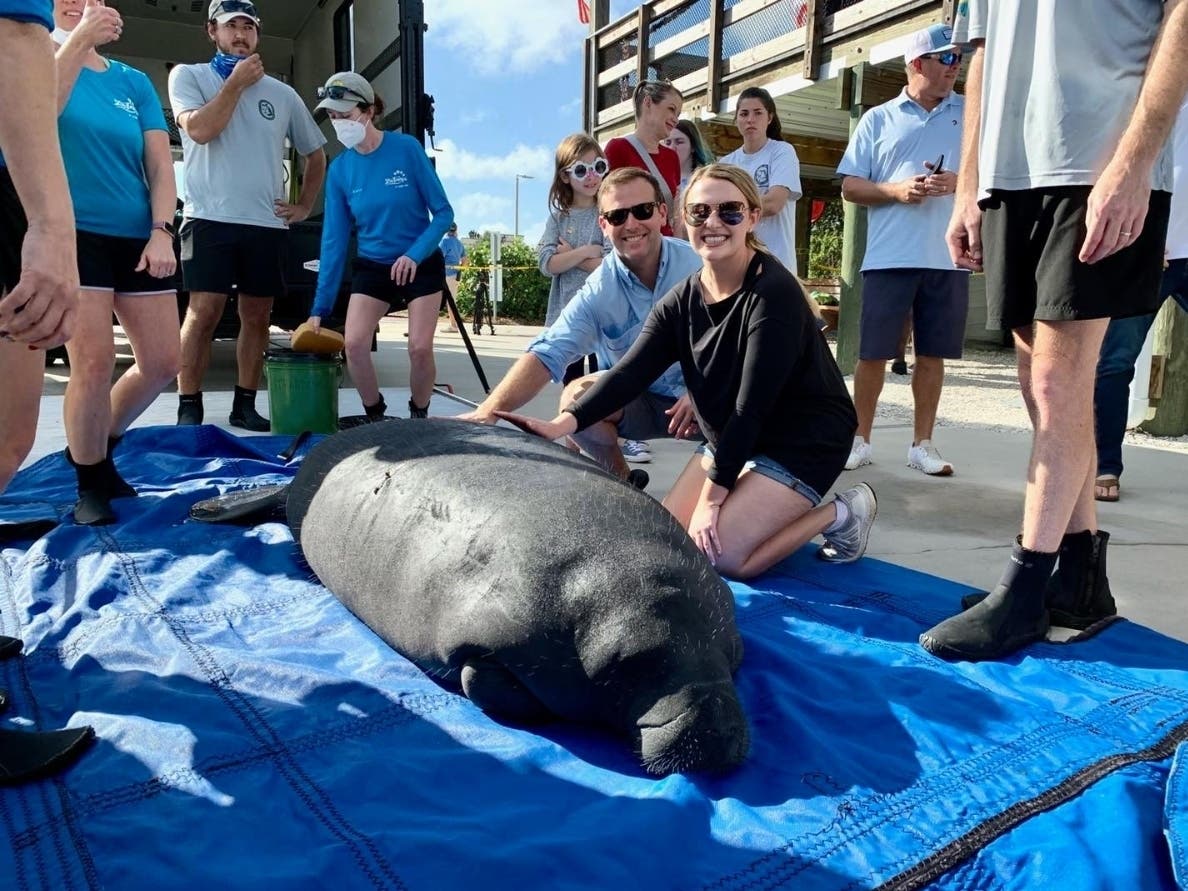


TAMPA, FL — After nearly dying from red tide toxicity, Baylo is back in the swim of things with the help of the ZooTampa David A. Straz Jr. Manatee Critical Care Center.
With Florida House Speaker Chris Sprowls and Florida Rep. Josie Tomkow, R-Auburndale, looking on, Baylo was released Thursday into the warm waters at the TECO Manatee Viewing Center in Apollo Beach.
She was brought to ZooTampa in October by the Florida Fish and Wildlife Conservation Commission after she was found in distress, dying from red tide poisoning.
Find out what's happening in Tampafor free with the latest updates from Patch.
Baylo is the 24th manatee treated at the critical care center this year. The center is one of only four facilities that specializes in the rescue, rehabilitation and release of sick, injured and orphaned manatees.
She spent three months being treated at the state-of-the-art David A. Straz, Jr. Manatee Critical Care Center, designed for the rehabilitation of orphaned, sick and injured sea cows.
Find out what's happening in Tampafor free with the latest updates from Patch.
Not all manatees survive the devastating impact of red tide toxins.
Red tide is caused by a species of algae, Karenia brevis, that secretes a toxin that affects the nervous system. When the algae are ingested by manatees as they graze on seagrass, it can cause seizures and paralysis. If they aren't rescued in time, the giant mammals, which weigh between 880 and 1,200 pounds, can't rise to the surface of the water to breathe and end up drowning.
"Taking park in Baylo's release today reaffirmed my full support for saving Florida's state marine mammal, the manatee," said Sprowls."On top of the $8 million for manatee habitat restoration and the $53 million for addressing water quality issues in the Indian River Lagoon we invested last year, the Florida House intends to continue to look at new ways we can assist with ongoing research, rescue and habitat restoration."
In recent years, the Florida Fish and Wildlife Conservation Commission said the population of the gentle sea cow has dwindled to just 8,800 in the southeastern United States due to a combination of starvation from diminishing seagrass beds, red tide toxin poisoning and boat strikes.
The FWC has now recorded an unprecedented 1,056 manatees deaths in Florida in 2021, up from 637 in 2020. Another 130 manatees have been rescued and are being nursed back to health by FWC partners including the Clearwater Marine Aquarium, ZooTampa and the Mote Marine Laboratory.
Brevard County leads the state in the greatest number of manatee deaths this year — 345 manatees, following by Lee County where 106 manatees have been killed.
In August, Sprowls, a Republican from Palm Harbor, took a boat tour with scientists from the Clearwater Marine Aquarium to better understand the current crisis the manatee is facing.
“The number of manatee deaths this year and the impacts of red tide on residents, tourism and the environment are devastating,” said Sprowls. “It’s critical we learn more about the issues and the challenges of current research to make informed decisions about how public policy and legislation can improve the situation.”
Joining him was James "Buddy" Powell, executive director of the Clearwater Marine Aquarium Research Institute.
“There is an unfortunate culmination of circumstances impacting manatees in Florida. Our role as researchers is to provide the data so that policymakers are able to make informed decisions and act to save our beloved sea cow," he said.
In September, the Clearwater Marine Aquarium unveiled plans to transform a former dolphin zone into a habitat to rehabilitate sick and injured manatees. Officials estimate it could cost nearly $10 million to transform the habitat into a facility for manatee rehab and research.
The aquarium isn't the only agency determined to rescue Florida's official sea mammal.
Last session, the Florida Legislature appropriated $8 million for manatee habitat restoration.
“The funding will be used to restore manatee access to springs and provide habitat restoration in manatee-concentrated areas,” Sprowls said.
Additionally, Gov. Ron DeSantis and the Legislature, which has already provided millions for red tide research and mitigation, is requesting additional funds during the 2021-22 legislative session for research, enforcement and aquatic restoration to help save Florida's West Indian manatee.
On Sept. 24, DeSantis also announced the award of $114 million from the Wastewater Grant Program with more than $53 million – 46 percent of the funding – going to the Indian River Lagoon, one of the most biologically diverse estuaries in North America. The lagoon is an especially precious resource for the manatee, which produces the majority of the seagrass beds that the marine mammal depends on for food.
The grants were made possible through three grant programs administered by Department of Environmental Protection's Wastewater Grant Program, Springs restoration grants and the Small Community Wastewater Grant Program.
DEP’s wastewater grant program was established in the Clean Waterways Act, which DeSantis championed and signed into law in 2020. The program is focused on expanding and upgrading wastewater treatment facilities to prevent spills that cause nutrient pollution to Florida's waterways and results in the destruction of coral beds and seagrass beds that marine life need to survive.
The Small Community Wastewater Grant Program funds septic to sewer conversions and wastewater treatment facility improvements in rural areas and fiscally challenged counties.
“Ensuring that our state’s water is clean is a key part of preparing Florida today for our future generations,” Sprowls said. “Some of the best memories I have with my two young sons are on Florida’s waterways. As they grow up and build families of their own, my hope is that they, too, can one day share in the joy of Florida’s waterways with their kids. We are one step closer to making sure our beloved waterways are preserved, restored and able to be enjoyed for many years to come.”
Oblivious to the symbolic significance of her release in Florida's struggle to save the gentle sea creature, Baylo was just happy to be back in her home waters, swimming alongside her fellow manatees in the sanctuary in Apollo Beach.
Baylo is the 12th manatee ZooTampa has restored to health and released this year and the 288th released since the facility opened in 1991.
See related stories:
- Rescued Manatee Sickened By Red Tide Under Care At ZooTampa
- Manatees Are Dying In Record Numbers, But Help May Be On Way
- Deaths Of Rare Sea Turtles, Manatees Attributed To Red Tide Toxin
- Record Deaths Of Manatees Prompt Urgent Need For New Rehab Center
- Manatee Deaths Surge In Florida, Experts Say Starvation Possible
- Aquarium To Turn Winter's Old Home Into Manatee Rescue Center
Get more local news delivered straight to your inbox. Sign up for free Patch newsletters and alerts.