Traffic & Transit
Tampa Bay Cross-Bay Ferry OK'd For 4 More Years, But Permanent Ferry Still Up In Air
Pinellas and Hillsborough counties, along with St. Petersburg and Tampa, have approved a four-year agreement to extend the ferry service.


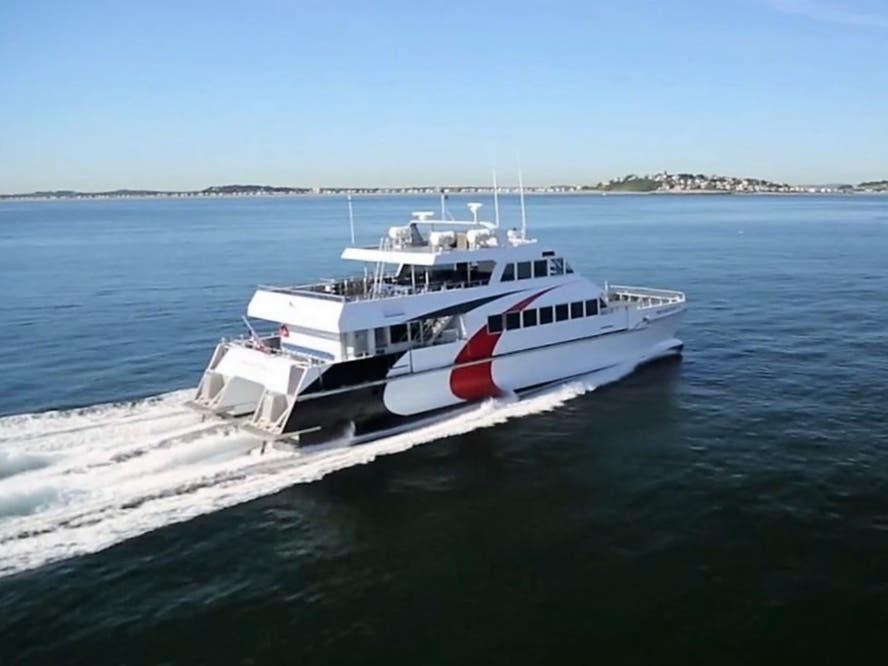
TAMPA BAY, FL — With this week's approval by the Pinellas County Commission, Tampa Bay will no longer be the only coastal metropolitan area in the country without a permanent ferry service.
The agreement between Pinellas and Hillsborough counties and the cities of St. Petersburg and Tampa calls for leasing ferries from national ferry-builder and operator HMS Ferries to operate six months of the year starting in mid-October for the next four years.
In the meantime, the four governmental agencies will seek state and federal money to launch a permanent year-round service that includes buying four ferries for a ferry service from south Hillsborough County to St. Petersburg and Tampa. At that time, HMS Ferries has agreed to assume all the costs of operating and maintaining the ferry system.
Find out what's happening in Tampafor free with the latest updates from Patch.
The Pinellas commission's vote that comes with a $3.7 million commitment from the county prompted reservations by commissioners Dave Eggers and Kathleen Peters, who voted against the agreement.
Three years ago, the Pinellas commission agreed to take part in a pilot program for a seasonal six-month ferry service between Tampa and St. Petersburg, with the ultimate goal of developing a full-time ferry service for commuters to ease traffic on congested bay bridges, especially the Howard Frankland Bridge between St. Petersburg and Tampa.
Find out what's happening in Tampafor free with the latest updates from Patch.
"It was an aspirational goal of creating a waterborne transportation system, and that is a worthy goal," Pinellas County Administrator Barry Burton said.
However, the pilot program didn't pan out as expected.
Instead of providing a commuter service, it turned into a party boat transporting affluent sports fans in St. Petersburg to Tampa Bay Lightning hockey games, said Peters.
"I am not confident spending money on a plan that has a benefit for the city of St. Petersburg but not a countywide benefit," she said.
Burton expressed similar concerns.
"I want to be clear what we're buying," Burton said. "We thought we were moving toward a commuter model but what is being proposed is an after 6 p.m. service. I love the ferry. I think it is a great amenity to have, but it's not a regional service. It's a special event and weekend service used mostly for entertainment. Does it add vitality to downtown St. Petersburg? Absolutely. But that doesn't necessarily mean we should participate in funding for everything that adds vitality to each of our 24 cities."
Commissioner Janet Long, who serves on the board of Forward Pinellas and the Pinellas County Transit System Authority, noted those two transportation planning agencies are working on an agreement to extend the existing Clearwater ferry service to Pinellas beaches using a state-of-the-art electric ferry that will provide a benefit to the entire county.
While the cross-bay ferry would benefit the city of St. Petersburg, she wondered if the advantages for Pinellas County at large justified the expenditure.
Advocate Defends Ferry Service's Merits
Longtime Tampa Bay alternative transportation advocate Ed Turanchik conceded the pilot program's attempt to operate a commuter service was a bust.
"We ran a commuter service between downtown St. Petersburg and downtown Tampa, and it was terrible ridership," he said. "We would recommend not doing that again until you develop the whole marketplace. You had two or three people riding the ferry. Not a lot of people live in south Pinellas that work in downtown Tampa."
Nevertheless, he countered Burton's contention that the ferry isn't a regional service.
"There's a major economic opportunity for the entire region in operating a ferry service on week nights and weekends to take residents and tourists across the bay for dining, special events, shopping and to visit beaches," he said.
"This is an opportunity for a truly regional service," said Miller. "If you look at Tampa Bay, this is one of the largest metropolitan areas with a body of water that has no ferry service on it. We view this as an opportunity for the region."
Matthew Miller, president of HMS Ferries, the largest water transit operator in the country, said he agreed to assume all operational and maintenance costs for a permanent ferry system in four years because he's confident of its success.
He noted that HMS now operates 38 ferries for the New York City Ferry System that attracts both commuters and tourists.
In response to Long's comments about the use of an electric ferry, Miller said his company was the first in the country to convert a conventional car passenger ferry to battery power, the first to build a hybrid vessel and the first to launch a hydrogen-powered vessel only a month ago.
"We are fully supportive of the electrification of ferries," Miller said. "We can bring truly environmental vessels to this community as well."
Burton reminded the commission that the four-year agreement before them would not include daily commuter service.
Turanchik countered that an after-hours and weekend ferry service has its own economic rewards.
"We have this opportunity to connect the beaches to Ybor by a seamless transit option really on the cheap. I think citizens understand this. They want to make trips across the bay for lifestyle purposes, and that makes a difference for the businesses and livability of this area," he said."That's the vision that's within our grasp and, in this case, you have an operator willing to cover operating and maintenance costs, which is extremely rare. There is a business plan for service 365 days a year without subsidies, and yet won't find another transportation plan in the country that doesn't have subsidies."
Turanchik added that a study by the Florida Department of Transportation concluded that 80 percent of the vehicles using the Howard Frankland Bridge were crossing the bay for leisure, not for commuting.
"This ferry service will be used to take people where they want to go, people who will spend money at local businesses," he said. "This is a historic opportunity to do something that's unique. It's a big deal, a huge opportunity for us."
Hillsborough County Commissioner Mariella Smith told Pinellas commissioners she supported the ferry system before becoming a commissioner.
As both a south Hillsborough County business owner and a Sierra Club leader, she said she saw its benefits both economically and environmentally.
"I am even more enthusiastic today about this project that reduces cars on our roads, reduces nitrogen pollution in our bay and uses our waterways to take people to the places they want to go in an incredibly cost-effective way," Smith said.
She added that the vision for the ferry system hasn't changed since they launched the three-year pilot program.
"The plan has always been to build on this cross-bay ferry service and expand it into a premium congestion-proof transit service connecting south Hillsborough County with the cities of St. Petersburg and Tampa, finally culminating in a service that will require zero operating and maintenance subsidies because this operator has made us the unprecedented offer of taking on those costs when we get to that point," she said. "We had hoped we'd be at that point now but we will get there soon. So I hope you join us in bringing on this transportation service that will bring people to the very businesses that have been hit hardest by the pandemic — restaurants and shops."
She said the addition of a south Hillsborough County ferry launch on land donated by the Mosaic Co. to Hillsborough County will only add to its success, providing an easy way for the large population of military personnel living in south county to commute to MacDill Air Force Base and allowing the residents of south county to enjoy the shopping, dining and entertainment opportunities available in Pinellas County.
"South Hillsborough County has 250,000 people, almost as many as St. Petersburg, and we have been growing at a phenomenal rate," she said. "They're eager to take the ferry to Pinellas County for shopping, dining and events, not to mention the beaches, which can be reached from the ferry terminal through your bus system. And it will take thousands of cars off our roads and bridges."
The four-year interlocal agreement includes a one-year opt-out by June 1. Pinellas commissioner Rene Flowers suggested that the commission approve the four-year agreement but take advantage of the opt-out if the ferry system doesn't operate as promised.
Hillsborough Commission Also Raises Concerns
Meanwhile, at Wednesday's Hillsborough County Commission meeting, commissioners expressed reservations of their own.
While the Hillsborough commission already approved the four-year interlocal agreement for a seasonal ferry service, Commission Ken Hagan had concerns about the capital outlay needed to build a permanent ferry system.
"I was an early supporter of the ferry service because I long believed our waterfront was one of our most underutilized assets," he said, noting that he made the original motion to pursue a study into launching a ferry service in Tampa Bay. "However, over the years it became apparent that the ferry is not a prudent investment. But it became apparent that the ferry is not an
He said the county will be responsible for $54 million in capital costs to build terminals in Apollo Beach and at MacDill Air Force Base, plus an additional $5.2 million over 20 years for long-term capital improvements and $150,000 a year for county oversight.
"It will only result, according to the study, in 1,250 cars being taken off the road," he said. "In my opinion, this is a collosal waste of money for very minimal ridership. The money would be better invested improving our roads or expanding real transit opportunities. This action today continues to throw good money after bad."
Hagan was the lone dissenter in a 6-1 vote to approve the four-year interlocal agreement and spend $1 million to continue work to develop a permanent ferry service.
See related story: 10 Things To Know About The New Cross-Bay Ferry Service
Get more local news delivered straight to your inbox. Sign up for free Patch newsletters and alerts.