Health & Fitness
Dengue Detected In International Travelers Entering Tampa
The health department in Hillsborough County said the arbovirus dengue has been detected in international travelers arriving in Tampa.


TAMPA, FLA - Hillsborough County residents have another disease to worry about on top of coronavirus, monkeypox and meningococcal. The Florida Department of Health in Hillsborough County said the arbovirus dengue has been detected in international travelers arriving in Hillsborough County.
The risk to the public is low, said the DOH-Hillsborough, however, Hillsborough County Mosquito Control and DOH-Hillsborough are keeping a close track of cases and taking prevention measures to keep down the mosquito population.
According to the Centers for Disease Control and Prevention, dengue viruses are spread to people through the bite of an infected mosquito. These mosquitoes also spread other arobviruses including Zika, chikungunya, Eastern equine encephalitis, St. Louis encephalitis, West Nile and yellow fever.
Find out what's happening in Tampafor free with the latest updates from Patch.
The arboviruses that cause dengue, chikungunya and Zika illnesses have rapidly expanded across the globe in recent years, with large-scale outbreaks occurring in Western Hemisphere, said the National Institute of Health.
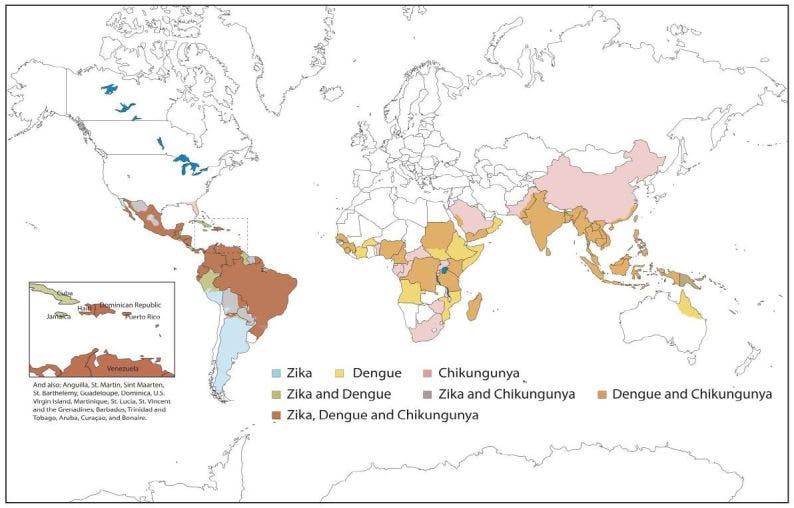
Each year, up to 400 million people get infected with dengue. Approximately 100 million people get sick from the infection, and 40,000 die from severe dengue.
Find out what's happening in Tampafor free with the latest updates from Patch.
As of July 6, 94 dengue cases were reported in the United States, with the most cases (34 cases) reported in Florida, said the CDC. The next greatest number of cases is 14 cases in California.
About one in four people infected with dengue will become sick with symptoms that can be mild or severe. Severe dengue can be life-threatening within a few hours and often requires care at a hospital.
Mild symptoms of dengue can be confused with other illnesses that cause fever, aches and pains, or a rash.
The most common symptom of dengue is fever with any of the following:
- Nausea, vomiting
- Rash
- Aches and pains (eye pain, typically behind the eyes, muscle, joint or bone pain)
Symptoms of dengue typically last two to seven days. Most people will recover after about a week.
There is no specific medicine to treat dengue. See a health care provider for fevers and other severe symptoms, and let the provider know about any international travel.
Otherwise, those with dengue should rest as much as possible, take acetaminophen for fever and pain (do not take aspirin or ibuprofen) and drink plenty of liquids to stay hydrated.
About one in 20 people will become severely sick. Severe dengue can result in shock, internal bleeding and death.
People who have previously had dengue are more likely to develop severe dengue, and infants and pregnant women are at a higher risk, said the CDC.
Warning signs of severe illness include:
- Belly pain, tenderness
- Vomiting (at least three times in 24 hours)
- Bleeding from the nose or gums
- Vomiting blood or blood in the stool
- Feeling tired, restless or irritable
DOH-Hillsborough reminds residents and visitors to limit exposure to mosquitoes by doing the following:
- Drain standing water to stop mosquitoes from multiplying.
- Draining water from garbage cans, house gutters, buckets, pool covers, coolers, toys, flowerpots or any other containers where sprinkler or rainwater has collected.
- Discard old tires, bottles, pots, broken appliances and other items not being used.
- Empty and clean birdbaths and pets' water bowls at least twice a week.
- Protect boats and vehicles from rain with tarps that do not accumulate water.
- Maintain swimming pools in good condition and chlorinated.
- Empty plastic swimming pools when not in use.
- Cover skin with clothing or repellent.
- Wear shoes, socks and long pants and long sleeves. This type ofprotection may be necessary for people who must work in areas where mosquitoes are present.
- Apply mosquito repellent to bare skin and clothing.
- Always use repellents according to the label. Repellents with DEET, picaridin, oil of lemon eucalyptus, para-menthane-diol, 2-undecanone and IR3535 are effective.
- Use mosquito netting to protect children younger than 2 months old.
- Check and repair screens on doors and windows. Keep them closed and use air-conditioning when possible.
Get more local news delivered straight to your inbox. Sign up for free Patch newsletters and alerts.