Travel
Florida Tourism Tops Pre-Pandemic Levels: Visit Florida
Hotels, theme parks and airports are bouncing back to pre-pandemic levels while restaurants and smaller businesses continue to struggle.


FLORIDA — With travel restrictions, "no sail" mandates for cruise ships, major fish kills from red tide and hospitals filled with patients due to the introduction of the delta variant of the coronavirus, Florida's tourism industry and the thousands of restaurants, gift shops and attractions that benefit from tourism were dealt multiple blows over the summer.
Therefore, it came as a surprise to many when Florida Gov. Ron DeSantis revealed this week that Florida's visitation from July to September exceeded 2019.
DeSantis announcement the revelation after receiving a report from Florida's tourism agency, Visit Florida.
Find out what's happening in Tampafor free with the latest updates from Patch.
According to Visit Florida, the Sunshine State welcomed 32.5 million travelers in the third quarter of 2021, a nearly 7 percent increase from the same period in 2019.
Additionally, Visit Florida reported that 1.2 million visitors traveled to Florida from overseas, and 85,000 from Canada between July and September, representing a 597 percent increase from 2020 and a 16.1 percent increase from the second quarter of 2021.
Find out what's happening in Tampafor free with the latest updates from Patch.
DeSantis attributed this to his policy to keep Florida businesses open even during the summer surge in coronavirus rates.
While other states closed their borders, he said Florida continued marketing to tourists outside its borders.
“In 2020, the experts thought Florida’s economy would be among the most impacted in the nation because of how important tourism is to our state," DeSantis said. "Instead, we are setting the pace for job creation and visitation in the U.S. We have been able to set these records because in Florida we kept businesses open and made sure Floridians could keep working. In just 15 months, Florida’s visitation numbers have surpassed past pre-pandemic levels, helping drive revenue, job growth and economic activity to all 67 counties in our state.”
“Visit Florida and its tourism partners around the state continued to deliver outstanding results for Florida tourism in Q3 2021, with total visitation surpassing 2019’s for the first time since the pandemic began,” said Dana Young, Visit Florida president and CEO. “Though the ever-evolving nature of the pandemic may continue to pose challenges, the steps we have taken as an industry and as a state have put us in the best possible position to overcome anything that comes our way. Looking ahead, Visit Florida will only be hitting the accelerator as we reenter the global travel arena and the lucrative winter travel season.”
This was borne out in reports from county tourism bureaus across the state.
Visit Tampa closed out its fiscal year setting a new benchmark in tourism development collections. Between October 2020 and September, Visit Tampa Bay reported $38.4 million collected in so-called "bed taxes" on hotel rooms, beating out 2019 by 7.04 percent.
Additionally, six of Visit Tampa Bay’s 12 fiscal months reached never-before-seen levels, including its September collections, which surpassed $3 million for the first time. A total of $3,241,979 in tourist development taxes were collected, a 17.44 percent increase over the previous record in October 2019.
“Tampa Bay’s tourism bounce-back is one for the books,” said Santiago C. Corrada, president and CEO of Visit Tampa Bay. “Collectively with our community stakeholders and partners, we have set a nationwide precedent for not letting a pandemic define us, but instead fuel us to push our community forward.”
Sarasota County reported an equally successful third quarter, said Virginia Haley, president of Visit Sarasota County.
“Q3’s visitation numbers are amazing news for our tourism industry and the entire state," Haley said. "Since Visit Florida reentered the market 15 months ago, Sarasota County tourism has skyrocketed, ranking first among Florida hotel markets in rooms sold growth from March to August," she said. “Our governor’s unwavering commitment to our tourism industry has been crucial to this success."
Hotels weren't the only benefactors of Florida's open-door policy.
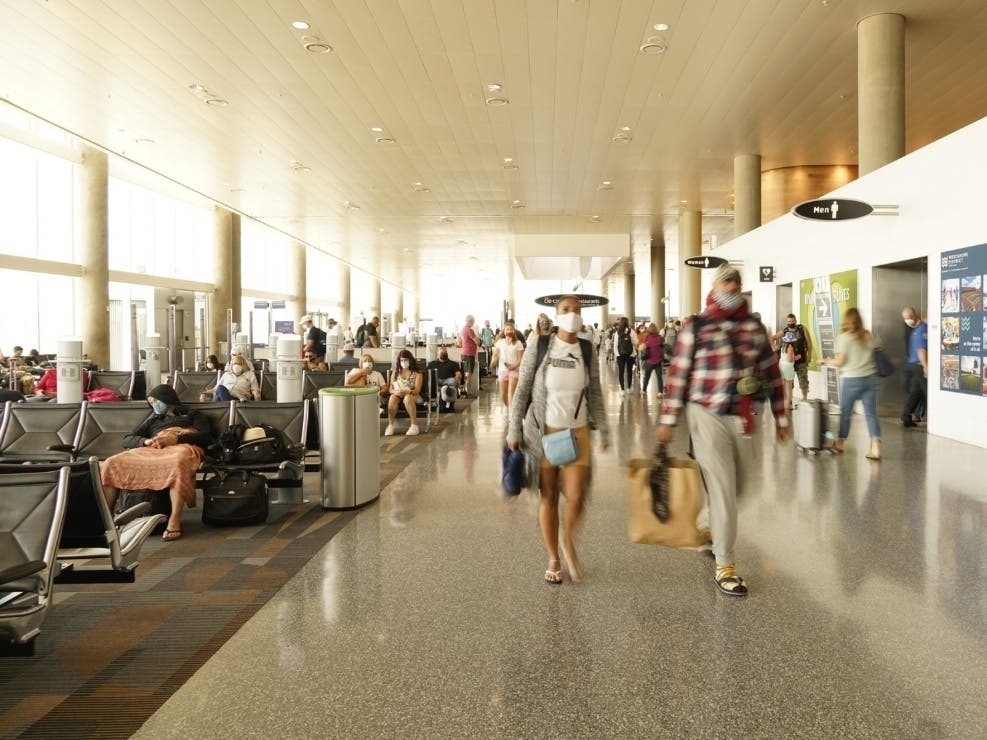
As of Aug. 31, Miami International Airport reported a 43.94 percent increase in international passengers arriving and departing from the airport and a 94.9 percent increase in domestic passengers over 2020. From Jan. 1 to Aug. 20, 22,830,967 people got on and off planes at the airport.
Orlando International Airport reported equally good news. In August, more than 3.5 million passengers sought a bit of magic at the Magic Kingdom and Orlando area theme parks, up 210 percent over 2020. The airport accommodated 3,325,116 domestic passengers and 193,056 international passengers (a 1,300 percent increase over 2020).
For the year to date, the Orlando airport saw more than 32 million passengers, quickly closing in on the pre-pandemic record of 51 million.
But how are small businesses like independent restaurants faring?
According to the National Restaurant Association, post-pandemic recovery of restaurants remained sluggish.
Nationally, restaurants reported sales this year that surpassed 2020 levels but were still 3 percent below pre-pandemic levels.
"This indicates that the restaurant industry’s recovery from the pandemic is not yet complete, in terms of a return to normal customer traffic levels," said the association.
Although Florida restaurants took a beating (about a 10 percent decrease in foot traffic) over the summer during the surge in COVID-19 cases due to the introduction of the delta variant, the Florida Restaurant and Lodging Association said restaurants are rebounding during the holiday season.
The association said the biggest concerns now facing restaurants are inflation due to supply chain issues and finding employees.
The Small Business Administration is urging restaurants facing difficulties to apply for funding through the Restaurant Revitalization Fund, established through the American Rescue Plan Act earlier this year.
This program provides restaurants with funding equal to their pandemic-related revenue loss up to $10 million per business and no more than $5 million per physical location. Recipients are not required to repay the funding as long as funds are used for eligible uses no later than March 11, 2023.

Get more local news delivered straight to your inbox. Sign up for free Patch newsletters and alerts.