Crime & Safety
Human Trafficking: The Downside Of Being A Super Bowl Host
In anticipation of Tampa hosting the 2021 Super Bowl, community leaders are meeting today to discuss ways to combat human trafficking.


TAMPA, FL -- In anticipation of Tampa hosting the Super Bowl in 2021, law enforcement leaders and experts are meeting today in Tampa to discuss ways to tackle the human trafficking that inevitably occurs in Super Bowl host cities.
With the announcement of the Super Bowl coming to Miami in 2020 and Tampa in 2021, Florida Attorney General Ashley Moody said it's more critical than ever to have a strategy to combat human trafficking and ensure that traffickers face harsh penalties.
What does the Super Bowl have to do with human trafficking?
Find out what's happening in Tampafor free with the latest updates from Patch.
Super Bowls are magnets for human traffickers, said Dottie
Groover-Skipper of Tampa, the moderator today's summit in Tampa. Groover-Skipper is the anti-trafficking coordinator for the Florida Divisional Headquarters of The Salvation Army.
Find out what's happening in Tampafor free with the latest updates from Patch.
“When large groups of people gather for major events like the Super Bowl, human trafficking increases,” Groover-Skipper said. “These big sporting events where a lot of men are gathered are prime targets for pimps and sex traffickers.”
The FBI arrested 169 people during an 11-day operation targeting human traffickers who flooded Atlanta with sex workers ahead of the Super Bowl.
From Jan. 23 through Feb. 2, a coalition of federal, state, and local law enforcement busted 26 people they said were trafficking the forced sex workers. The FBI said it also arrested 34 people who tried to have sex with minors.
The FBI arrested 94 people in a similar operation in Minneapolis during last year's game.
"The operation’s goal was to raise awareness about sex trafficking by proactively addressing that threat during the Super Bowl and events leading up to the Super Bowl,” said the FBI in a press release. “Sex trafficking is not just a problem during large-scale events; it is a 365-day-a-year problem in communities all across the country.”
In anticipation of the 2021 Super Bowl in Tampa, Groover-Skipper said The Salvation Army has obtained a federal grant aimed at raising awareness of the human trafficking problem.
“We want to use the funds to launch an all-out effort to educate Tampa Bay about the human trafficking problem and signs that someone may be a victim,” she said.
Penalists at the Feb. 18 summit hosted by the Greater Tampa Chamber of Commerce include Moody; Hillsborough County Sheriff Chad Chronister; Dr. Dion Samerson, medical director of St. Joseph's Hospital Emergency Department, and Elizabeth Melendez Fisher, co-founder of Selah Freedom, a national nonprofit that combats sex trafficking.
Groover-Skipper has been on the forefront of Tampa's fight against human trafficking and efforts to help human trafficking survivors for more than 30 years. Because of her efforts, former Attorney General Pam Bondi appointed her to the 15-member Statewide Council on Human Trafficking, created in 2014.
“Human trafficking is an epidemic problem in our state,” said Groover-Skipper. “Florida ranks third in the nation behind California and Texas for the number of calls received by the National Human Trafficking Hotline.”
It's the third largest international crime industry behind illegal drugs and arms trafficking, she noted. In the United States, between 14,500 and 17,500 people are enslaved and trafficked each year, generating $32 billion for the gangs, organized crime syndicates and individuals engaged in sex trafficking.
The 2016 Global Slavery Index estimates that there are $40.3 million people around the world who are enslaved to human traffickers.
Unfortunately, said Groover-Skipper, Florida has become a hub for human trafficking because of its transient population, mild weather, year-round growing season and burgeoning tourist industry.
“Many runaways head to Florida, and these kids living on the streets are prime targets for traffickers,” she said. “Traffickers are very good at building relationships and gaining the trust of these kids. Before they know it, they’re trapped in a situation they can’t escape.”
She said traffickers use a number of tactics to control their victims including getting them hooked on drugs so they become dependent on the trafficker for their next fix; giving them food, clothing and a place to stay to make them feel indebted to the trafficker; or subduing them with violence or threats of violence to themselves or loved ones.
It's an issue that has long been on Moody's radar.
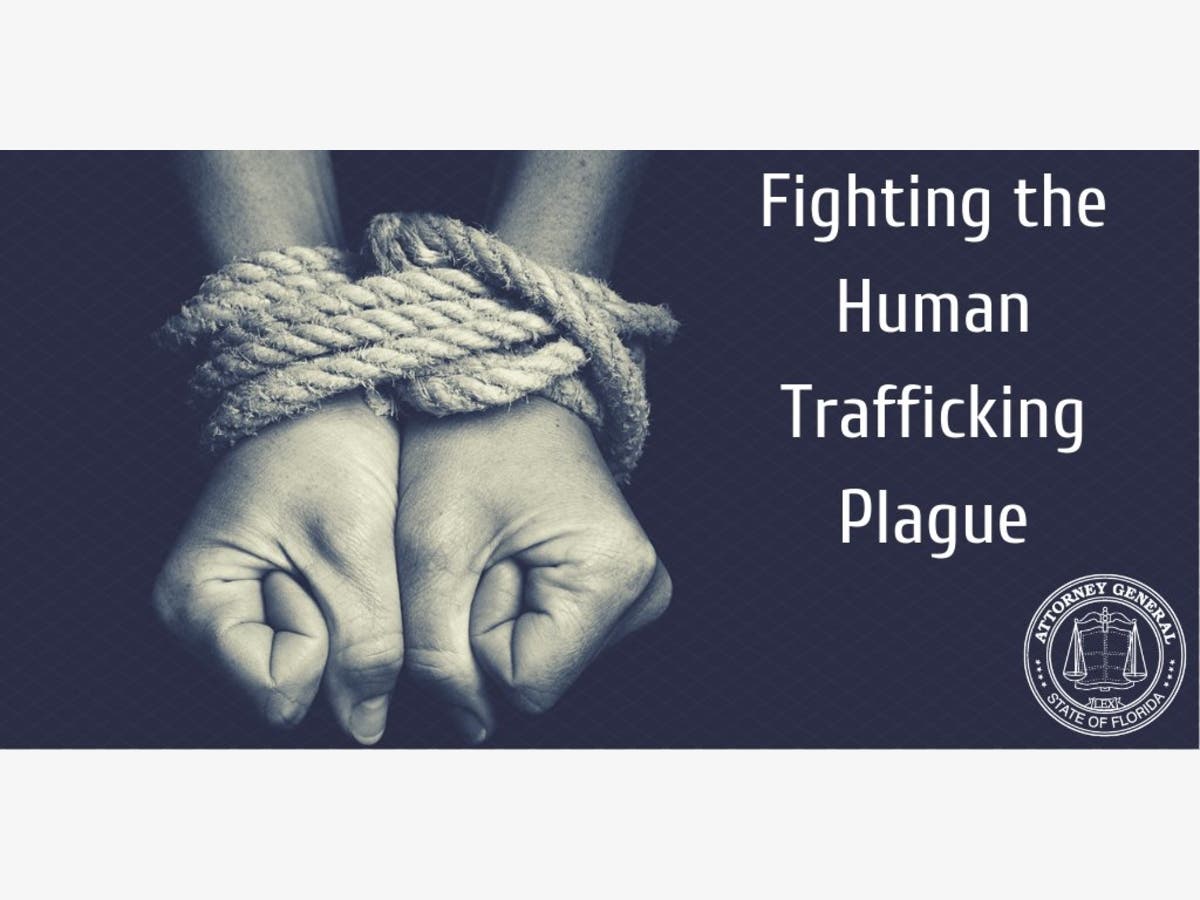
“Human trafficking is a plague that we cannot give up on combating in our state and nationwide," she said. "It is appalling anyone would engage in acts that take away people’s basic human rights."
“Those signs can be very subtle,” said Beth Potter, who works with human trafficking victims through the Florida United Methodist Conference.“The perpetrators look for individuals who are marginalized, young people who have low self-esteem. This could be any of our children."
A couple of years ago, the Pasco County Sheriff's Office arrested a trafficker who was trolling for victims at an ice cream shop, she said.
"We can’t put our kids in a protective bubble, so they need to be smart and we need to be smart," said Groover-Smith, who raised seven children and is now a grandmother. "Runaways are often targeted by traffickers because they are immature, frightened and alone."
Potter said there are an estimated 30,000 to 40,000 runaways living on the streets in Florida.
“They’re usually contacted by a trafficker within 48 hours of being on the street,” she said. “They’re lured with promises of shelter or simply grabbed off the streets. Then they’re groomed, repeatedly raped, hooked on drugs or beaten down to control them.”
Greed is the motivation. She said a single victim can earn a trafficker $200,000 to $400,000 a year.
“It’s more lucrative than selling drugs,” she said. “Once you sell the drugs, they’re gone; but you can sell these victims over and over.”
Groover-Skipper said she’s worked with victims who were forced to have sex 20 to 30 times a night.
Potter said awareness is the first step in the battle against human trafficking.
“People need to be attuned to what’s happening around them,” she said. “I specialize in training emergency room nurses and doctors to spot victims. But there’s a big need to train employees at airports, cruise lines, railroad and bus stations, shopping malls, hotels and schools.”
Moody agrees.
"We need to take an active role in this fight by spotting possible human trafficking signs," she said.
Those signs include physical injuries, such as burns, dental issues, disorientation, scars, tattoos, etc.;· individuals displaying fear, anxiousness, paranoia or are reluctant to discuss injuries;· people speaking as if coached and allowing someone else to speak for them; and· people suffering from drug addiction, infections or sleep deprivation.
If anyone suspects or witnesses an occurrence of human trafficking, Moody urges them to call the National Human Trafficking Hotline at 1 (888) 373-7888.
Image via Florida Attorney General
(For more local news from Florida, click here to sign up for real-time news alerts and newsletters from Patch. If you have an iPhone, click here to get the free Patch iPhone app; download the free Patch Android app here.)
Get more local news delivered straight to your inbox. Sign up for free Patch newsletters and alerts.