Weather
Hurricane Isaias: Hurricane Shelters Adapt To Pandemic Protocols
"The way Florida evacuates and takes shelter from hurricanes will be vastly different this year," said emergency manager Jared Moskowitz.


ACROSS FLORIDA — It's the perfect storm that keeps emergency management directors awake at night: a mass hurricane evacuation in the midst of a worldwide pandemic.
Nevertheless, that's the situation facing Florida emergency officials this hurricane season as positive cases of coronavirus continue to soar in some Florida counties during the most active months of hurricane season (August through October).
The severity of the situation isn't lost on Florida Department of Emergency Management Director Jared Moskowitz.
Find out what's happening in Tampafor free with the latest updates from Patch.
"I promise, there is no one that wishes we do not have a hurricane more than myself, but we’ll be ready,” Moskowitz said during a hurricane preparedness news conference. “The folks at the division of emergency management are battle-tested. We’ll be ready.”
Acknowledging that the state could face an unprecedented crisis, in early May Moskowitz started diverting staff from managing the coronavirus to making contingencies for a hurricane during a pandemic.
Find out what's happening in Tampafor free with the latest updates from Patch.
“Clearly nobody has pandemic experience out there in hurricane season,” Moskowitz said. “Everything that we do will be affected in one way or another – big and or small – by COVID-19.”
He concedes that the biggest challenge will be setting up hurricane shelters while simultaneously safeguarding residents from the coronavirus.
He said his staff has worked closely with the Centers for Disease Control and Prevention, the Federal Emergency Management Agency and the American Red Cross to develop shelter standards that will protect evacuees from the coronavirus.
"The way Florida evacuates and takes shelter from hurricanes will be vastly different this year," he said.
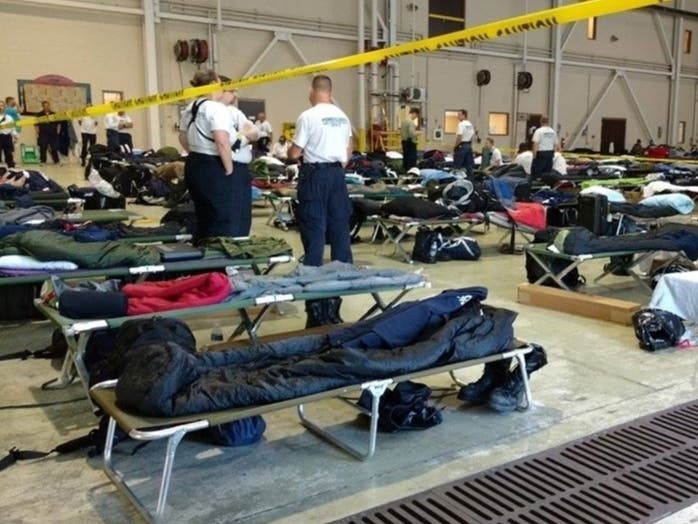
In a normal hurricane evacuation shelter at a local high school or community center, emergency managers plan for 20 square feet of space per person.
"We are looking at expanding that to 60 square feet per person," Moskowitz said. "That’s going to decrease the amount of folks we can put in our shelters. We don’t generally put folks in classrooms, we keep them in the larger hallways. Well, that may change this year, and moving forward.”
This means designating more shelters for fewer people.
When Hurricane Michael made landfall in the Florida Panhandle on Oct. 10, 2018, as a Category 4 hurricane with just two days' notice, about 375,000 Floridians were ordered to evacuate with
more than 6,500 people packing into 44 shelters that were brought online just hours before the hurricane made landfall.
To maintain social distancing guidelines under the same scenario, the Panhandle would need to double the number of shelters it opens.
As an alternative, in May the state began negotiating with hotels, which continue to have high vacancy rates due to the coronavirus, entering into pre-emergency contracts to reserve rooms for government use during a hurricane. The state now has an interactive map with more than 500 hotels that have expressed interest in serving as hurricane shelters.
“We are really leading the charge on non-congregating sheltering - that’s using hotels as potential shelters," Moskowitz said. He said those most vulnerable to the coronavirus — senior citizens and those with underlying health conditions — would be given priority.
Additionally, Moskowitz said the state has $190 million worth of supplies ready to distribute at a moment's notice to impacted counties, including face masks and hand sanitizer. The state has also purchased massive generators to power essential facilities.
Moskowitz said the last thing he wants is for people living in mandatory evacuation zones to remain at home for fear of being exposed to the coronavirus in a shelter.
"The most important thing, in my opinion, going into hurricane season is that if you live in an area and that area is not safe for you with the hurricane approaching, we must make sure that you feel comfortable to leave your house and get out of harm’s way," he said. “While COVID-19 complicates things and you have to plan around COVID-19, I think Florida is as prepared as ever."
The CDC has released tips to help evacuees reduce the risk of infection while staying in a shelter:
- If you may need to evacuate, prepare a “go kit” with personal items you cannot do without during an emergency. Include items that can help protect you and others from the coronavirus, such as hand sanitizer with at least 60 percent alcohol, bar or liquid soap, disinfectant wipes (if available) and two cloth face coverings for each person. Face covers should not be used by children under the age of 2. They also should not be used by people having trouble breathing, or who are unconscious, incapacitated or unable to remove the mask without assistance.
- Find out now the location of your assigned evacuation shelter. Due to the addition of shelters to accommodate social distancing, your shelter location may have changed this year.
- If you have to travel away from your community to evacuate, follow safety precautions for travelers to protect yourself and others from coronavirus.
- Practice social distancing. Stay at least 6 feet from other people outside of your household.
- Follow CDC COVID-19 preventive actions—wash your hands often, cover coughs and sneezes, and follow shelter policies for wearing cloth face coverings. Avoid sharing food and drinks with anyone, if possible.
- Follow disaster shelter policies and procedures designed to protect everyone in the shelter, especially those who are at higher risk for severe illness from coronavirus, including older adults and people of any age who have serious underlying medical conditions.
- Wash hands with soap and water for at least 20 seconds or use hand sanitizers with at least 60 percent alcohol immediately after you touch these surfaces.
- Keep your living area in the shelter clean and disinfect frequently touched items such as toys, cellphones and other electronics.
- If you feel sick when you arrive at the shelter or start to feel sick while sheltering, tell shelter staff immediately.
- Help your children stay at least 6 feet away from anyone who is not in your household.
- Watch your child for any signs of illness and tell shelter staff if your child may be ill.
- Try to deal with the disaster calmly and confidently, as this will help children cope with emergencies.
Get more local news delivered straight to your inbox. Sign up for free Patch newsletters and alerts.