Seasonal & Holidays
Indigenous Tampa Residents Call For Removal Of Columbus Statue From Bayshore Boulevard
"We are no longer asking the city of Tampa; we are telling them the statue will come down," said the Florida Indigenous Alliance Inc.


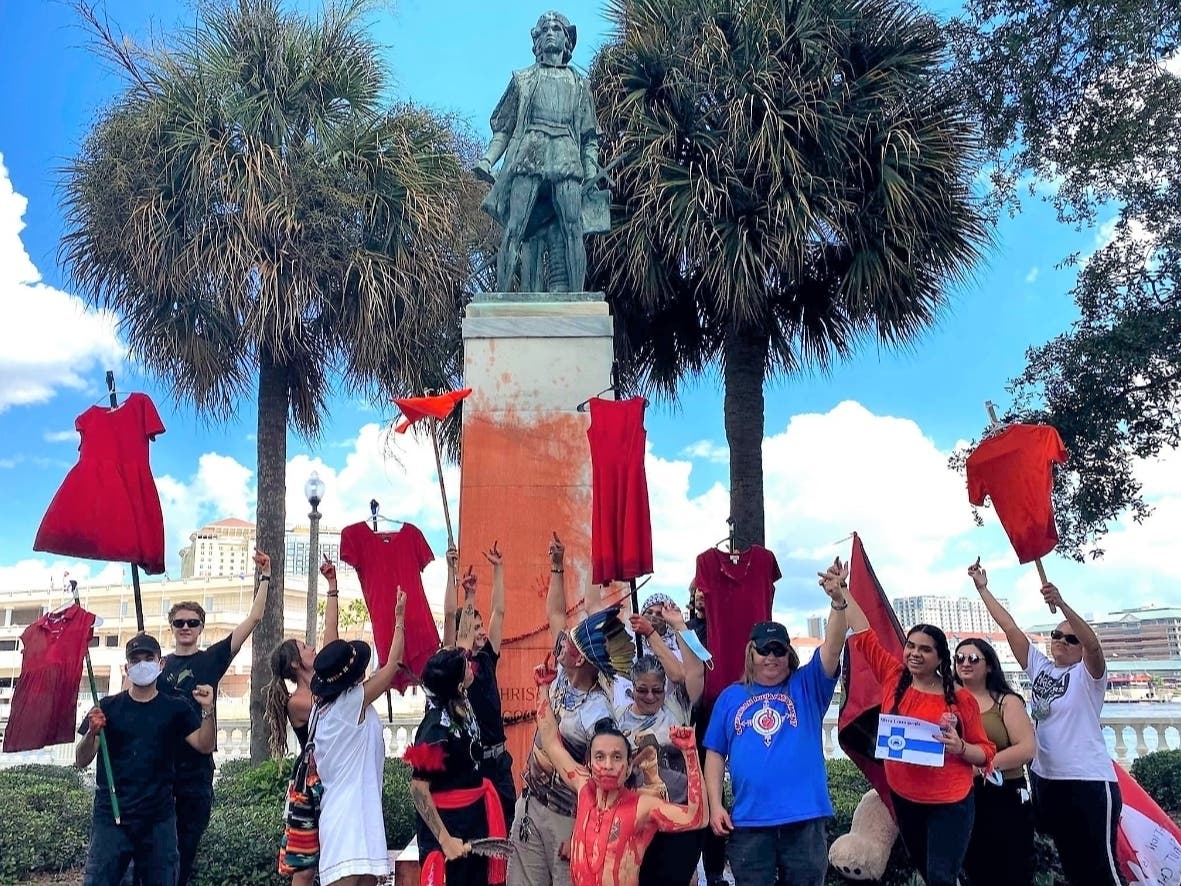
TAMPA, FL — In what's become an annual tradition ahead of Columbus Day, the Florida Indigenous Alliance Inc. in conjunction with the International Indigenous Peoples Day of Rage hosted a rally Saturday demanding the removal of the statue of Christopher Columbus at 300 Bayshore Blvd. in Tampa.
The statue stands in the tiny Columbus Statue Park at the intersection of Bayshore Boulevard and Platt Street Bridge depicts Columbus with a sword in one hand and an oar in the other.
Construction of the statue by Cuban artist Alberto Sabas was funded by the Ybor City Rotary Club. The statue was erected at the intersection on Columbus Day, Oct. 12, 1953, as a unifying symbol to ease growing tensions between the United States and Cuba on behalf of Tampa's large Cuban population, which helped found the city.
Find out what's happening in Tampafor free with the latest updates from Patch.
However, the statue has long been a bone of contention for Tampa's indigenous residents, including the Seminole Indian Tribe, which was granted a reservation on 9 acres of land in Tampa in 1980 and subsequently built the Seminole Hard Rock Hotel & Casino Tampa.
Calling the statue an "abomination," the Florida Indigenous Alliance Inc. made up of Native Americans has been lobbying for the removal of the Tampa statue and all other statues of Columbus in Florida, contending that the explorer committed genocidal assault on the native people of North, South and Central America and the Caribbean islands, and doesn't deserve to be honored with a statue.
Find out what's happening in Tampafor free with the latest updates from Patch.
In September 1992, the late David Goyette, a Kanawake Mohawk, was the first to formally request the removal of the Tampa statue from then-Tampa Mayor Sandy Freedman.
Tampa resident Sheridan Gosta-Murphy, an activist with the Florida Indigenous Alliance Inc., the American Indian Movement and the Florida Indigenous Rights and Environmental Equality, said the groups have been trying to get the Columbus statue removed since.
"We are no longer asking the city of Tampa; we are telling them the statue will come down," said Murphy in a statement issued Friday. "We have been waiting 28 years. We are done waiting. The city needs to do the right thing and take it down. If they do not, we will organize and we will take it down."
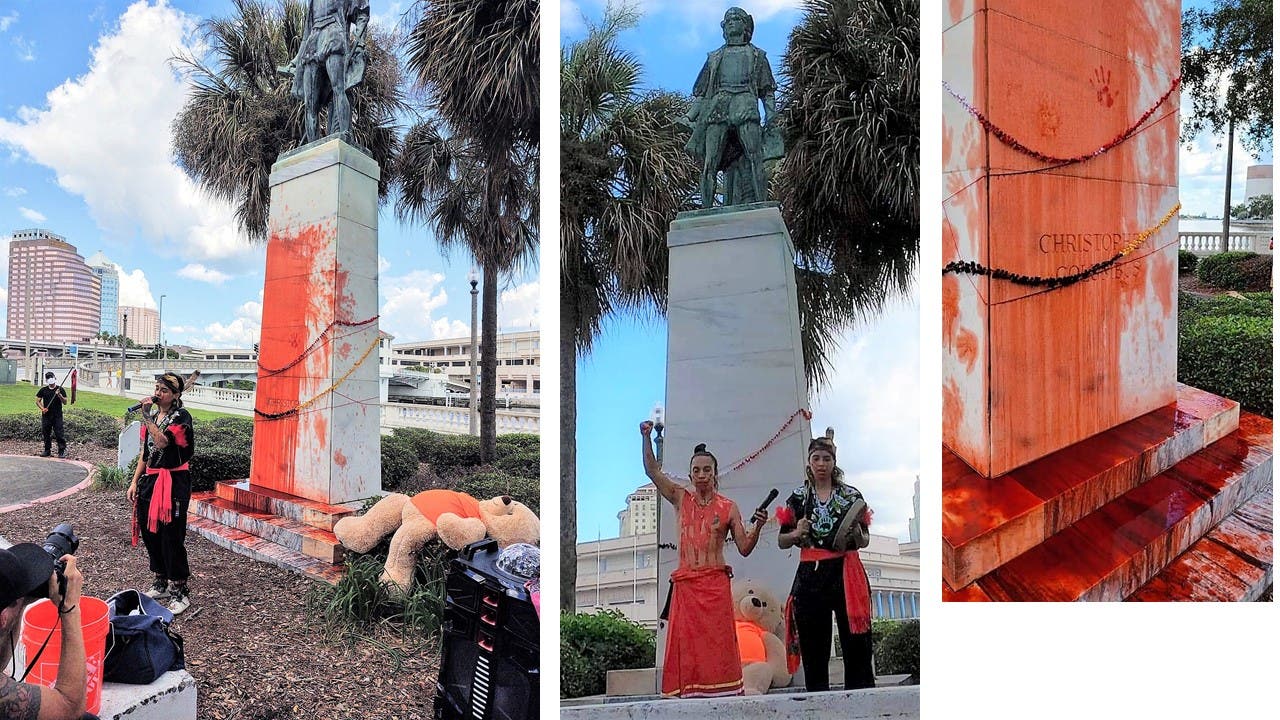
Members of the Florida Indigenous Alliance protest Tampa keeping the Columbus statue on Bayshore Boulevard Monday.
In light of the organization's declaration of civil disobedience, Tampa police discreetly placed additional patrols around the park where the statue is located.
In 2020, as the country was embroiled in a national reckoning on racial injustice following the death of George Floyd in Minneapolis, protesters toppled and beheaded statues of Columbus in a number of cities and called for Columbus Day to be replaced with a national holiday that celebrates the people who first populated America.
"Columbus invaded the Arawak, Caribe and Taino nations, decimating their populations through inhuman genocidal practices such as feeding children to dogs and hanging adults in rows of 13 to honor Jesus and the 12 disciples," Murphy said on behalf of the organization. "In the United States and Canada, native people are denied voting rights in multiple states while 5,200 native women have been murdered without substantive investigation. Multiple pipelines, uranium mining and other energy industry projects are imposed on indigenous lands with no consent or consultation of the indigenous nations. Both nations refuse to account for its history of stealing native children from their families and imprisoning them in boarding schools."
Murphy said thousands of native children have been found in mass and unmarked graves in Canada and the United States, children murdered, tortured and uncaringly tossed into unmarked and mass graves by the "boarding school concentration camps designed to eliminate Indigenous peoples and cultures from the Western Hemisphere."
All of these atrocities, she maintained, are the legacy of Christopher Columbus who is "honored with a day, parades and statues in every significant American city including Tampa."
In response to the controversy, some cities and states have turned to alternative celebrations, such as Indigenous People Day, for the second Monday in October, which traditionally marks Columbus Day.
Indigenous Peoples Day recognizes the history and contributions of Native Americans to the United States. Since Columbus was Italian, others have turned the holiday into an opportunity to celebrate Italian American heritage.
Nevertheless, the federal government continues to refer to the day as Columbus Day. It has been a federal holiday since April 30, 1934, when Congress declared the second Monday of October each year as Columbus Day. All federal offices observe the day by closing.
On Thursday, President Joe Biden issued a proclamation declaring Monday Columbus Day while acknowledging "the painful history of wrongs and atrocities that many European explorers inflicted on tribal nations and indigenous communities."
While the day is intended to commemorate Christopher Columbus’s historic voyage 529 years ago,"On this day, we recognize this painful past and recommit ourselves to investing in native communities, upholding our solemn and sacred commitments to tribal sovereignty, and pursuing a brighter future centered on dignity, respect, justice and opportunity for all people," said Biden in his proclamation.
The state of Florida does not recognize Columbus Day as a holiday, and all state, county and city offices remain open.
Get more local news delivered straight to your inbox. Sign up for free Patch newsletters and alerts.