Weather
More Hurricanes Occur When Air Pollution Reduced, Says New NOAA Study
The study, released Wednesday, indicates that less pollution in North America and Europe causes more hurricanes in the North Atlantic basin.


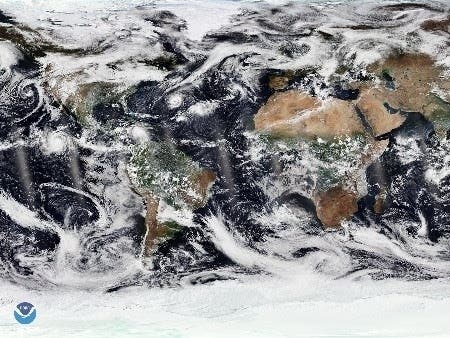
FLORIDA — A new by the National Oceanic and Atmospheric Administration study published Wednesday in the journal, Science Advances, reveals the surprising result that reducing air pollution in Europe and North America has contributed to an increase in hurricanes.
NOAA researchers examined data from four decades of tropical cyclones and discovered that North America and Europe's efforts to reduce particulate air pollution resulted in more tropical cyclones in the North Atlantic basin but decreased the number of these storms in the Southern Hemisphere.
The study also found that the growth of particulate pollution in Asia has contributed to fewer tropical cyclones in the western North Pacific basin.
Find out what's happening in Tampafor free with the latest updates from Patch.
“Air pollution is a big environmental risk to human health and we have made great strides in reducing health risks by reducing particulate air pollution,” said Hiroyuki Murakami, a physical scientist at NOAA’s Geophysical Fluid Dynamics Laboratory and author of the study. “But reducing air pollution does not always decrease the risk of hazards from tropical cyclones.”
While a number of recent studies have examined how increasing greenhouse gas emissions are impacting global tropical cyclone activity, Murakami tackled the less-studied and highly complex topic of how particulate pollution in combination with climate changes is affecting tropical cyclones in different areas of the planet.
Find out what's happening in Tampafor free with the latest updates from Patch.
Murakami reached these conclusions using the state-of-the-art climate model developed at NOAA's lab.
Why Would Less Pollution Increase Tropical Storms In The Atlantic?
Over the last 40 years, Europe and North America have been leaders in reducing particulate air pollution from industry, autos, energy and other sources. The increasing absence of human-caused air pollution in the Northern Hemisphere, estimated to be a 50 percent drop in concentration from 1980 to 2020, has led to surface warming over the tropical Atlantic Ocean, which contributes to more frequent tropical cyclones.
Without significant amounts of particulate pollution to reflect sunlight, the ocean absorbs more heat and warms faster. A warming Atlantic Ocean has been a key ingredient to a 33 percent increase in the number of tropical cyclones during this 40-year period, Murakami said.
The decrease in pollution has also led to a warming of the mid and high latitudes in the Northern Hemisphere. This warming of land and ocean is causing the steady poleward movement of the jet stream from the tropics toward the Arctic.
The shift of the jet stream has led to weakening westerly winds in the upper troposphere in the tropical Atlantic basin, an area of the atmosphere about 10 to 12 miles from the surface of the Earth.
Weaker winds, in turn, mean that there is less difference between the speed of winds in the lower and upper troposphere or less wind shear. With little wind shear, tropical cyclones are able to develop and grow in strength over the Atlantic Ocean.
How Pollution In Asia Reduces Tropical Storms In Western North Pacific
The Earth system processes at work in the western North Pacific – an area where strong tropical cyclones are called typhoons - are the flip side of what’s happening in the Atlantic basin.
The key ingredient for the decrease of tropical cyclones in the western North Pacific is also air pollution, according to the new research. In this case, a 40 percent increase in the concentration of particulate air pollution has been one of several factors that has contributed to a 14 percent decrease in tropical cyclones, Murakami said. Other factors include natural variability and increased greenhouse gases.
Over the western North Pacific Ocean, increasing air pollution from the rapidly developing economies of China and India have reduced the strength of the Indian monsoon winds in the summer.
The increased pollution is cooling the land in East Asia, thus reducing the difference between the temperature of the land and the ocean. Without this contrast in temperature, monsoon winds become weaker.
In general, tropical cyclones in Asia are born in the summer in what is called the monsoon trough, which is where westerly Indian monsoon winds converge with trade winds in the western Pacific Ocean. With weaker monsoon winds there are fewer tropical cyclones.
Less Pollution In Northern Hemisphere Results In Fewer Hurricanes In Southern Hemisphere
The warming trend in the mid and high latitudes of the Northern Hemisphere has been changing large-scale global circulation patterns, said Murakami. These changes have led to increased upward air flow in the Northern Hemisphere. This is causing a downward air flow in the Southern Hemisphere. This downward air flow comes with high pressure, which inhibits the formation of tropical cyclones.
What Is The Implication Of The New Research?
“This study indicates that decreasing air pollution leads to an increased risk of tropical cyclones, which is happening in the North Atlantic, and could also happen, if air pollution is rapidly reduced, in Asia,” said Murakami.
“The ironic result suggests the necessity of careful policy decision-making in the future that considers the pros and cons of the multiple impacts," he said.
Murakami added that the projection for the next decades is that human-caused particulate air pollution will remain stable in the North Atlantic and that increased greenhouse gases will become a more significant influence on tropical cyclones. The projection is for fewer numbers of tropical cyclones, but those that occur are likely to be more intense.
For more information and an animation see the NOAA Geophysical Fluid Dynamics Laboratory Highlight.
Go online to read the research in "Science Advances," “Substantial global influence of anthropogenic aerosols on tropical cyclones over the past 40 years.”
Get more local news delivered straight to your inbox. Sign up for free Patch newsletters and alerts.