Crime & Safety
Remains Of Second Missing USF Student Identified: Hillsborough Sheriff
The remains of a second missing USF doctoral student, Nahida Bristy, were identified using DNA, the Hillsborough County sheriff said.


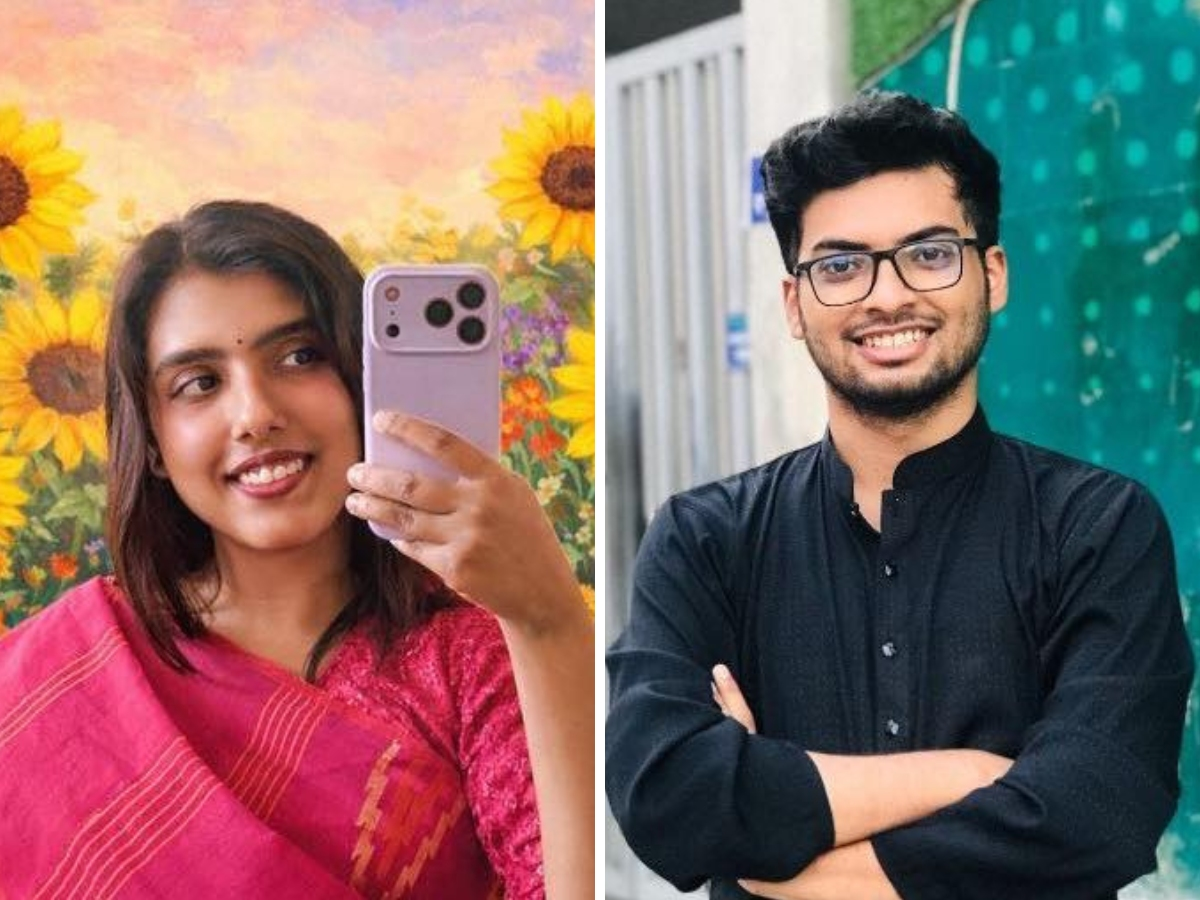
TAMPA, FL — The human remains recovered from Pinellas County waters on Sunday were confirmed to belong to a missing University of South Florida doctoral student, Hillsborough County Sheriff Chad Chronister said during a Friday morning news conference. (Watch the full news conference below.)
The body of 27-year-old Nahida Bristy, one of two students who went missing last month, was found off Interstate 275 and 4th Street in Pinellas County by two kayakers.
Her remains were identified by DNA, dental work and clothing worn in a video from the last time she was seen alive, reports said.
Find out what's happening in Tampafor free with the latest updates from Patch.
Her remains were found not far from where the body of a second missing USF student, Zamil Limon, also 27, was recovered the morning of April 24.
His body was found in a black garbage bag on the shoulder of the Howard Frankland Bridge, investigators said.
Find out what's happening in Tampafor free with the latest updates from Patch.
Limon’s roommate, Hisham Abugharbieh, 26, faces multiple charges, including two counts of first-degree murder, in the deaths of the students, both from Bangladesh.
“The details of this investigation are gruesome and the actions of the suspect are nothing short of pure evil,” Chronister said.
The students, good friends who were considering marriage, according to family, went missing in April after friends were unable to contact them. They were last seen alive on April 16.
“They were accountable and responsible,” so when they didn’t show up for appointments or respond to loved ones, “friends immediately knew something was very wrong,” the sheriff said.
Bristy, who was studying chemical engineering, was last seen on USF’s Tampa campus at the NES building. She was reported missing to USF police on April 17.
Limon, who was pursuing a doctoral degree in geography, environmental science and policy, was last seen at Avalon Heights, the off-campus complex where he shared an apartment with Abugharbieh and another roommate. He was reported missing to the Hillsborough County Sheriff’s Office on April 18.
The sheriff’s office and USF police began working on the case together, starting at Limon’s apartment.
Detectives immediately noticed that Abugharbieh “continues to be elusive, the stories are inconsistent, almost to the point where he will talk about anything — loves to talk about himself — and this continues and carries throughout the entire investigation, except when we want to talk about either of our two victims,” Chronister said. “Then, he immediately starts becoming elusive and deceptive.”
The other roommate, who wasn’t involved in the deaths, cooperated with investigators, telling them that some details at the apartment seemed off, such as the doormat, as well as pots and pans were missing, the sheriff said.
After learning that the trash compactor at the apartment complex hadn’t been emptied in several days, they emptied its entire contents, finding Limon’s glasses, student ID, wallet and “extremely bloodied” clothing, Chronister said.
Investigators obtained a warrant for the apartment, as well as the roommates’ electronic devices and cars.
Using Bluestar Forensic technology, they found a large pool of blood in the kitchen that continued down the hall into Abugharbieh’s bedroom.
“We can see the outline of a human being on the floor next to the suspect’s bed, where it is curled up in a fetal position,” Chronister said.
A large amount of blood, later found to belong to Bristy, was found on the passenger side floorboard of his car.
Detectives also learned that Abugharbieh had wiped his devices clean of search histories and GPS data. A deeper forensic investigation unveiled various searches he made in the days before the students’ deaths.
“Can a knife penetrate a skull? Can a neighbor hear a gunshot? Can you bury a body in a trash bag and throw it in a dumpster?” were among the questions he looked up, Chronister said.
He also ordered items, including heavy duty black contractor bags, lighter fluid and a lighter, duct tape, and Lysol wipes through DoorDash.
The sheriff described these actions by Abugharbieh as “calculated.”
“This is what makes it so premeditated,” he said.
The suspect also had a laceration to his pinky and a deep laceration to his left tricep that should have received medical attention — both likely defensive wounds — that he wouldn’t explain, the sheriff said.
A forensic look at his car’s GPS found that Abugharbieh had driven to Sand Key in Clearwater and then to the Howard Frankland Bridge, where he stopped for a short period of time.
He wasn’t arrested at this point, but was named a person of interest and under 24/7 surveillance, as investigators began searching for the bodies in these areas.
While searching in the area of the bridge on April 24, investigators found a large black trash back on the shoulder that was emitting the “unique smell of human remains when in decomposition phase,” Chronister said.
Though the body was in early stages of decomposition, detectives were able to identify Limon’s remains through his fingerprints, which matched those taken by the Department of Homeland Security when he entered the country.
He was stabbed several times, which was his cause of death, before being placed in the bag and “literally left on the side of the highway like a piece of trash,” the sheriff said.
Limon’s hands and ankles were bound and “his legs up to his buttock area were almost completely severed and bent together,” making it easier to fit in the trash bag, Chronister added.
As the body was recovered, Abugharbieh’s family contacted investigators the night before because he had “battered and committed domestic violence against them” at their Tampa-area home, the sheriff said.
Abugharbieh came out of the shower with only a towel wrapped around him “and begins, almost in, like, a humping fashion, trying to grind on his sister, and at one point tries to kiss his sister,” Chronister said.
He overpowered her and she wasn’t able “to freely leave or push away,” the sheriff added. “And he batters the family at the same time.”
By the morning of April 24, the HCSO SWAT went to the home after learning Abugharbieh had ordered a firearm at a pawn shop, only learning later that he hadn’t picked it up yet.
He barricaded himself inside the home, and after a brief standoff with deputies, he came out, surrendered to deputies and was taken into custody around 10:30 a.m.
The search continued for Bristy’s body, which was found two days after the suspect was arrested.
Two kayakers in waters of I-275 in Pinellas County came across her remains when one of their fishing lines snagged the bag that her body was stuffed into, Chronister said.
Because her body was in advanced stages of decomposition, they couldn’t use her fingerprints to identify her remains, instead relying on DNA.
“We are now actively working to release both bodies for religious reasons back to the families, who live in Bangladesh," the sheriff said.
Watch the full news release:
Get more local news delivered straight to your inbox. Sign up for free Patch newsletters and alerts.