Kids & Family
Samantha's Vision Exercises Hit Halfway Mark
Vision problems commonly are misdiagnosed as Attention Deficit Disorder, as was the case with 10-year-old Samantha
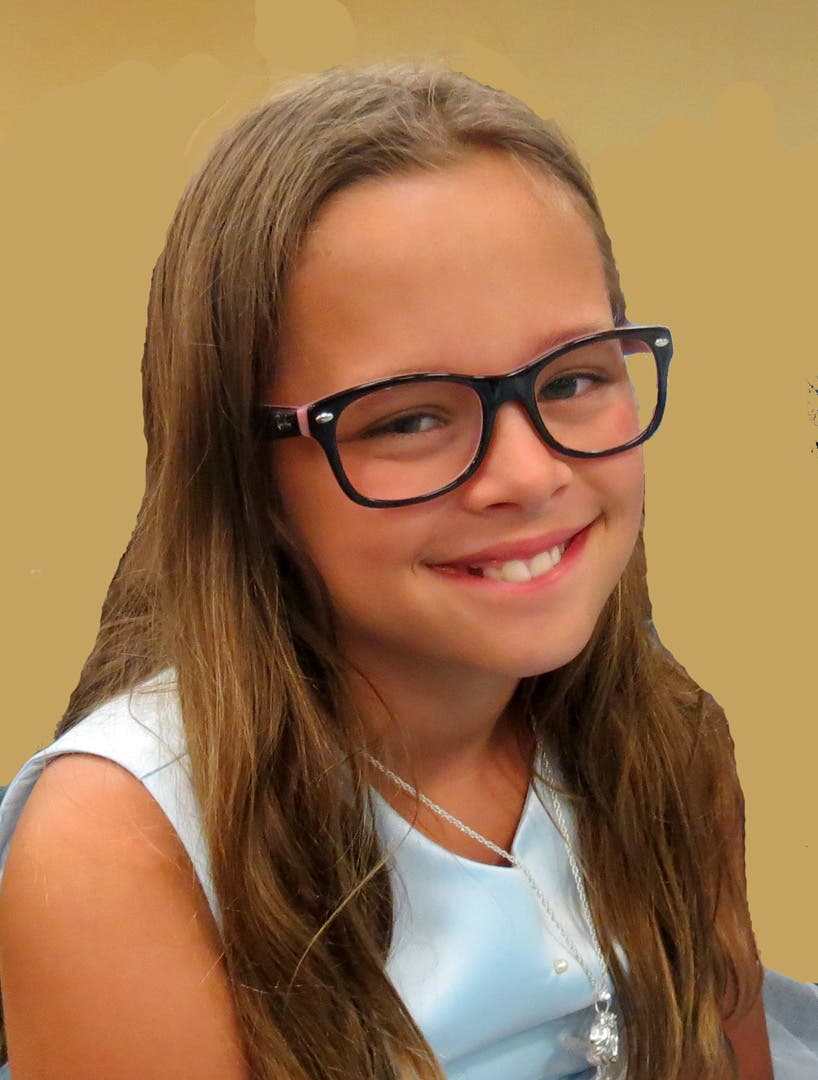
For starters, I always knew something was wrong with me. To start, we found out my eyes were the thing that was wrong...so my doctor sent me to an eye therapist for my eyes.* I was kind of scared. I got to know the people there, so now I am not scared. I am glad that when we are done with therapy that I will not have this problem anymore. In conclusion, I knew something was wrong with me, so now we are fixing it. *For example, some of the things I do is dotting o's. In dotting o's, I put a eye patch on and put a marker behind my ear and dot in (the center of) the o's. Another thing I do is I have a patch on, I have a stick, someone holds a straw and I put the stick in the straw. An essay 10-year-old Samantha wrote in her 4th grade class On the advice of her pediatrician, Samantha had her first vision test in February of this year, Dr. Chi at the Visual Health & Learning Center, told her and her mother Sarah that symptoms of vision problems and Attention Deficit Disorder overlap. Children with convergence insufficiency (where the eyes don't work together) often are misdiagnosed, but that he felt the problem could be resolved with intense 24-week sessions of vision therapy. He said convergence insufficiency was Sami's diagnosis. Now Sami is at the halfway mark in her therapy after going to the Learning Center once a week and practicing her vision exercises at home five times a week. She had her vision tested again at the end of May. The tests showed that Sami's stereopsis (3D vision), or depth perception now is adequate. And, although she is progressing on her convergence skills (her eyes working together) and her accommodation (focusing), she still needs work in those areas. Sami's ability to read rows of numbers vertically and then horizontally has gotten "a lot better time wise" according to her therapist Olivia. And Sami now has 80 percent comprehension when she is tested on how many words she can read per minute. However, Olivia recommended cutting Sami's home exercises from four to three per day, because Sami has developed chronic stomach aches. She says she feels as though she is going to throw up, but doesn't. The pediatrician told Sarah that the stomach problems could be caused by stress. Sami is pushing herself too hard when she does her vision exercises. Sami also now is wearing glasses when she reads. They make the print bigger. Dr. Chi thinks that, once the convergence problem is corrected, she won't need glasses at all. And as for Sami's essay, her teacher wrote on the margin: "Super job! Proud of you. Something to think about: sometimes our weaknesses turn out to be our biggest blessings. Now that we understand the problem you have, we can help other students, so you actually are a blessing for many other boys and girls and for us teachers because you taught us something." Note: This is the fifth article in a series about vision problems being mistaken for dyslexia, ADD or ADHD is extremely common. It's estimated that as many as one in four children can see 20/20, but they actually have functional vision problems.