Business & Tech
Historic Floridan Palace To Join Tampa's NoDo District As It Undergoes Revilalization
Located in the heart of the rising NoDo Tampa area, the once-dilapidated Floridan Palace is making a comeback. Take a look inside.


TAMPA, FL — The historic Floridian Palace Hotel in downtown Tampa will become part of the revival of the emerging restaurant and entertainment district known as the "NoDo District" of north downtown Tampa with the help of new owners who have unveiled ambitious plans for the 1926 hotel.
1754 Properties LLC, which owns the Tradewinds Resort on St. Pete Beach, paid $22.5 million for the 212-room hotel at 905 N. Florida Ave. in partnership with Triangle Capital Group. The sale was completed Oct. 7 and includes the 3/4-acre parking lot site at 505 E. Taylor St.
The hotel is located in the heart of the NoDo District, which has become an epicenter of culture and nightlife in downtown Tampa with a growing collection of popular bars, clubs, upscale restaurants, and attractions, including the Straz Performing Arts Center.
Find out what's happening in Tampafor free with the latest updates from Patch.
“We’ve had our eyes on the rapidly transforming NoDo market and are very excited to acquire one of Tampa’s most storied treasures, the Floridan Palace,” said Alex Galewicz, one of the principals of 1754 Properties.
According to Joe Kelley, head of management for 1754, the company will hire dozens of new employees to bolster the existing team in preparation for restaffing the hotel for full operations.
Find out what's happening in Tampafor free with the latest updates from Patch.
“With additional employees in place, we look forward to opening the restaurant and wedding and group venues at the Floridan by the end of the year. We plan to significantly upgrade the restaurant experience to complement NoDo’s dining scene and deliver the great experience guests and residents have come to expect,” said Kelley.
“We are incredibly excited about the location and management team here, as well as the opportunity to continue to grow our footprint throughout Florida. The transformation of this property will fill an underserved gap in the market and benefit the entire neighborhood,” said Michael Dornbusch, vice president of Triangle Capital Group.
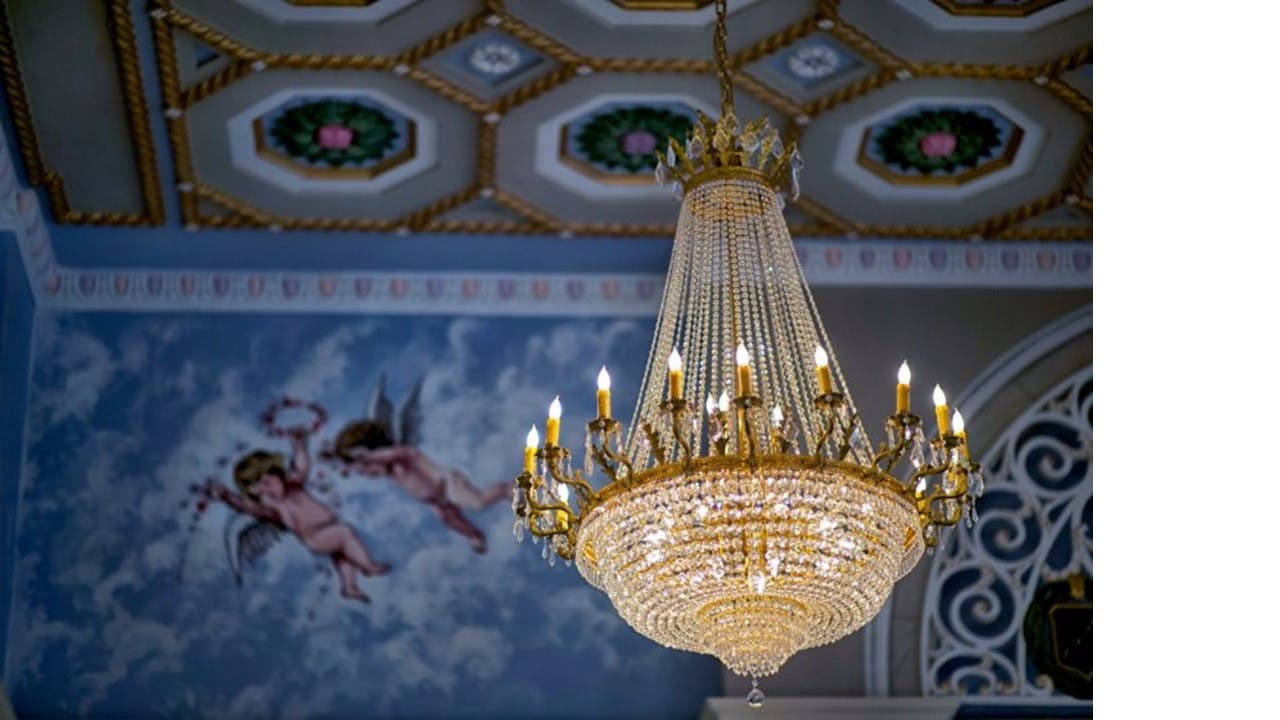
Among the hotel's notable features is the famous Sapphire Lounge and the Lobby Lounge with its elaborate handcrafted lobby bar, the elegant Crystal Dining Room adorned with crystal chandeliers, a detailed decorated ceiling and hand-painted cherubs, and the Grand Luxe Penthouse Suites with custom gold-trimmed furniture in the Beaux arts style, marble bathrooms, a writing desk and upscale amenities.
“We look forward to upgrading this property through a significant new renovation, bringing it to a level deserving of such a grand hotel,” said Joseph Smith, founding partner of 1754 Properties LLC. “We take such historical assets seriously and will be good stewards of the hotel’s intriguing past and its wonderful 1920s façade.”
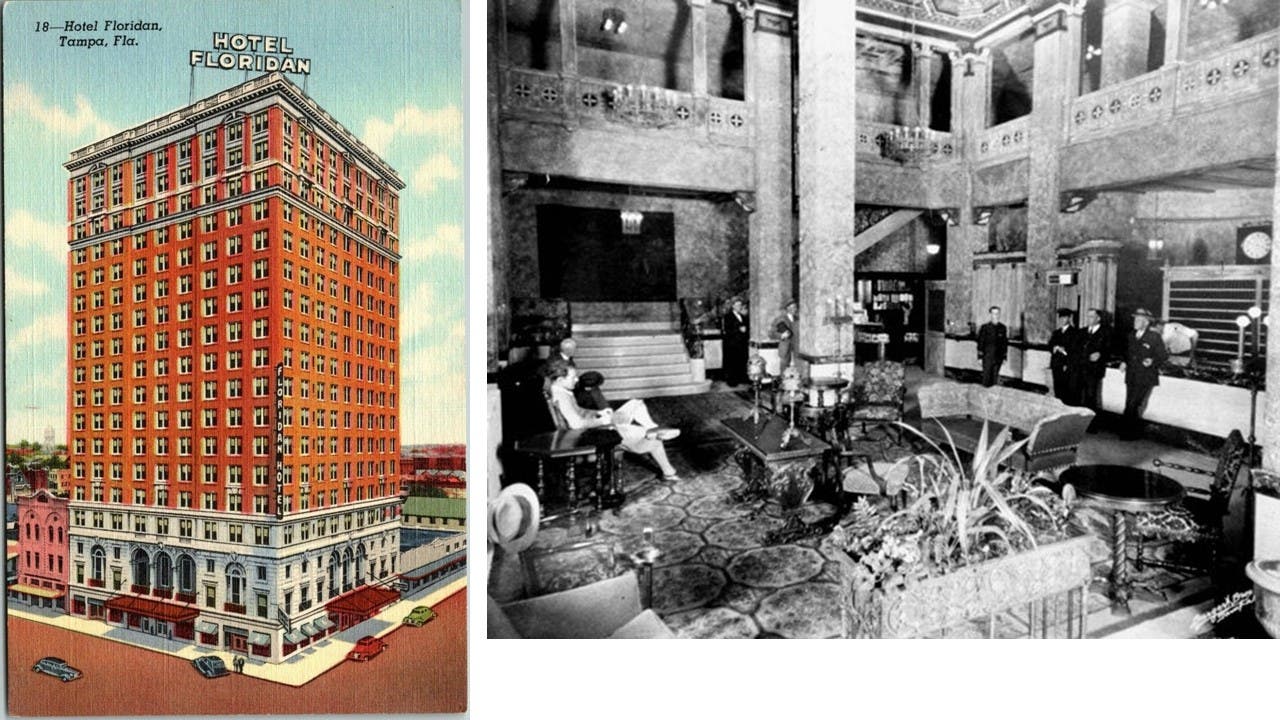
Built in flamboyant style that marked the Roaring '20s, the 19-story Tampa landmark, formerly known as the Floridan Hotel, or to locals, simply the “Floridan,” symbolizes Tampa’s growth as the epicenter of business on the West Coast of Florida.
At approximately 240 feet tall, the hotel was Florida’s first skyscraper and remained the state’s tallest building until 1966 when the Franklin Exchange building was constructed. It is the only historic skyscraper remaining in Tampa of the six constructed downtown between 1910 and 1930.
A Storied Past
In the summer of 1925, Tampa was bustling with land speculators and would-be orange juice barons.
Among those who saw the area's potential was Allen J. Simms of New Brunswick, Canada, who moved to Florida in 1906 and worked as a stenographer for the Tampa Bay Land Company. He then sold lots in Palma Ceia Park, Keystone Park and Suburb Beautiful.
In 1908, he began his own venture, Simms Realty Co., but joined the Royal Canadian Dragoons in 1917 during World War I. In 1919, Simms returned to Tampa where he launched his development career by creating the sophisticated neighborhoods of New Suburb Beautiful and Parkland Estates, and constructing apartment and office buildings.
It occurred to Simms that a hotel catering to business travelers would thrive, so he and a group of local investors established the Tampa Commercial Hotel Company Inc., for which Simms worked as general manager and secretary.
The company bought the site where the Floridan sits today. It hired Francis Joseph Kennard, a Tampa architect, to design the hotel and contractor G.A. Miller Construction Co. built it.
Costing $1.9 million, a fortune in 1920s dollars, the hotel officially opened in 1927.
The heyday of the Floridan extended from its opening in the late 1920s into the 1960s.
During the 1940s, the hotel enjoyed particular prominence as a gathering spot for local business leaders and the military.
Maj. Gen. Clarence L. Tinker, the highest ranking officer of Native American ancestry and the first general lost in action during World War II, was having a drink at the Floridan’s Sapphire Room bar when he received word of the attack on Pearl Harbor.
Another Tampa hotel built within the same era, the Tampa Terrace, which no longer exists, was located nearby and was considered a better quality hotel, but the Floridan’s “Sapphire Room” was favored for entertainment. It was called the “sure-fire room” because GIs would always have a good time there.
At 98 years old, Gus Arencibia, the Floridan’s former bartender, recalled that, during the war, “you couldn’t get a room.”
Both Gus and former hotel worker Mary Jim remembered numerous movie stars and public figures who stayed at the hotel over the years including James Stewart, Charlton Heston, Gary Cooper, Constance Bennett, Esther Williams, Sherman Hayes and Elvis Presley.
The hotel is also rumored to be the place where Tampa mob boss Santo Trafficante Jr. hatched his plot to assassinate President John F. Kennedy when the president visited Tampa.
As retribution for the president's brother, U.S. Attorney General Bobby Kennedy, getting tough on organized crime, the mafia originally planned to assassinate the president when President Kennedy's motorcade made a left turn in front of a corner guest room at the Floridan when he visited Tampa on Monday, Nov. 18, 1963.
For reasons still a mystery, that plan never materialized. However, four days later, Lee Harvey Oswald assassinated President Kennedy as his motorcade passed by Dealey Plaza in Dallas, Texas.
Clarence Darrow, the attorney famous for defending John T. Scopes in the 1925 Tennessee “Scopes Monkey Trial” for teaching evolutionary theory also stayed at the hotel. He was in Tampa to participate in a biblical debate with local religious leaders.
The hotel also served as a home base for the Cincinnati Reds baseball players during spring training.
Hotel Goes From Royal To Ratty
After the 1960s, the hotel declined as Tampa’s downtown core experienced the flight of residents to the suburbs and visitors flocked to modern hotels.
By 1989, the hotel had gone from rooming house to homeless shelter and was ultimately closed by Tampa’s fire marshal due to safety concerns. Several companies attempted to reopen it including a Japanese company, Akio Ogawa and Sity International Inc., which poured money into the hotel's restoration and led the effort to have it added to the National Register of Historic Places.
But none of the owners were able to make the hotel profitable.
In March 2005, The Hunter Group conducted a study and reported to the Tampa Downtown Partnership that the Floridan Hotel, as a dilapidated structure was a looming symbol of urban blight within the northern portion of Tampa’s downtown. The Hunter Group said its revitalization was critical to the economic development of downtown.
At that time, the hotel was under demolition order due to its poor condition. City estimates topped $18 million for the hotel’s renovation, and nobody seemed interested in investing the money.
Then in April 2005, the hotel caught the eye of international hotelier, restaurteur and developer Antonios Markopoulos. He bought the hotel for $6 million in 2005 and for the next seven years worked on restoring the hotel.
Teams of craftsmen spent thousands of hours restoring the painted ceilings, intricate woodwork and plaster decorative finishes, much of it crafted on-site.
On July 30, 2012, the hotel, which Markopoulos renamed the Floridan Palace, opened to the public just in time to host guests attending Tampa’s first Republican National Convention in August 2012.
The hotel had 400 small rooms during the 1940s. The rooms were expanded during the renovations into 213 larger rooms including 15 suites and three penthouse suites.
The famous Crystal Dining Room was expanded across the west side of the lobby, connecting to the lobby bar, which was originally a ladies' lounge.
The Sapphire Lounge on the first floor was restored from top to bottom and a former post office adjacent to the hotel was acquired to serve as a ballroom with plans to add a pool and spa in the future.
For more information on the Floridan Palace Hotel, visit FloridanPalace.com or call 813-225-1700.
Interested jobseekers should contact Glenn Willocks of 1754 Properties at gwillocks@1754properties.com.
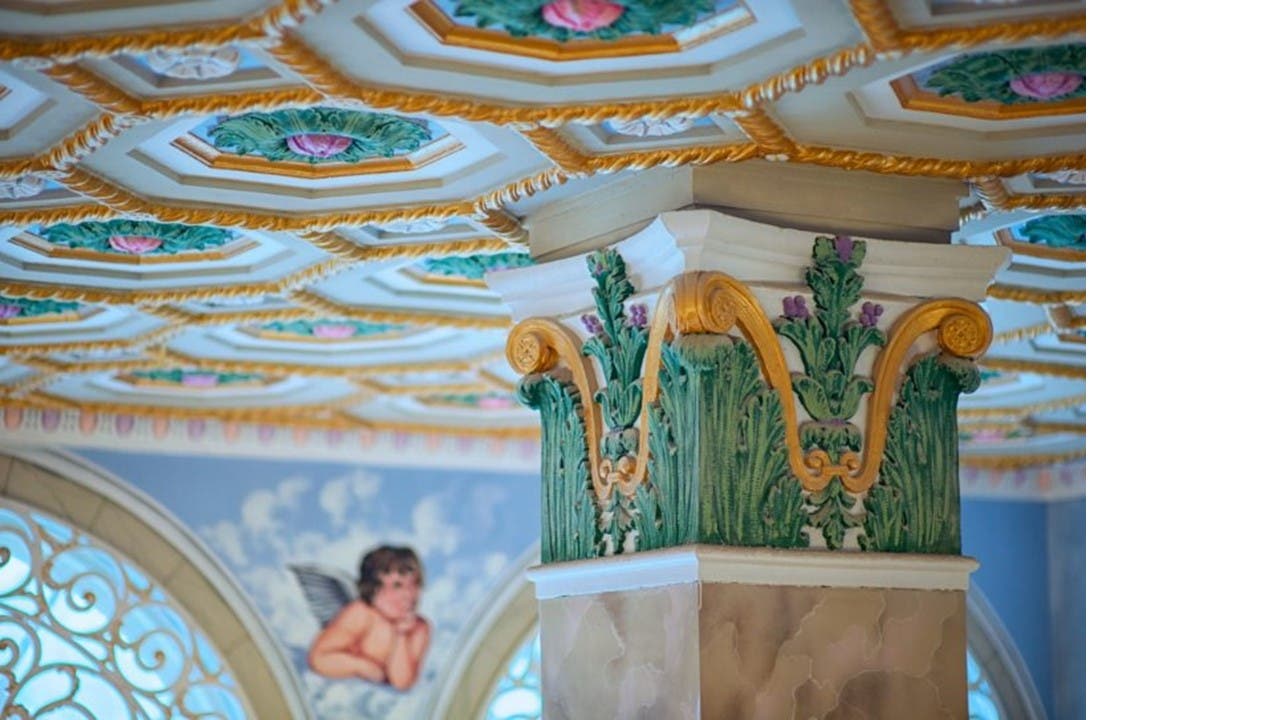
Craftsmen restores much of the intricate plaster details on-site during the renovation.


All the original woodwork was restored in the lobby lounge.

All of the hotel's original crystal chandeliers were refurbished.
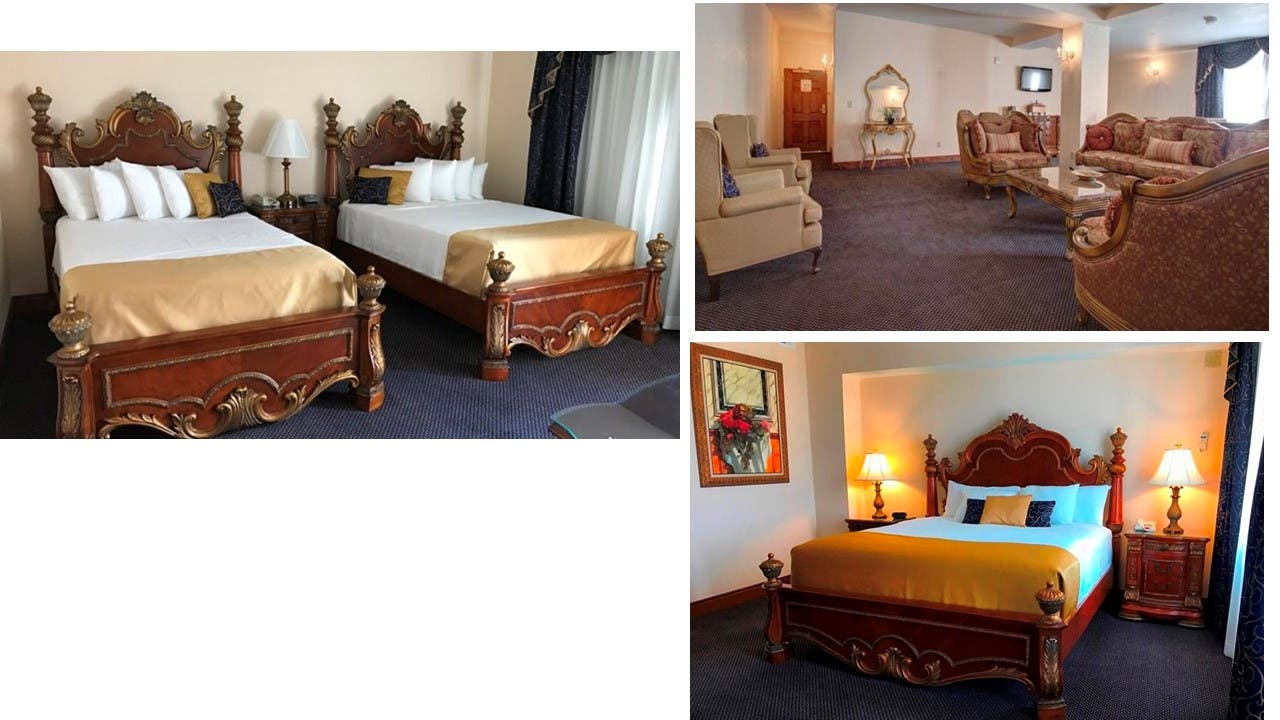
Smaller rooms were expanded to create penthouse suites.
.jpg)
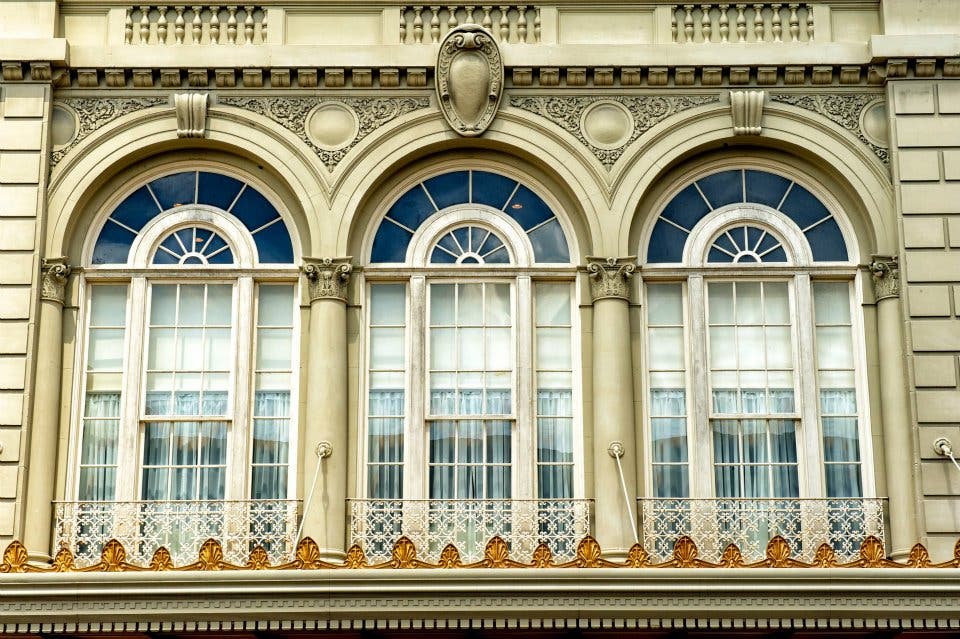
Many of the original Beaux arts details were salvaged and restored.
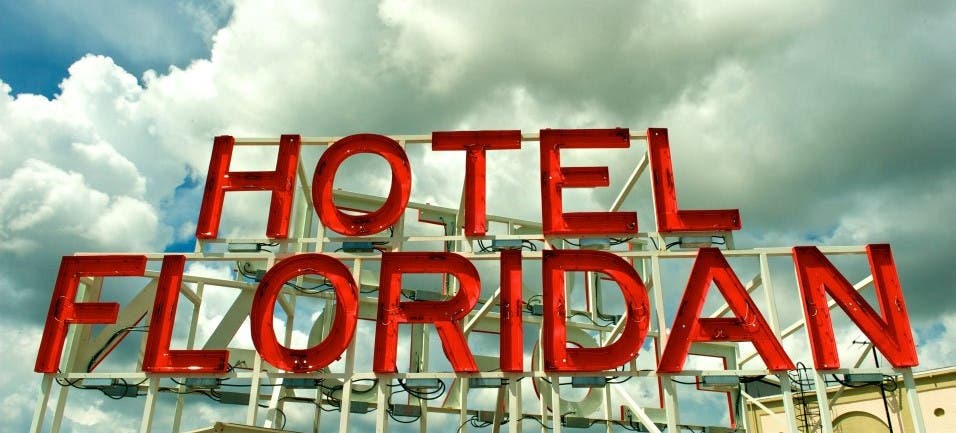
The hotel was photographed by Ali, a professional photographer and educator who has carved out a career capturing moments at the peak of major sports action and events. Ali has also spent eight years photographing endangered wild animals and the places they inhabit before these lands are destroyed due to an escalation of poaching.
Get more local news delivered straight to your inbox. Sign up for free Patch newsletters and alerts.