Weather
Temperatures For June, July Hottest Ever Recorded In Tampa: NWS
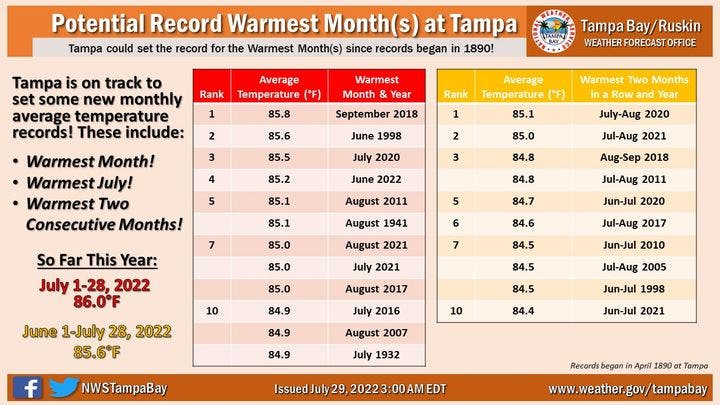
Tampa is on track to set a new monthly temperature record for the hottest July ever, according to the National Weather Service in Tampa Bay.


TAMPA, FL — How hot is it? Tampa is on track to set a new monthly temperature record for the hottest July ever, according to the National Weather Service in Tampa Bay.
Additionally, said senior meteorologist Paul Close, Tampa's official climate site at Tampa International Airport is reporting the two warmest consecutive months ever recorded.
The average temperature for the first 28 days of July is 86 degrees. The previous warmest month was September 2018 with an average temperature of 85.8 degrees.
Find out what's happening in Tampafor free with the latest updates from Patch.
The average temperature in July 2020 was 85.5 degrees.
"This may also end up being the warmest summer, which meteorologically is June, July and August, of all time," Close said.
Find out what's happening in Tampafor free with the latest updates from Patch.
He said two reasons for this is morning lows have been above average due to a lack of rain, which usually cools temperatures, and a persistent easterly flow is delaying sea breezes that act as a temperature-moderating force.
Later sea breezes mean later storms and warmer temperatures, he said.
Whether these high temperatures signal climate change, Close said the answer is "yes and no."
He said the average annual temperature for Tampa has increased by 2.5 degrees since records began in 1891. On average, urbanized areas of West Central and Southwest Florida have seen an increase of 2.5 to 3 degrees over the last century. These increases are consistent with the global rise in temperature over the last century, he said.
At the same time, Close said in a news release, seasonal weather patterns have played a role. La Nia is contributing to often warmer and drier conditions in Tampa Bay and the urbanization of the area also causes a rise in temperature.
Get more local news delivered straight to your inbox. Sign up for free Patch newsletters and alerts.