Weather
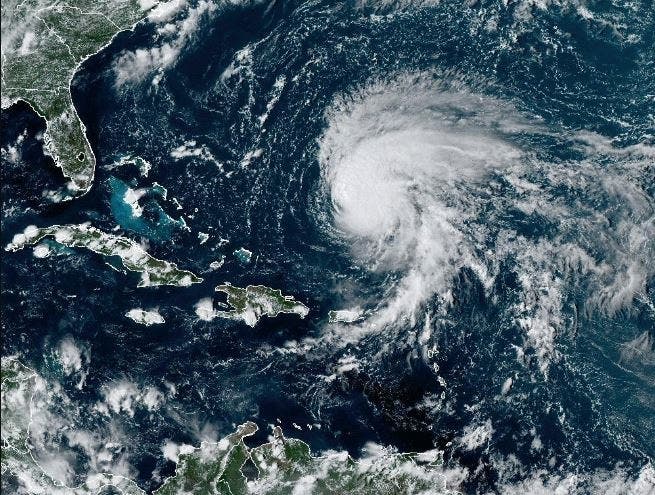
Earl Becomes Hurricane Earlier Than Forecast, Surprises Experts
Earl became a hurricane more quickly than experts expected, making it the 2nd of the season. It could reach major hurricane strength soon.


Updated at 10:05 p.m.
FLORIDA — With a speed that caught even the experts at the National Hurricane Center in Miami off guard, Tropical Storm Earl became Hurricane Earl Tuesday night with maximum sustained winds of 80 mph.
Tropical Storm Earl developed over the weekend in the Caribbean Sea. The hurricane center predicted Tuesday morning that it would take at least two days before Earl became a hurricane. However, in 12 hours, Earl proved the experts wrong.
Find out what's happening in Tampafor free with the latest updates from Patch.
The Air Force hurricane hunter aircraft said at 9 p.m. that Earl was producing hurricane-force winds extending 30 miles from the storm's center and tropical storm-force winds extending up to 125 miles.
Earl is likely to continue gaining strength and become a major category 3 hurricane during the second half of this week, forecasters say.
Find out what's happening in Tampafor free with the latest updates from Patch.
A category 3 hurricane has maximum sustained winds of 111 to 129 mph.
The hurricane is expected to pass to the south of Bermuda by Friday morning and then continue moving northeast away from the U.S. coastline.
Nevertheless, the hurricane is causing choppy waters, prompting marine warnings in the Atlantic, Caribbean Sea and Gulf of Mexico and 6-foot waves crashing into the U.S. Virgin Islands.
On Sunday, with 6-foot waves pounding the U.S. Virgin Islands, a U.S. Coast Guard Air Station Borinquen MH-60T Jayhawk helicopter crew managed a harrowing rescue of a spear fisherman in distress near the small, uninhabited Dog Island.
"Wind shear will become less of a factor in terms of impacting Earl's strength," AccuWeather Chief On-Air Meteorologist Bernie Rayno said. "It will be in a zone of lower wind shear, but it will also be moving along with the winds, rather than fighting them."
As a result, the lower and upper portions of the storm will become more aligned. Earl will not only begin to strengthen at midweek, but the system may also do so rapidly from Wednesday to Friday, according to AccuWeather.

Courtesy of AccuWeather.com
In the meantime, Tropical Storm Danielle, which developed late last week, became a hurricane over the weekend and has been stirring up the waters in the central-north Atlantic, producing large waves. But, as predicted by the hurricane center, the hurricane has continued circling about 950 miles west-northwest of the Azores off Portugal, and is expected to weaken in the next several days without impacting land.
Related stories:
- Hurricane Season 2022 Predicted To Be 'Above Normal': NOAA
- 2022 Hurricane Names List Released For Atlantic Season
Earl is the second hurricane of the 2022 hurricane season, and is expected to be the first major hurricane.
Forecasters at the National Oceanic Atmospheric Administration's Climate Prediction Center predicted an active 2022 Atlantic hurricane season, which began June 1 and continues through Nov. 30.
According to this year's forecast, the ongoing La Niña, in addition to above-average ocean temperatures, means there's a 65 percent chance the 2022 hurricane season will be above normal.
For the 2022 season, forecasters are predicting 14 to 21 named storms with winds of 39 mph or higher. Of those, anywhere from six to 10 of the storms could become hurricanes with winds of 74 mph or higher.
Get more local news delivered straight to your inbox. Sign up for free Patch newsletters and alerts.