Politics & Government
Why You Can't Buy A Home In Tampa And How The City Is Helping
The city is purchasing infill property and building affordable homes for low-income residents.


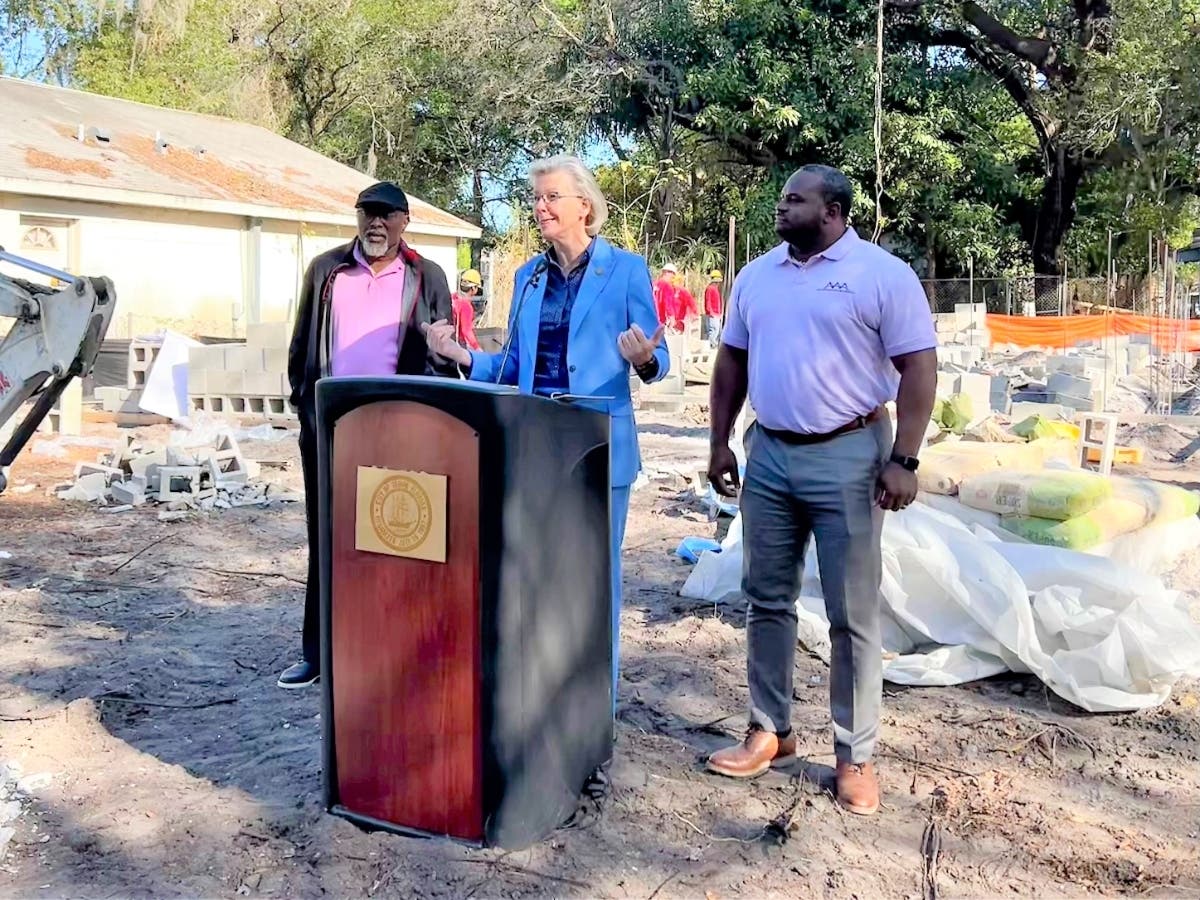

TAMPA, FL — Darak Fullwood was raised by a single mother in East Tampa. He spent his childhood living in eight different rental homes and apartments because his mother could never afford to purchase a home on her salary at the Woolworth department store in Tampa.
Now, Fullwood is helping East Tampa residents realize their dream of homeownership as part of the city of Tampa's program to make use of vacant properties to build affordable homes.
"It put a fire in me to not only find a way to build a home for my mother, but build homes for the other struggling families in East Tampa," Fullwood said. "I would like to help build East Tampa back up and become a beacon of hope for the youth of the community."
Find out what's happening in Tampafor free with the latest updates from Patch.
Tampa City Council chairman Orlando Gudes seconded those sentiments at a news conference Monday. Like Fullwood, Gudes grew up in East Tampa and was disheartened to see blight, crime and drugs take over the community.
"For me, it's very exciting to allow everyone to be part of the process, and give the little guy (home builder) an opportunity to grow," Gudes said. "We have to build more houses, but they have to be affordable, so people can afford to live in the city and have a place to call home."
Find out what's happening in Tampafor free with the latest updates from Patch.
Fullwood, who became a builder in 1999 and founded AAA Restoration and Builders LLC, is among 15 minority- and women-owned construction firms and four nonprofits selected to build 17 homes on 15 lots in East Tampa in the city's second infill housing initiative. Fullwood is building three of the homes on East Emma Street and East 32nd Avenue.
Fullwood broke ground on the homes this month and expects the homes to be completed in the late fall.
The city is contributing $1.1 million of revolving loan funds toward the infill homes at 0 percent interest toward the homes' development.
The average price of the finished homes will be $200,000 and those purchasing the homes will be residents who make less than the 50 percent of the average median income.
The first infill housing initiative launched last year to construct 14 new single-family lots on infill properties. Castor said the city is now working on a third infill initiative.
"Not only are we increasing our affordable housing inventory, but we also reworked the program to ensure the lots are awarded to local, minority-owned developers," said Castor. "Many are from this area and are committed to our mission to uplift their neighborhoods and provide deserving families with a home they can afford and feel proud of. Every single day, this administration and city council are working to increase the supply of affordable housing for Tampa residents.”
"I'm thankful that we have a mayor here in Tampa who has made affordable housing a priority and is making sure that families have a home to live in," Fullwood said. He added that he's especially grateful that the city is giving small, minority builders a chance to build these homes.
"We all know housing is a crisis across our nation," Tampa Mayor Jane Castor said. "This work being done behind me will eventually become the American dream for 17 families."
Skyrocketing Rents, Housing Shortage
While the popularity of Tampa as a place to live and work has been a boon for the city's economy, it's resulted in a shortage of affordable housing and skyrocketing rents.
With people flooding into Tampa from around the country, longtime Tampa residents are finding themselves priced out of the housing market.
Castor said the city doesn't have the authority to control rents, but it can do something about providing more affordable housing.
"We aren't going to waste valuable time going down that path (attempting to control rents)," she said. "So we're looking at every possible angle we can address to provide more affordable housing."
One of the big stumbling blocks, she said, is only 4 percent of the property in the city is currently vacant.
She said city staff is combing property records to identify infill properties and designate them for development for affordable housing.
According to the national real estate brokerage company, Redfin, Tampa homeowners are paying more for their homes than homebuyers in any other city in the state. During the past year, the maximum purchase price increased by $60,000.
"Finding a home right now, within a reasonable level of affordability, is increasingly difficult for most homebuyers, let alone for our low-income and working-class families," said Castor. "Too often, the cost of down payments and closing expenses prevents deserving families from being able to buy a home, which is why we must constantly evaluate and improve our programs. Every Tampanian, regardless of their income level, should be able to live in our great city, and our team is working diligently to maximize our resources and tackle this issue."
Redfin said both down payments for mortgages and rent increases in Tampa are now the highest in the state.
Mortgage down payments averaged 37.8 percent, the second highest in the nation behind Austin, Texas, with 44 percent. In the past, down payments averaged 20 percent of the home's total cost.
In the meantime, rent was up 31 percent from January 2021 to January 2022, according to Redfin. Currently, those renting homes in Tampa spend as much as 42 percent of their monthly income on rent.
Concern over rents that have doubled and tripled in the past year prompted Tampa residents to stage a protest outside city hall last month. They begged the council to look into "rent stabilization" measures, also known as rent control.
It's a topic the city was already exploring with little success. In October, Gudes and Councilman Charlie Miranda asked the city's legal department to study ordinances in other cities to see how other cities are stabilizing rents.
The legal department concluded that taking such measures would be risky.
This year, the Florida Legislature passed Senate Bill 620 and House Bill 569, titled the "Local Business Protection Act," allowing businesses to seek damages from local governments if they can prove a new law caused a 15 percent income loss in one year. This includes those who make their living renting properties.
Rather than pursue a route that could lead to lawsuits, the city council opted to explore other ways to help residents pay their rents.
Among the measures, the city decided to use $1 million in city Housing and Community Development Department funding to launch the Rental & Move-In Assistance Program.
Based on financial need, the funds provide residents with move-in assistance, including help with security deposits, first and last month's rent and rental subsidies for those moving into rental property or renewing a lease with a rent increase.
The program proved so popular that, on Feb. 28, the city announced the program had reached the maximum number of residents it could accept and quit taking applications. Residents were told they could be put on a waiting list.
Another measure, announced in January, was the expansion of the city's "Dare to Own the Dream" Homeownership Program, which provides forgivable down payment assistance loans to income-eligible homebuyers.
Previously, first-time homebuyers participating in the program were restricted to buying homes that cost no more than $240,000, depending on their income. When the city realized that finding homes in this price range was next to impossible, the city increased the maximum purchase price to $300,000. (Current state laws impose a maximum home value of $311,000, which the city does not have authority to exceed).
The city designated $1 million in general funds to expand the program's loan assistance, so it could reach more families, including those whose earnings fall between the 80 percent to 140 percent average median income.
For example, a family of four living on an income up to $103,320 can apply to the program and receive up to $15,000 for a down payment or closing costs.
Those at 0 to 50 percent AMI can now qualify for loans up to $40,000. Previously, the maximum loan amount was $30,000.
Last fiscal year, the city distributed more than $1.1 million to first-time homebuyers through the "Dare to Own the Dream" Homeownership Program.
Those who benefit from the program must live in the home for at least 10 years for the loan to be forgiven.
Investors Snapping Up Available Homes
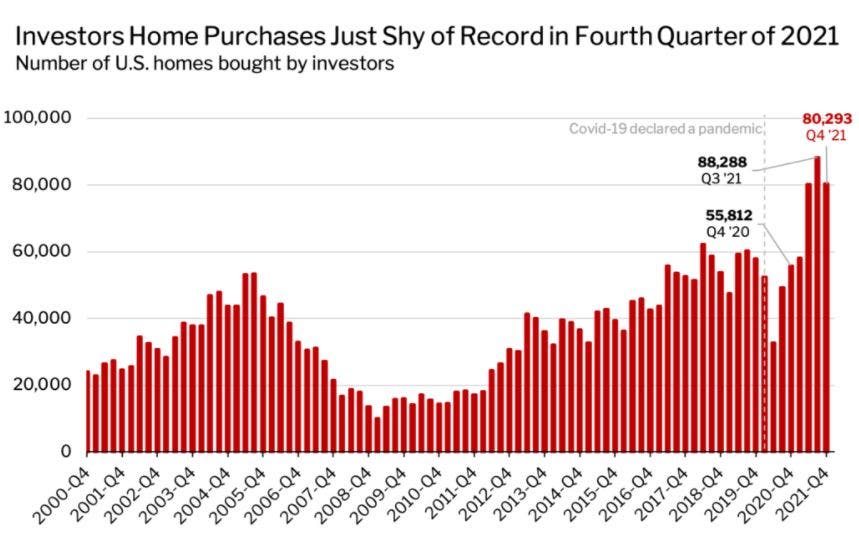
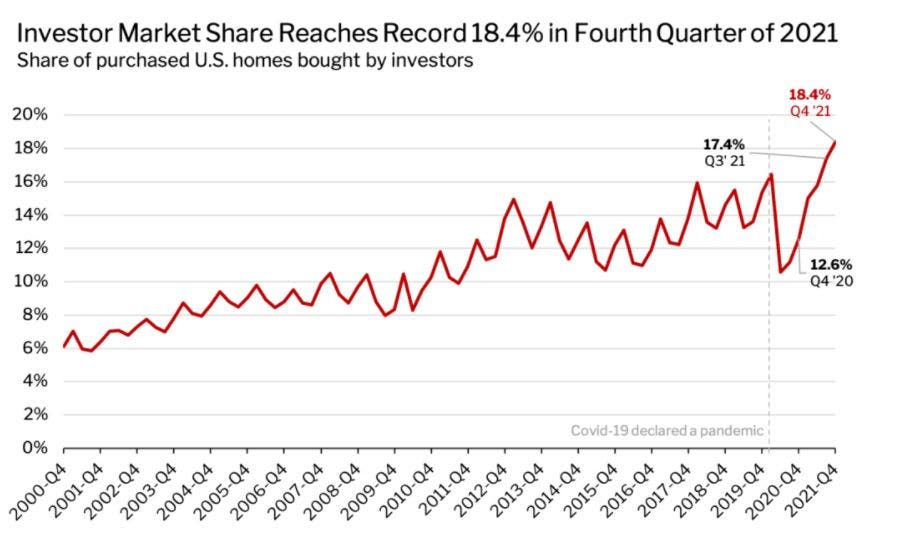
In the meantime, Tampa Realtors say the inventory of homes for sale in Tampa is dwindling not only because of the surge of new residents but because homes are being quickly bought up by investors who plan to rent them out.
According to Redfin, 25 percent (one in four) of Tampa’s available homes are purchased by investors, not families.
“While record-high home prices are problematic for individual homebuyers, they’re one reason why investor demand is stronger than ever,” said Redfin economist Sheharyar Bokhari.
“Investors are chasing rising prices because rental payments are also skyrocketing, incentivizing investors who plan to rent out the homes they buy. The supply shortage is also an advantage for landlords, as many people who can’t find a home to buy are forced to rent instead. Plus, investors who flip homes see potential to turn a big profit as home prices soar.”
Bokhari said it's created an increasing problem for homebuyers.
“Investors buying up a record share of for-sale homes is one factor making this market difficult for regular homebuyers,” Bokhari said. “It’s tough to compete with all-cash offers, and rising mortgage rates have a smaller impact on investors because they often don’t use mortgages at all."
Get more local news delivered straight to your inbox. Sign up for free Patch newsletters and alerts.