Politics & Government
Zoning Changes Proposed To Allow More Mother-In-Law Cottages In Tampa
An expansion of accessory dwelling unit zoning is being proposed to provide more affordable housing in the city of Tampa.


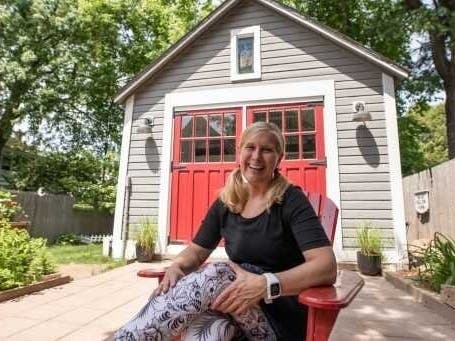
TAMPA, FL — As part of a multi-pronged approach to address Tampa's affordable housing crisis, the city of Tampa and the Tampa City Council are exploring zoning changes that would allow for more accessory dwelling units.
Commonly referred to as "mother-in-law" cottages, "granny flats," garage apartments and tiny homes, ADUs are generally more affordable than a traditional residence because of their small size.
Currently, Tampa's code only allows ADUs to be constructed in Seminole Heights and the area around Lowry Park. Everywhere else in the city, ADUs may only be created for a family member.
Find out what's happening in Tampafor free with the latest updates from Patch.
"While they may not be appropriate for every neighborhood, considering the huge demand we are seeing for rental properties, accessory dwelling units can be a great tool for increasing our affordable housing inventory," said Tampa Mayor Jane Castor. "Household demographics are changing all around us, making it critical for us to adapt and evolve in a way that meets the new demands."
The city of Tampa conducted an online survey on the topic of accessory dwelling units in the spring. About 1,000 residents responded and an overwhelming majority of participants said they were interested in learning more about the process of building an ADU on their property.
Find out what's happening in Tampafor free with the latest updates from Patch.
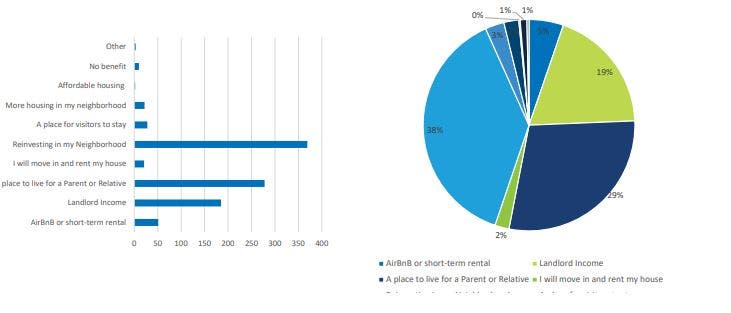
Of those who responded to the survey, 801 said they'd be interested in adding an ADU to their property while 181 people said they wouldn't be interested.
When residents were asked which of the benefit of ADUs are most important to them, the majority said answered "reinvesting in my neighborhood" and providing a "place to live for a parent or relative.
"The city needs to revamp their codes to deal with the housing crunch. It’s time," Orlando Martinez said when the city surveyed residents in the spring.
Cynthia Garcia Tamargo said there needs to be more conformity across the city when it comes to ADUs. On the one hand, she said her neighbor has been trying to close in her carport for her parents to live in but is encountering "all kinds of absurd requirements" where she lives.
Yet, a friend in another part of the city lives in an apartment created from a carport, Tamargo said. She said the property also has two recreational vehicles that are rented out.
"In the front is an old RV that was added to and is rented out, and now there is a huge RV in the front which is also rented out — four families living on a 50- by 100-foot lot," she said.
Missy Martin said, in the areas of the city where ADUs are permitted, the city has done little to regulate abuse. She's concerned that expanding ADU zones will only exacerbate the problem.
"I have a house on my block that has five apartments in it with five different families with multiple cars and work vans on a 50 by 100 lot," she said. "No one has ever forced a code or zoning change on them. The cases are investigated, then closed and passed."
.jpg)
Tampa's code only allows accessory dwelling units in the Seminole Heights and Lowry Park areas.
But Kyle Petrone fears it would lead to people adding ADUs to be used as short-term rentals.
South Gandy community activist Stephanie Poynor, however, believes that ADUs are one answer to resolving the city's affordable housing crisis.
"The county is 54,000 dwelling units short of housing," she said. "These can address some of the issues on a single lot, one house at a time."
Elaine Cowles is concerned that existing homes lack the parking to accommodate granny flats.
"The problem is the number of concrete parking pads increase or they park on the street," she said. "The rainwater has to go somewhere so all that concrete creates an issue. Street parking is fine as long as it’s not on both sides of the street. Emergency vehicles, garbage trucks and delivery trucks need to get through."
She also fears there will be some who will abuse the zoning.
My concern is, like everything, some will get permits and build well-designed ADUs while others will run extension cords to sheds. Code enforcement will not be able to enforce what is not reported," she said.
"It will be interesting to explore the requirements," Sally Finney commented when the city asked for opinions last spring. "Tampa needs this so badly."
Fabian Hernandez said his home sits on an oversized lot in Tampa, and he'd like to add an ADU to his property.
"With how deeply short on housing Tampa is, I'm disappointed I can't build a nice ADU to rent out," he said. "I've seen really nice ones in Seminole Heights that are nearly unnoticeable."
"I think they are a wonderful way to keep generations together," Karla Plastek added.
Denis Wieland agreed it would be an ideal way to allow aging parents to live on the property where their family can look out for them but still have some independence.
Click here to view the complete survey results.
City staff will present the proposed changes on the ADU code reform at the Thursday, Oct. 27 Tampa City Council workshop.
Get more local news delivered straight to your inbox. Sign up for free Patch newsletters and alerts.