Arts & Entertainment
Gay Rodeo Art Exhibit In St. Pete Bursts Cowboy Stereotypes
The James Museum of Western & Wildlife Art is the last venue for the national "Gay Rodeo" tour, and the exhibit shows tough diversity.


ST. PETERSBURG, FL — Imagine a drag queen wrangling a bull, and a cowboy couple dancing after they both competed in the rodeo. Has your stereotype of rodeos as something strictly for straight, tough womanizing men burst yet?
Gay rodeos have been around for quite a while, and were officially established in 1985 through The International Gay Rodeo Association that serves the United States and Canada.
Its visual history and narrative is captured in the "Blake Little Photographs From The Gay Rodeo" exhibit that opens on Saturday at The James Museum of Western & Wildlife Art.
Find out what's happening in St. Petefor free with the latest updates from Patch.
"The James Museum is thrilled to host this special exhibition that celebrates diversity in the American West," Emily Kapes, curator of art, told Patch. "The gay rodeo is a sport that not everybody's heard of before, and we really want to bring attention to it. And it's still going on today."
Blake Little, the photographer and a California native, stumbled upon the gay rodeo in 1988 when he and a friend attended one in Burbank, California.
Find out what's happening in St. Petefor free with the latest updates from Patch.
"We were hooked immediately by the whole scene: watching it, imagining that these guys were really doing this, and they were gay," Little said.
Little tried to attend as many rodeos as possible, and took black-and-white photographs of the gay rodeo culture. Little also started riding bulls at the rodeos, and developed friendships with his fellow cowboys.
He has outlived many of them. In the 1980s and 1990s as members in the LGBTQ community living with AIDS/HIV struggled for equality, acceptance and health care, so many of his cowboy friends were living with AIDS, too.
"Many of the guys I was (riding) with are no longer with us," Little said about one of the photos that captures a closeup of a cowboy titled, "Gordon Fiedor Close Up, Los Angeles, California, 1989."
The images offer an alternative to the pervasive narrative of illness and loss in the LGBT community in the 1980s, said Johanna Blume, the assistant curator of art at the Eiteljorg Museum of American Indians and Western Art.
"These photos tell a story of people full of vitality and spirit, participating in a demanding sport they loved," said Blume.
There are 41 black-and-white photographs in the exhibit that were taken between 1988 and 1992, and document the lives of many of its participants. It's last stop on the national tour is St. Petersburg. The St. Pete showing is from September 5 through January 31, 2021.
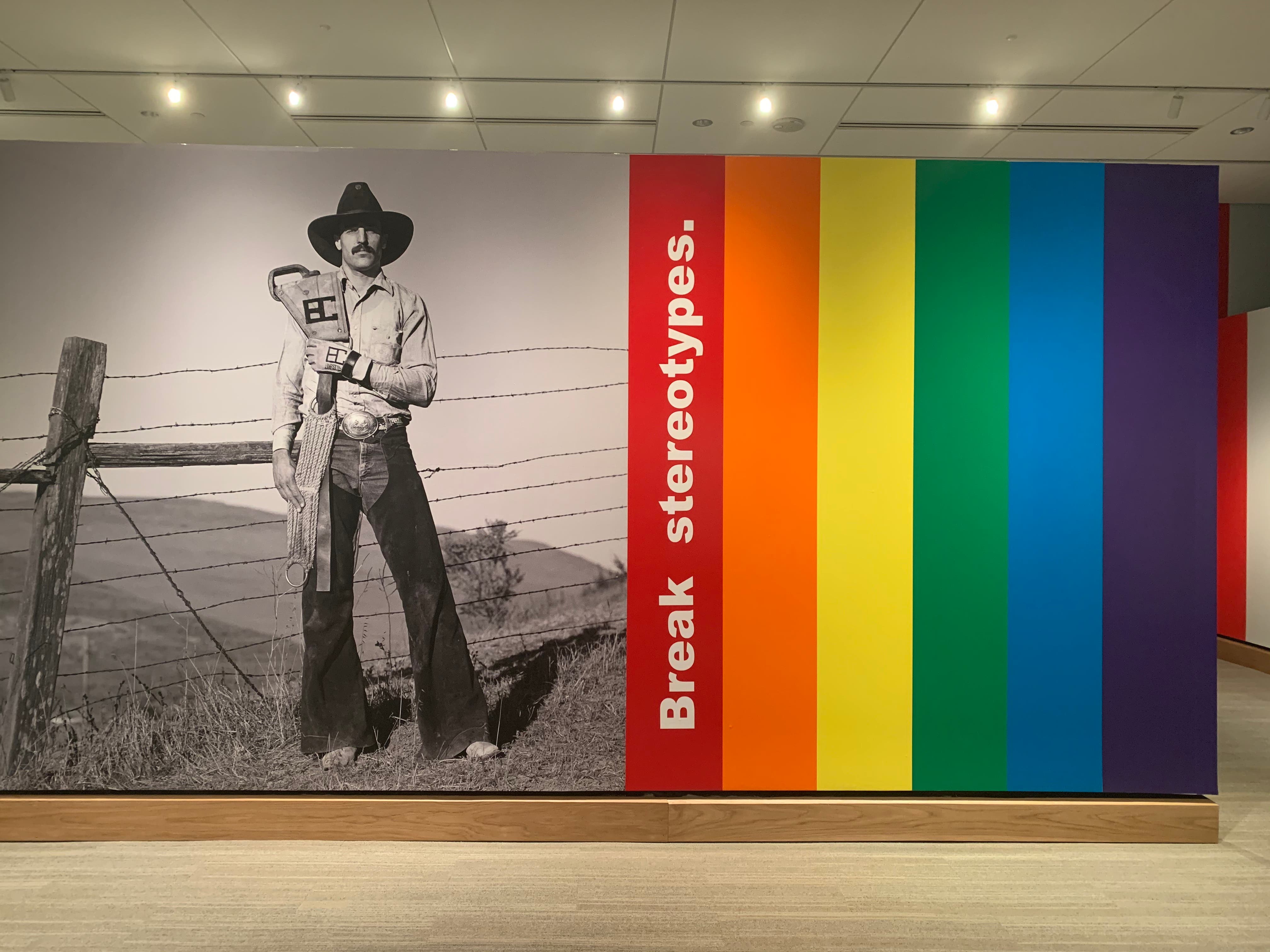
The museum encourages guests to take a selfie at the end of the tour in front of a rainbow flag painting that covers half a wall, and is displayed next to one of the cowboy images. In big letters on the rainbow painting it reads, "Break stereotypes."
The James Museum of Western & Wildlife Art is open daily from 10 a.m. to 5 p.m., with extended hours on Tuesdays from 10 a.m to 8 p.m.
For more information about the museum and photography, visit The James Museum website.
Get more local news delivered straight to your inbox. Sign up for free Patch newsletters and alerts.