Crime & Safety
Home DNA Kit Leads To Arrest In 1988 Pinellas County Cold Case
The use of DNA databases compiled by genealogy websites to solve crime cases isn't without controversy.


ST. PETERSBURG, FL — With the help of a home DNA testing kit, an arrest has been made in a rape that sparked fear throughout a St. Petersburg business district in 1988.
Around 1:50 p.m. on Sept. 24, 1988, a man in his mid-20s entered the Carrie Hawkins Distinctive Gifts shop at 5539 Park St. N. and asked for assistance from a 51-year-old woman who was working alone, police said at the time.
He then pulled out a knife and ordered the woman into a back room, where he threatened her and sexually battered her at knifepoint, police said.
Find out what's happening in St. Petefor free with the latest updates from Patch.
Pinellas County sheriff's deputies collected evidence from the crime scene, but no suspects were ever identified. In 1994, detectives reviewed the case, conducted more interviews and submitted additional evidence to the Florida Department of Law Enforcement. Based on that review, in 1996 detectives put together a DNA profile from the evidence and entered it in the FBI's national Combined DNA Index System (CODIS), which was founded in 1990.
Detectives checked out several suspects but eliminated them through DNA analysis or because they were incarcerated at the time of the rape.
Find out what's happening in St. Petefor free with the latest updates from Patch.
Although DNA analysis was used for the first time in 1983 in Great Britain, U.S. law enforcement agencies didn't routinely submit DNA evidence and compare it to the CODIS database until the 1990s.
The case had been cold for 29 years when detectives in the Cold Case Homicide Unit began a review in November 2017. Detectives were able to eliminate several suspects with additional DNA samples, but no matches were found in CODIS.
That changed with the advent of home DNA testing kits that people use to submit samples to public genealogy websites to search for ancestors.
According to ScienceNews, in 2018 GEDMatch was the first such website to allow law enforcement to use its DNA database of more than 1.3 million profiles to search for genetic information in rape and murder cases.
In February 2019, Pinellas County sheriff's detectives asked the Florida Department of Law Enforcement's Familial Search Review Committee to search the databases of genealogy websites. The committee approved the request, which was passed on to the FDLE's Genetic Genealogy Team.
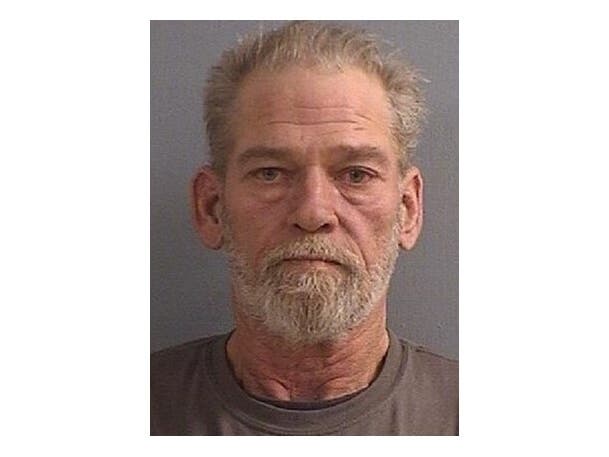
On Sept. 6, 2019, the genealogy notified the sheriff's office. It had gotten a familial hit from a genealogy website user. Using this lead, investigators identified 54-year-old Larry Eugene Gould as a suspect in the 1988 rape.
Gould was 23 years old when the crime occurred and lived in Pinellas County, police said. He had moved to Gallatin, Tennessee, in the ensuing years. Police said the victim is now 82.
Detectives contacted the Gallatin Police Department and the Sumner County District Attorney's Office in Tennessee for assistance. On Nov. 15, Gallatin police obtained a search warrant to collect a DNA swab directly from Gould. The sample was sent to the FDLE for testing.
On Jan. 7, Pinellas County sheriff's detectives were notified that the DNA sample collected from Gould matched the previously unidentified DNA profile collected from the victim in 1988, police said.
Gould was taken into custody by Gallatin police on Friday and was interviewed by Pinellas County sheriff's detectives.
According to the detectives, Gould did not dispute the DNA evidence but denied raping anyone. He did say he would have consensual sexual relations with people in their open businesses within minutes of meeting them, detectives said.
Gould was charged with one count of armed sexual battery and booked into the Sumner County Jail, where he awaits extradition to Pinellas County.
Use Of Ancestry DNA Databases By Law Enforcement
This is the second time the Pinellas County Sheriff's Office has made an arrest with the help of a home DNA testing kit.
See related story: Home DNA Testing Kit Leads To Arrest Of Man in 1998 Rape Case
In one of the most publicized cases in the nation, police tracked down a suspect in the Golden State Killer spree in April 2018 by uploading crime scene DNA to GEDmatch. Joseph James DeAngelo is accused of committing more than 50 rapes and at least 13 murders in California from 1974 to 1986.
However, the use of DNA databases compiled by genealogy websites isn't without controversy.
Although people submit their DNA samples to genealogy websites knowing their DNA will be included in a database, some people claim that use of that information in crime investigations is an invasion of their privacy. They argue that their DNA was submitted strictly as a way of finding matches in their family trees and that they never agreed to allow law enforcement to search for criminal matches.
In May, the controversy led GEDmatch to reconsider its decision to open up its DNA database to law enforcement agencies. The website decided to restrict law enforcement searches to participants who had given consent, cutting the number of available DNA profiles from 1.3 million to 185,000.
To ease concerns about privacy and civil liberties, the Department of Justice issued an interim policy Nov. 1 that said “forensic genetic genealogy” should generally be used only for violent crimes such as murder and rape, as well as to identify human remains. According to the policy, law enforcement should first exhaust traditional crime-solving methods, including searching its own criminal DNA databases.
Eventually, the issue landed before the 9th Judicial Circuit Court of Florida in Orange and Osceola counties, which ruled in November that GEDmatch must allow law enforcement to search its complete database for matches in rape and murder cases.
The landmark case opened up the possibility that other genealogy websites — such as Ancestry.com, which has a DNA database of 15 million people, and 23andMe, which has 10 million customers in its DNA database — could be forced to open their databases to law enforcement. Currently, their databases are closed to everyone except customers who submit saliva samples for DNA analysis.
Get more local news delivered straight to your inbox. Sign up for free Patch newsletters and alerts.