Politics & Government
Local Symbol of Segregation Now a Landmark
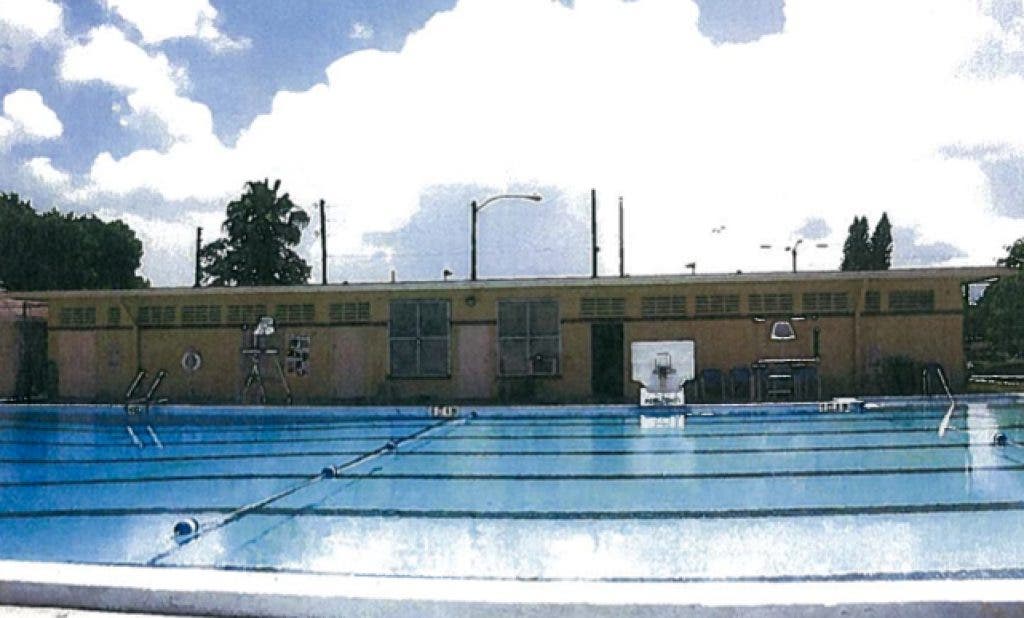
The Jennie Hall Pool, built in 1954, was the city's only African American pool in segregated St. Petersburg. The City Council voted unanimously on Thursday to designate the pool as a local historic landmark.




St. Petersburg resident Kevin Johnson remembers what it was like to grow up during segregation. Living in Cincinnati he recalled when his mother picked up a pair of shoes in a store to look at them, and then put them back on the shelf.
She was told she had to buy them, because she touched them. She was African American, a second-class citizen simply because of her skin color.
“I remember signs that said ‘blacks need not apply,’ ” Johnson said at Thursday’s St. Petersburg City Council meeting.
Find out what's happening in St. Petefor free with the latest updates from Patch.
“We have to preserve our history. If [we] don’t preserve our history, we lose it.”
Johnson was speaking in favor of a proposal to designate the Jennie Hall Pool Complex as a local historic landmark.
Find out what's happening in St. Petefor free with the latest updates from Patch.
Jennie Hall Pool, built in 1954, was the city’s only African American pool in segregated St. Petersburg.
“This is a real easy vote,” said council member Steve Kornell.
On Thursday, the Council unanimously approved the pool’s historic designation. The pool is still operational today.
According to city documents, staff said the designation application demonstrates that the Jennie Hall Pool, located at 2650 10th Ave. S, is significant at the local level in the areas of ethnic heritage, community planning and development and entertainment/recreation, under the local landmark designation.
Those speaking in favor of the proposal — there were none who opposed it — emphasized the importance of learning from the past, so history does not repeat itself.
Peter Belmont, president of St. Petersburg Preservation, noted that the pool is significant, because it is a visible reminder of Jim Crow laws, which mandated segregation at the local and state levels through the mid 1960s.
“This place marks an era that we are not proud of. (It is) important to remember that era, so we can continue to progress forward,” he said.
“We cannot improve the present without understanding the past,” said Will Michaels, speaking on behalf of the Council of Neighborhood Associations.
He said the pool’s historic designation is a step in the right direction, but there is still work to be done. “There is still significant defacto segregation, income inequality in our community. We must continue to ensure that all walks of life have increased one another as people.”
Get more local news delivered straight to your inbox. Sign up for free Patch newsletters and alerts.