Health & Fitness
Discussion: A Medicine of Opposites
A little bit about relative opposites in Chinese Medicine, and differences in Eastern and Western medical theory, just to fire up those brain cells!!
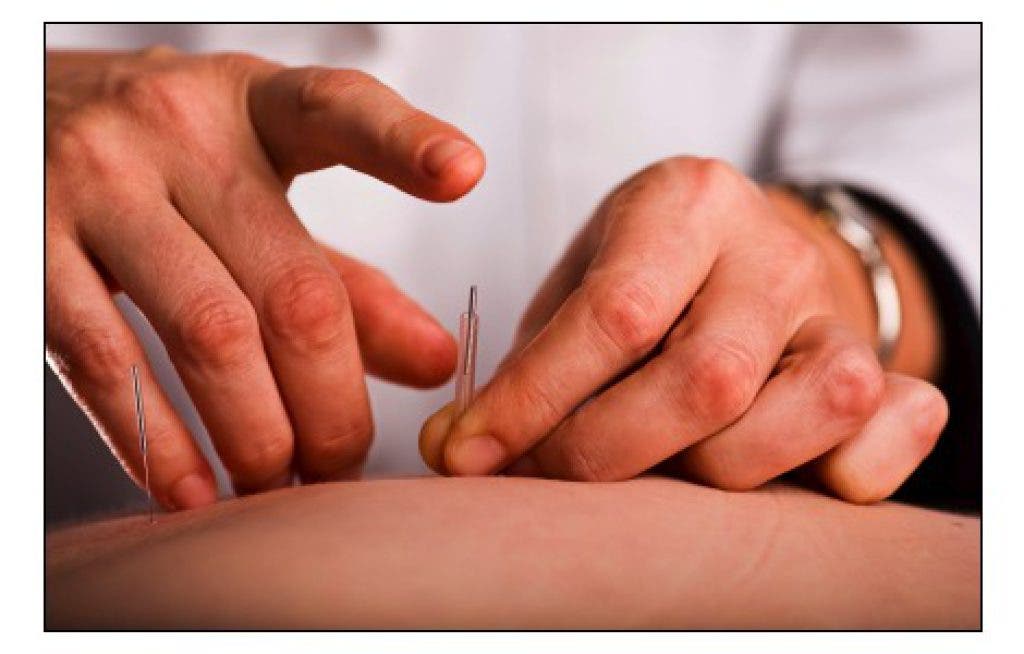
TCM is a medicine which incorporates the notion of tangible opposites, and how they comingle in the body to not only control regular and normal body functions, but how they interact to cause disease states. Today's #TCMTuesday blog will begin to explore some of these relationships and what they mean. Forgive me while I put my researcher hat on for this one - I love to share information about medical theory!
If I may be bold for a moment, I want to attempt to set the scene by making some broad (and hopefully not too controversial!!) generalizations of Eastern and Western medicine. Western medical theory is Reductionist or Isolationist, depending on what side of the medicine you are on; basically (and again, broadly) it's the difference between an MD and an PhD. Eastern medicine overall is a Circular Logic structure; it incorporates some aspects of reductionism and isolationism in the diagnosis and treatment processes, but overall it is a construct which the beginning and the end are at the same point. I'll do my best to explain these three types of theoretical constructs simply with examples.
A Reductionist theory takes a broad topic, and then classifies and categorizes with the purpose of "narrowing down" a wide array of information in order to get to a single result. A good example of this is the Classification of Living Things pioneered by Darwin and continuing to evolve today, which if you remember a little bit of Biology from middle school, is (from broad to narrow): Kingdom, Phylum, Class, Order, Family, Genus, Species. In this example we have taken all of the living things on the planet, and categorized them down to individual species - all related, but all different. In Western medicine, as another example, doctors who see patients are essentially Reductionists - they take a wide body of information about the patient, such as vital statistics and chief complaints, and classify and reduce this information to a single diagnosis by which to prescribe a treatment, and each symptom has its own diagnosis and treatment. TCM practitioners use elements of the Reduction theory in determining an appropriate treatment for the condition presented; the difference is that multiple symptoms could have the same diagnosis and treatment.
Find out what's happening in Temple Terracefor free with the latest updates from Patch.
Isolationist theory is a generally a little more complex, in that there is a wide array of information on one side, a result on the other, and the process to get to that result is a big "black box" of unknown between the two which the isolationist is trying to figure out. A generic example is demonstrated perfectly with the invention of aspirin. A folk remedy for pain has been willow bark tea or locally-applied poultice which works very well, and has for millenia. The ultimate question of "why" was raised as science evolved into the preeminent medical doctrine, and eventually through a process of experimental elimination, it was determined that Acetyl Salicylic Acid, or what became Aspirin, was the ingredient that caused the best pain-relief response. Most researchers are isolationists, trying to determine the Why and How of medicine and science based on available and experimental data. TCM theory has an element of isolationism to it, in that we have thousands of years of data showing that TCM works, and we have the processes to make it work that we learn and apply to our patients, but the black box in the middle as to Why and How it works is the topic of much research and debate in the medical community to this day.
Finally, Circular Logic brings us back around (see what I did there?) to TCM and other Eastern medicines. Circular Logic relates all aspects of something back to itself, in essence, the Beginning is the End is the Beginning. There is a saying in TCM that appropriately describes circular logic (and I'm butchering it, I'm sure):
Find out what's happening in Temple Terracefor free with the latest updates from Patch.
"One treatment, many diseases; one disease, many treatments."
I promise it sounds more beautiful in Mandarin. Basically what it means is that we might use one specific treatment for many different diseases and conditions, and we might use many different specific treatments for one disease or condition; the difference is the presence or absence of each of the aspects of opposites and how they affect the body relative to each other.
A good example of Circular Logic is when a person catches a cold, and the stages that cold can go through if not treated. In TCM terms we look at the symptoms to determine if the invading pathogen (virus, bacteria, etc) is still relatively "exterior" (symptoms of sudden sore throat, runny nose, itchy eyes, fever, chills, aching body) or if it has descended to the "interior" of the body (chronic postnasal drip, barking cough, coughing up phlegm, white lesions on the tonsils with hot soreness, severe fever, lethargy, weak voice, shortness of breath, recurring seasonal bronchitis, etc). Once we know if the pathogenic invasion is interior or exterior, we can treat accordingly.
TCM uses a relative perspective when analyzing the intake information provided to the physician by you, the patient, which means that the answers we get from you are from your perspective (such as whether you feel hot or cold), and these are compared to and combined with our objective observations of you (such as whether you feel hot or cold to the touch). The sets of opposites we use to diagnose are called the Eight Principles: Yin and Yang, Hot and Cold, Interior and Exterior, Deficient or Excess. It is just one of the methods we can use to diagnose a patient. We put symptoms and signs together that may seem unrelated in order to form our treatment plan. For example, symptoms diagnosed as gout and others as acid reflux in the same person which would be treated separately in Western medicine by prescribing both a uric acid reducer and an antacid, a TCM practitioner might treat as the same TCM diagnosis with acupuncture and herbs.
As a patient, it's not important for you to know the intricacies of diagnosis in order for our medicine to work for you. I offer blog entries about these topics for those of you who find that your inquisitive side is not satified with "it just works." Obviously I am painting with hugely broad strokes here; every individual has their own very complex set of conditions and circumstances that make up the sum of their existence, and not everything fits into one specific pattern for one person. Indeed, most of us are a mixture of several patterns, and it is up to the practitioner to determine which one to treat first so as to alleviate the symptoms affecting the patient the most. Once those are alleviated, we move on to the next one.
Thanks for reading and letting me pontificate on medical theory with you, it is good nerdy fun for me! Please ask any questions you may have below, I'm happy to have a conversation about this or any aspect of TCM. As always, I'm here to help.
--Marissa Byrum, AP, DOM, Dipl. Ac., is an associate at Ideal Balance Center for Acupuncture and Integrative Medicine in Temple Terrace, FL.