Health & Fitness
Don’t Forget the Onions
Home grown onions are as indispensable as home grown tomatoes.
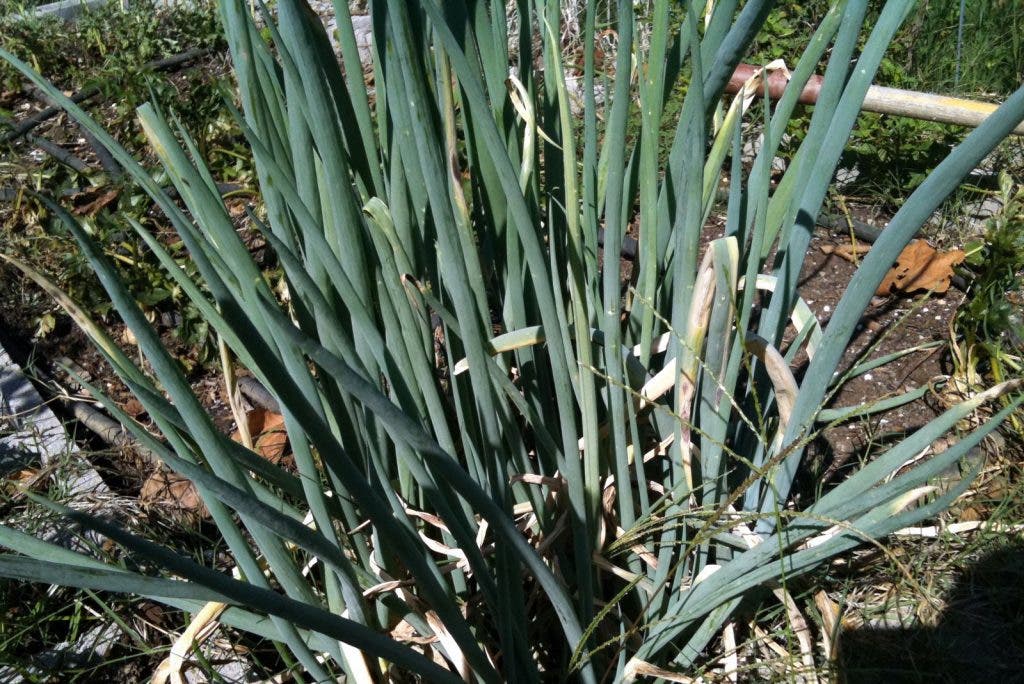


“It’s hard to imagine civilization without onions.” -Julia Child
My sons continually ask me for my garden onions to use in their own kitchens. They appreciate the superior flavor of a home grown onion. We find that an organic onion from the backyard is far milder, sweeter and tastier than any that you buy in stores. They could change a dish from ordinary to extraordinary.
Onions can be grown here almost all year round. They're very cold hardy vegetables. There are a few months at the height of the summer when onions are a waste of time. It’s all you can do to keep them alive. But once temperatures moderate just a little, they are potentially one of the easiest vegetables to grow.
Find out what's happening in Temple Terracefor free with the latest updates from Patch.
I say “potentially” because starting onions from seeds is a challenge. You are dealing with a very small and delicate stem. When you start onions from seed it seems to take forever for the little onion to grow additional leaves and form a good sized bulb. That’s why I try to find onion sets or onion slips whenever possible. It greatly simplifies and speeds up the process.
Sometimes I manage to find onion sets at Home Depot. Otherwise I have to order them on-line. If you know of other places in the local area that have them, please post that info for us.
Find out what's happening in Temple Terracefor free with the latest updates from Patch.
There are some types of onions that don’t involve starting from seed. We have bunching onions that form new little onions around the central bunch. There are also the slightly bizarre Egyptian walking onions that form new bulblets at the top of their leaf stalk.
Onions like a soil that drains well. I usually plant them in a mixture of recycled potting mix with some partially composted oak leaves. I fertilize them occasionally but I don’t see much difference afterwards. They just plod along at their own slow pace.
Root-knot nematodes don’t seem to bother onions. Few insects bother them either. Sometimes I spot some leaf damage from little caterpillars. I suppose I could spray them with Bt (Bacillus thuringiensis) but it’s not worth the effort. I either tear off the affected leaf or squash the caterpillar if I manage to find it. So much for systemic insect control!
After you harvest an onion you chop off the leaves and roots and let the bulb dry out in any airy spot for a few days (curing) before you store it. Or you can take it straight from the garden to the cutting board and use it fresh.
With just a little bit of patience and minimal effort you’ll find that home grown onions will add a whole new dimension to your cooking.