Health & Fitness
Meridians and Your Body
How does one easily relate Eastern and Western medical theory? Here are a few answers for you.
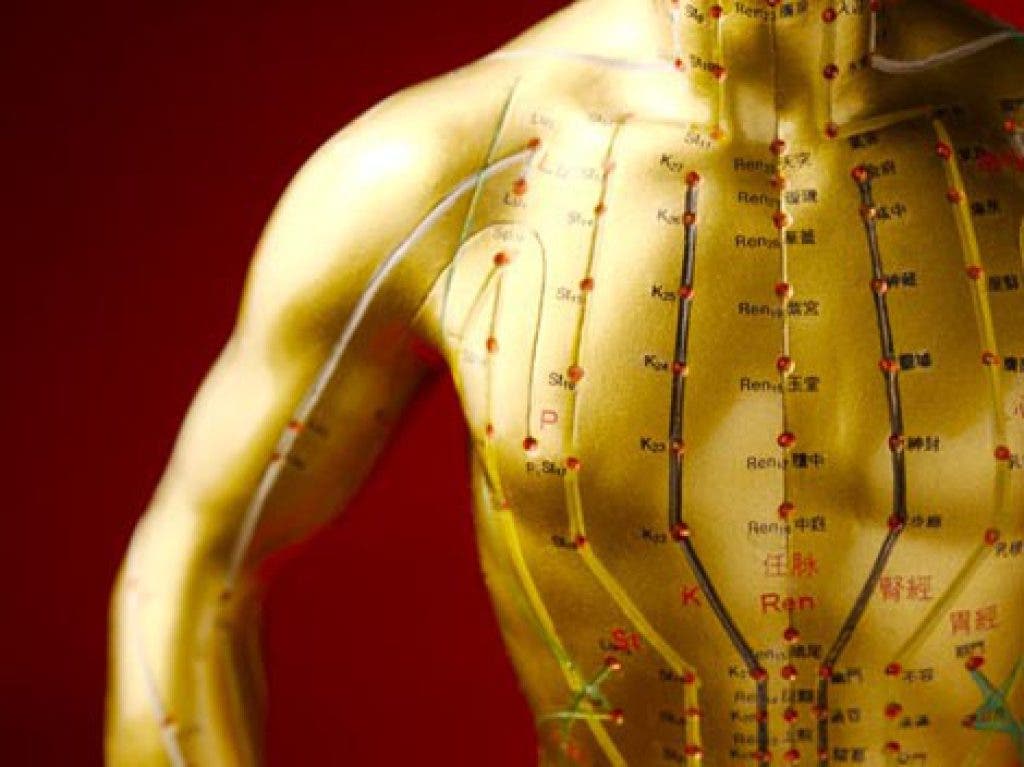
Today's #TCMTuesday blog is further discussion about the basics of Chinese Medicine theory. If you have been following my blog posts from the beginning, you know that is the energy of the body, and it travels through pathways called . But how does that relate to your physical body? I hope to cover some of that briefly in today's blog.
First, a writing technicality: when referring to Western science definitions, I will use a lower-case letter to start a term, such as "spleen" and "organ." When referring to Eastern science I will use an upper-case letter to start a term, such as "Gall Bladder" and "Organ."
We learned in the previous Meridians blog two weeks ago about how they are associated with the Organs of the body. For example, there is a Lung channel, a Spleen channel, a Kidney channel, etc. These names are energetic relationships to the body's organs (and Organs) for the most part, determined by thousands of years of observation of the human body by early East Asian healers and physicians.
Find out what's happening in Temple Terracefor free with the latest updates from Patch.
Our physical organs have slightly different functions from our Organs as described in TCM. As an example, your lungs as physical organs, as you already know, are responsible for the exchange of carbon dioxide and other waste gases for fresh oxygen, and once that exchange is made, the blood moves back to the heart to be pumped out to all the tissues and cells of the body. In TCM, the air we breathe is referred to as a type of Qi (Qing Qi, or Clear Qi), and the Lung has the responsibility of converting this Qing Qi into other forms for the body to use, as well as moving that Qi through the body. The Lung is also responsible for our body's immune defenses in Chinese medicine, called Wei Qi. If your Wei Qi is weak, invading pathogens, like bacteria and viruses, can enter the body and cause you to get sick.
How does this link back to the Meridians? Well, there are points along the Lung channel that affect and improve the physical lung organ function, points that stimulate the Wei Qi to defend the body, and points to strengthen the Organ's function of moving new fresh Qi throughout the body. However, the function of the Lung channel is not just to treat the lung (or the Lung). Points of the Lung Meridian can also treat pain along the course of the channel, can help expel pathogens from the lung, and has several other functions as well.
Find out what's happening in Temple Terracefor free with the latest updates from Patch.
It can be a little confusing, I know. Relating Eastern medicine to Western science is a tricky business, but once you find the common thread, it can work. A common misconception is that if we are placing needles along the Kidney channel, for example, that there is something wrong with a person's Kidney function. In some cases that is true, however, most of the time we are treating a condition that is associated energetically with the functions of the body assigned to the Kidney in Chinese Medicine.
I will give you an example of this. Let's say a patient comes to me because they had a bone density scan, and it was determined that their bone density was low. They were told the risk of hip and pelvis fracture was imminent and it scared them. In TCM, the Kidney is associated with the bones, and also with aging, so if a person has a lower-than-normal bone density, we will often treat points along the Kidney channel that are specifically for bone-building, and will recommend weight-bearing exercise, dietary changes, and nutritional supplementation to increase the patient's bone density. The acupuncture supports the body in rebalancing itself and helps it adjust to the lifestyle changes that you as the patient would make in this situation so that the bone density improves and the issue is resolved over a relatively short amount of time.
In that example, you see there was no mention of kidney problems because their physical organ is not in jeopardy; the responsibilities of the Kidney Organ in TCM are not being completed due to an imbalance in the patient's overall system, and this needs to be rebalanced so that homeostasis is reached and the bone density can return.
Many textbooks have been written on the relationships between Meridians and Organs, and as such I could go on for hours discussing the nuances of TCM Organs and Meridians. My purpose today was to give you a general idea of how we are interconnected, organs and Organs, to the body and Meridians, so that you could get a quick and easy-to-read introduction to our medicine.
I may refer to these entries over the course of my blogging here on the Temple Terrace Patch, so look for links in my entries which will refer back to previous blogs. If you are looking for a good overview of TCM that is a wealth of information, a book by Ted Kaptchuk called The Web That Has No Weaver is a great place to start. In this book he talks a lot about the relationships between the physical body, Qi, and the Meridians and Organs, as well as other topics.
I am, as always, happy to answer any questions. Feel free to post them below, because I guarantee you're not the only one with that same question.
--Marissa Byrum, AP, DOM, Dipl. Ac., is an associate at Ideal Balance Center for Acupuncture and Integrative Medicine in Temple Terrace, FL.