Neighbor News
From the Battlefield to Main Street: How Military Policy Could Move America Toward Recreational Legalization
For decades, America's relationship with cannabis was defined by prohibition.

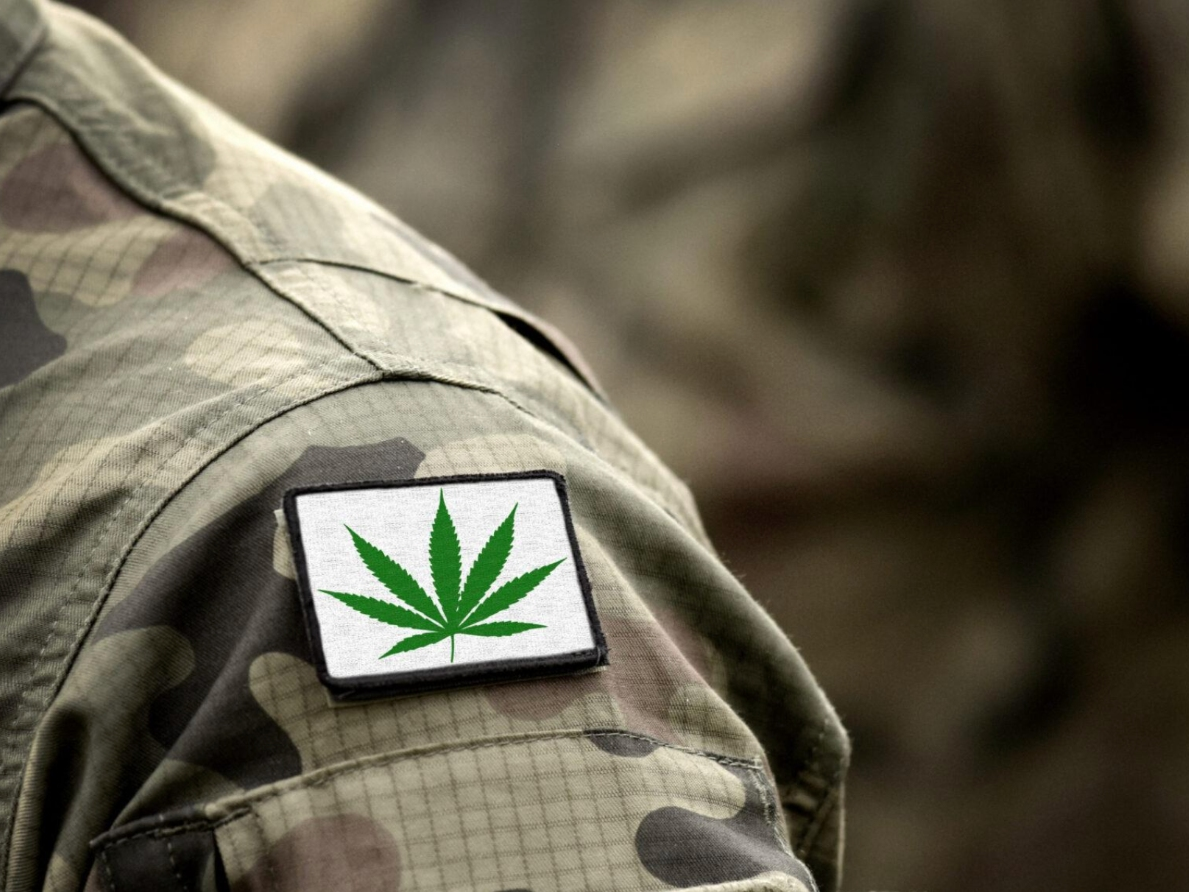
Marijuana was treated as an illicit drug, possession could result in criminal penalties, and the federal government maintained a fundamentally different position from the growing number of states that legalized cannabis for medical or recreational purposes.
Today, that divide is becoming increasingly difficult to sustain.
The most consequential question may no longer be whether cannabis will become more accepted in American society, but how far that acceptance will ultimately extend—and whether the logic of federal policy will eventually lead to nationwide recreational legalization.
Find out what's happening in West Palm Beachfor free with the latest updates from Patch.
One of the most revealing battlegrounds is the American military.
The military is traditionally among the most conservative institutions in the country when it comes to substances that can affect readiness, judgment and discipline. If the federal government eventually determines that cannabis can be researched, regulated, medically utilized and treated less harshly under federal law, pressure will inevitably grow to explain why the same substance should remain categorically prohibited for millions of other American adults.
Find out what's happening in West Palm Beachfor free with the latest updates from Patch.
That is where the logic becomes politically significant.
The military represents a unique test of federal policy
The United States military does not operate according to state marijuana laws.
A soldier stationed in a state where recreational cannabis is legal does not thereby receive permission to use it. The Army has reiterated that marijuana, hemp and cannabinoid-containing products remain prohibited for soldiers, regardless of how those products are marketed or consumed.
The Department of War has likewise maintained prohibitions even as federal cannabis policy has begun changing elsewhere. A July 2026 Pentagon memo reportedly emphasized that marijuana remained prohibited for service members despite the administration's moves concerning federal marijuana policy.
But that creates an increasingly important policy question:
What happens when the federal government's general treatment of cannabis becomes substantially more permissive while the military maintains a blanket prohibition?
There may be legitimate reasons for the military to maintain stricter standards than the civilian population.
Readiness is one.
Weapons safety is another.
Military aviation, vehicle operation, deployment requirements and combat effectiveness present circumstances that are fundamentally different from ordinary civilian life.
But those distinctions also create a logical framework for the next stage of the debate.
If cannabis can eventually be regulated safely for civilians while remaining prohibited for safety-sensitive military occupations, then the argument for prohibition begins shifting from "cannabis is inherently unacceptable" to "cannabis is acceptable under some circumstances but prohibited where safety and readiness require it."
That is a profound change in the legal philosophy surrounding the drug.
The THC seltzer problem
The emergence of THC-infused beverages illustrates the changing social environment particularly well.
Cannabis is no longer necessarily presented as something associated with an underground market, illicit transactions or smoking marijuana in secret.
THC can be incorporated into commercially packaged consumer products.
A THC seltzer can look remarkably similar to an ordinary beverage.
That transformation matters because public policy frequently follows social normalization.
When a substance moves from an illicit product to a commercially manufactured, labeled and regulated consumer product, the public begins asking different questions.
Instead of asking:
"Why should anyone be allowed to possess this?"
the debate becomes:
"How should this product be regulated?"
That is a fundamentally different political question.
The logical progression
Consider the progression.
First, cannabis is prohibited.
Then medical cannabis becomes accepted.
Then states authorize regulated adult-use cannabis.
Then federal policy begins reconsidering cannabis's classification and expanding research.
Then cannabis-derived products become increasingly visible in ordinary consumer markets.
Then lawmakers confront the inconsistencies between federal law and the laws of states representing large portions of the American population.
Eventually, the central question becomes whether the federal government should continue maintaining a nationwide prohibition while simultaneously permitting increasingly broad state-level legalization and regulation.
That is where the argument for national legalization becomes difficult to dismiss as merely ideological.
It becomes an argument about legal consistency and regulatory uniformity.
Acceptance does not mean unrestricted use
There is an important distinction that must not be lost.
National legalization would not necessarily mean unrestricted cannabis use.
America already regulates legal substances that can cause impairment.
Alcohol is the obvious example.
Adults may legally purchase alcohol, but they cannot legally drive while impaired. Employers can restrict alcohol consumption in safety-sensitive positions. Airlines can impose stricter standards on pilots. The military can impose standards more restrictive than those applicable to civilians.
Cannabis could theoretically operate under the same regulatory philosophy.
The question would become not whether cannabis is legal, but where, when and under what circumstances its use is permitted.
That distinction could ultimately make national legalization more politically feasible.
The military may become part of the argument for legalization—not against it
Ironically, the military's changing relationship with cannabis could become part of the argument for broader legalization.
Suppose federal policy eventually moves toward recognizing cannabis as having legitimate medical applications.
Suppose veterans receive broader access to cannabis-based treatment.
Suppose federal agencies increasingly distinguish cannabis from more dangerous controlled substances.
Suppose states continue expanding adult-use legalization.
At some point, maintaining a national criminal prohibition begins requiring increasingly complicated explanations.
The government would have to explain why a substance considered sufficiently legitimate for medical research, regulated commerce and state-authorized adult consumption should nevertheless remain categorically prohibited under federal criminal law.
That does not automatically make recreational legalization inevitable.
But it creates a powerful logical and political pressure toward federal uniformity.
Veterans could become an especially important part of the debate
The veteran population could become another major factor.
Congress has already considered proposals that would expand veterans' access to medical cannabis recommendations through Department of Veterans Affairs physicians in states where cannabis is legal.
That development illustrates an important transition.
If the federal government increasingly recognizes that cannabis may have legitimate therapeutic applications for veterans, the argument against cannabis becomes less absolute.
The policy conversation moves from:
"Cannabis has no legitimate place in American society."
to:
"Cannabis may have legitimate uses, but government must determine how those uses should be controlled."
Once that philosophical shift occurs, recreational legalization becomes easier to conceptualize as a regulatory question rather than a criminal-law question.
The national-security argument could eventually change
There is another irony.
The military's primary concern is not necessarily whether an individual likes cannabis. Its concern is whether cannabis interferes with military readiness.
That distinction could ultimately produce a new model.
The military could maintain strict prohibitions on active-duty consumption while civilian governments establish regulated recreational markets.
In other words:
A substance can be legal for civilians and prohibited for soldiers without creating a contradiction.
The same principle already exists for numerous activities.
The military does not have to follow every rule that applies to civilians.
It can establish higher standards when national security requires them.
Therefore, the continued prohibition of cannabis within the military does not necessarily provide a permanent logical foundation for nationwide civilian prohibition.
It could instead provide the framework for a future distinction between civilian legalization and occupational safety restrictions.
The real question becomes regulation
Once society accepts cannabis as a legitimate regulated product, the public-policy debate necessarily shifts toward regulation.
Who can purchase it?
How old must the purchaser be?
How much can a person possess?
Where can it be consumed?
How much THC can a product contain?
How must it be labeled?
How should children be protected?
How should advertising be restricted?
What constitutes impaired driving?
How should employers regulate cannabis in safety-sensitive jobs?
And perhaps most importantly:
What objective standard determines when someone is too impaired to drive?
These questions are fundamentally different from the question of whether cannabis should exist legally at all.
Why recreational legalization could eventually become the logical endpoint
The argument for eventual national recreational legalization rests on a simple principle:
When a government increasingly accepts a substance's medical legitimacy, permits states to regulate adult consumption, allows increasingly conventional consumer products and reduces its reliance on criminal prohibition, maintaining fifty different legal approaches becomes progressively harder to justify.
Eventually, federal uniformity becomes attractive.
That does not mean every state must have identical rules.
A federal legalization framework could establish minimum national standards while allowing states to impose stricter protections.
That model already exists throughout American law.
The federal government establishes a baseline.
States can go further.
The road ahead
The transformation of cannabis policy is therefore larger than marijuana itself.
It represents a change in how the government defines the relationship between personal freedom, public safety and government regulation.
The military provides an especially important example because it represents the extreme end of the safety spectrum.
If America eventually determines that cannabis can be regulated for ordinary civilians while remaining restricted for soldiers, pilots, commercial drivers, law-enforcement officers and other safety-sensitive occupations, the country will have effectively abandoned the idea that cannabis must be universally prohibited.
It will instead have embraced a new principle:
Cannabis is a regulated substance whose legality depends on the circumstances of its use.
Once that principle becomes established, nationwide recreational legalization is no longer an unimaginable political outcome.
It becomes the logical question that follows:
If cannabis can be regulated rather than prohibited, why should an American adult in one state be treated as a criminal for behavior that is lawful for an adult across the state line?
That question may ultimately prove more powerful than the traditional legalization debate.
The future of American cannabis policy may therefore not be decided by whether society suddenly "embraces marijuana."
It may be decided by something much more ordinary:
the growing recognition that regulation can replace prohibition.
And if that principle continues moving from state governments into federal policy, from medicine into consumer markets, and eventually into the institutions that define federal policy itself, nationwide recreational legalization may become less a revolutionary change than the final step in a process that has already been underway for years.
The caveat that matters
That outcome is not inevitable.
As of 2026, military personnel remain subject to strict prohibitions on marijuana and cannabinoid products, and federal cannabis policy remains in transition.
But the direction of the national debate is unmistakable: the more cannabis moves from an illicit substance toward a regulated product, the more difficult it becomes to maintain a single nationwide policy based solely on prohibition.
The ultimate question may therefore no longer be whether America will accept cannabis.
It may be what kind of rules America will create once it does.