Neighbor News
Personal Injury Liability in Florida Truck Accidents
In the case of an accident with an 18-wheeler, who is liable for paying for your injuries?
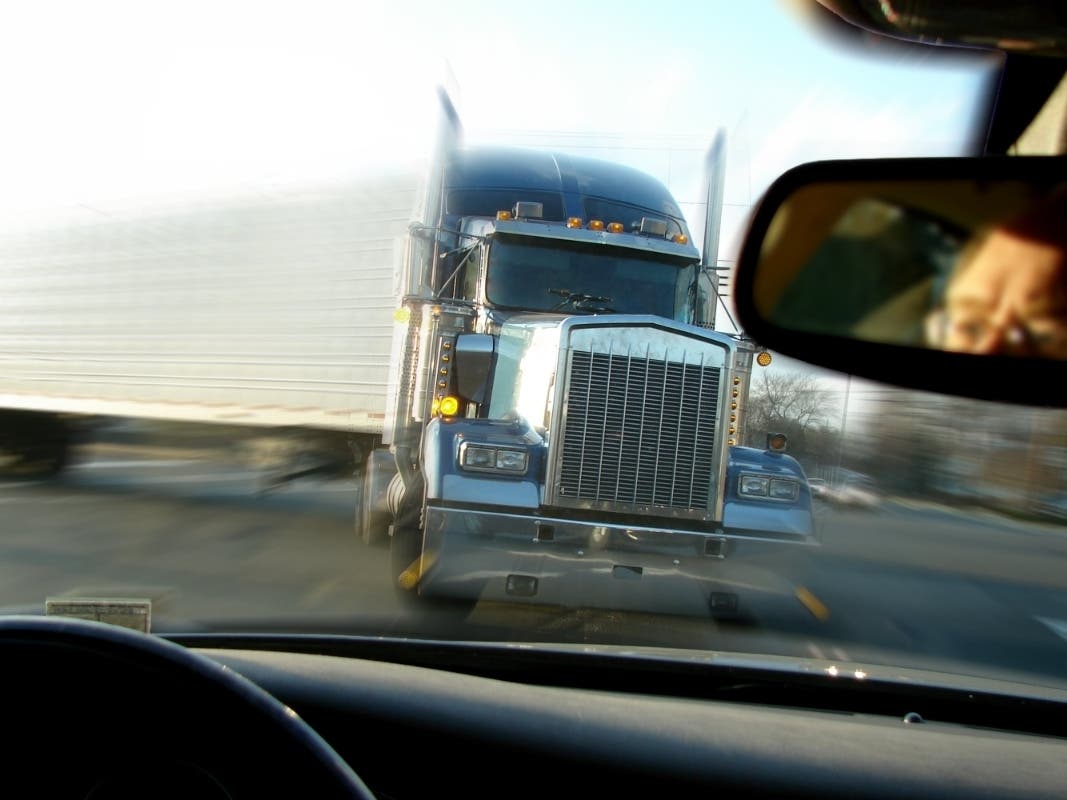
Semi-truck, 18-wheeler, tractor trailer - whatever you call it - these commercial trucks are 80,000 pounds of danger when driven negligently. Considering that hundreds of these vehicles are driven throughout the state of Florida daily, it raises the question of what to do in the case of a trucking accident.
Being involved in an accident with an 18-wheeler is drastically different than being involved with another passenger vehicle, and the protocol involved in personal injury cases differs as well. If the question of liability is leaving you stumped, continue reading.
18-Wheeler v. Passenger Vehicle Accidents
Accidents involving an 18-wheeler truck are much like a David versus Goliath scenario. As you travel down the highway, chances are you've already noticed that tractor trailers are often carrying wide loads and, in addition to taking up the width of the whole lane, they're most likely several cars long. To put it in perspective, a tractor trailer can weigh up to 20 times more than a passenger car.
Suffering an accident at-fault of a commercial vehicle implies that several tons are being slammed against a passenger car that typically only weighs 3,000 to 5,000 pounds on average. According to the Federal Motor Carrier Safety Administration, more than 5,000 18-wheeler accidents resulting in death occur nationwide each year, and 500,000 tractor-trailer accidents occur annually.
Information pulled from Florida's official state crash repository, Florida’s Integrated Report Exchange System (FIRES), shows that 42,775 accidents involving a commercial vehicle took place in 2017.
Find out what's happening in West Palm Beachfor free with the latest updates from Patch.
Common Causes of Truck Accidents
As with all personal injury cases, negligence must be proven before the question of liability can be discussed. Due to the many levels of liability involved with an 18-wheeler accident, taking a moment to analyze the various common causes of trucking accidents is crucial.
If it has not been made clear already - 18-wheelers are incredibly large. When these massive vehicles are handled improperly, or the driver does not follow proper protocol while driving, a plethora of negligent causes for a collision will arise. Negligent causes include:
- Failure to maintain the truck, including parts such as brakes, tires, or valve systems
- Driving over the speed limit
- Failure to use traffic signals
- Improper passing
- Operating without sufficient sleep
- Failure to halt at traffic lights or signs
- Inexperienced drivers
- Carrying a heavy load outside of legal parameters
- Larger blind spots
Due to the size of these vehicles, speeding or failing to obey traffic signals can be deadly. In addition to plowing into another unsuspecting vehicle at a heightened force, operating the vehicle negligently makes the driver unable to stop the truck as quickly. In fact, semi-trucks experience an additional 40% of time needed to stop their vehicle as compared to a passenger car.
Likewise, a trend exists of drivers carrying a load outside of legal weight parameters. Many drivers are operating their vehicle for hours on end, on limited sleep, attempting to transport some type of material goods from one destination to another. Unfortunately, as these trucks are crossing state lines, they might not always be carrying the legal weight for that specific state.
Find out what's happening in West Palm Beachfor free with the latest updates from Patch.
Trucks Exceeding Their Weight Limit
In the Unites States, vehicles of all shapes and sizes are sharing the road. Therefore, to make road conditions safer for large trucks, smaller commercial vehicles, and passenger cars alike, the Intermodal Surface Transportation Efficiency Act of 1991 (ISTEA) was passed. ISTEA specifies the maximum weight allowed on federally funded highways, including interstates and the national network of highways.
The standard set of weight limits outlines:
- Gross Weight: 80,000 lbs
- Single Axle Weight: 20,000 lbs
- Tandem Axle Weight: 34,000 lbs
This list holds true for states like Florida and Georgia, in which the max-weight carried cannot exceed 80,000 lbs. However, states that had more liberal weight laws in place when ISTEA was passed in 1991 were allowed to keep their higher weight laws in place. These states include:
- Michigan's Maximum Weight: 164,000 lbs
- South Dakota's Maximum Weight: 170,000 lbs
- Maine's Maximum Weight: 99,000 - 100,000 lbs
- New Hampshire's Maximum Weight: 99,000 - 100,000 lbs
- New York's Maximum Weight: 107,000 - 117,000 lbs
Unfortunately, many trucks on today's roads are hauling loads that are surpassing the weight limit of the state they are in. Carrying a heavier load is a cause for negligence, and can be used as evidence in a personal injury claim.
Liability in Auto Accidents
A major reason why personal injury cases involving large semi-trucks are so complicated is because multiple layers of liability exist for just one 18-wheeler. Filing a personal injury claim against the at-fault driver in a trucking accident is vastly different than other personal injury cases. To compare, let's first examine where typical personal injury liability would fall in the case of an auto accident.
Personal Injury Liability with Personal Passenger Cars
Filing against another passenger car is most likely the type of personal injury claim you are familiar with. If you were in an accident and the other driver was deemed at-fault, you would receive compensation for the injuries you sustained due to their negligence. In this case, the at-fault driver would be liable for your personal injuries.
Personal Injury Liability with Company Cars
Though 18-wheelers are commercial vehicles, they differ greatly from other vehicles that are used for business purposes, such as delivery vehicles or ridesharing cars. In those cases, two forms of personal injury liability typically exist:
- The driver of the vehicle has an insurance policy.
- The company in question has an insurance policy.
In essence, after an accident with one of these vehicles you can file a personal injury claim against (1) the driver's insurance if they were not on the clock at the time of the accident, or (2) you can file a personal injury claim against the company the driver belonged to if they were en route during work or transporting passengers at the time of the accident.
Levels of Liability in Truck Accidents
Similar to accidents with company vehicles, the driver and the company that is employing the driver are liable for compensating you for your damages. However, the list of parties that could be liable for your injuries also includes:
- The owner of the truck
- The company that leased the truck
- The shipper or loader of the truck's cargo
- The manufacturer of the vehicle
- The manufacturer of the vehicle's parts
In total, this list comprises 7 parties that could potentially be liable for your personal injuries, compared to the normal maximum of two.
Components of Proving Liability
Due to the large size of commercial trucks as well as their frequent interstate travel, their insurance policies are often upwards of a million dollars. In fact, the insurance policy of an 18-wheeler can be worth up to 50 times more than the insurance policy of a passenger vehicle. For this reason, the truck company will often attempt to deny full negligence.
For this reason, proving your personal injury case requires an extreme amount of pro-activity on behalf of the victim. As with all personal injury cases, the specific facts of the accident are crucial to establishing legal liability. Facts that will likely be relevant include:
- The name of the drivers involved in the accident
- The company responsible for the operation of the truck
- Weather conditions at the time of the accident
- Your speed at the time of the accident
- Conditions that you believe may have contributed to the accident, including the use of traffic signals, obeying traffic laws, as well as the emotional and physical state of the truck driver
- The equipment, parts of the vehicle, and the damage done to both vehicles
As typical protocol, try to take photographs of the scene of the accident, both vehicles, and collect contact information from anyone who may have witnessed the accident.
Gathering Information to Prove Liability
As you are paying for medical bills or any out of pocket expenses that are the immediate result of the accident, be sure to maintain a record of all expenses. It is wise to hire an attorney for representation at this time, as many trucking companies may attempt to offer accident victims a lump sum of money to avoid having to pay for the full, often much larger, amount they are liable for.
A qualified truck accident attorney can ensure that the commercial truck is examined for any evidence of faulty parts or improper maintenance, and follow up with the police report taken at the scene to assess the state of the driver at the time of the accident.
Despite the levels of liability involved with 18-wheeler accidents, your personal injuries can be compensated with proper representation.