Health & Fitness
Service Options for Adults with Autism and Developmental Disabilities
Here are a list of services available to individuals with autism and related disorders as they enter adulthood.
Written By Ed Littleton, M.S., BCBA
Although some individuals with Autism and other Developmental Disabilities are able to function as independent adults, there are many who will need ongoing care throughout adulthood. Therefore, a common question that parents of these children are forced to think about is what happens to my son or daughter when they become adults and I am unable to be his/her sole caretaker. It’s a question that worries many parents as they think about the future.
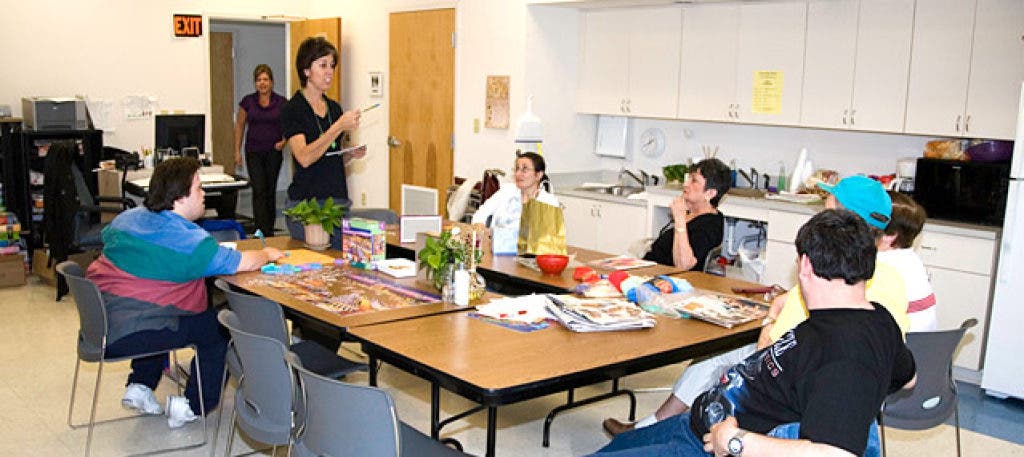
So, what are the service options once a person with a developmental disability turns 21 and is no longer able to attend public school? Let’s start with what they are going to do during the day once they are no longer attending school. Most adults attend an ADT, which stands for Adult Day Training facility. An ADT is set up like a school where the clients sit at tables and work on different activities, all under staff supervision. Most ADT’s provide transportation for the clients and the ADT is open Monday through Friday during school hours. Some individuals, who do not do well in a setting with many other clients, may opt for companion services. This means they will have an individual staff (or a 1 to 2 staff/client ratio) who will come to pick them up and take them on an outing in the community. This can include going to malls, restaurants, parks etc.
Find out what's happening in Westchasefor free with the latest updates from Patch.
Now let’s look at living options. Here in Florida, the state has tried to cut down on the large residential facilities that hold many clients and often have poor staff to client ratios. Now the movement appears to be toward group homes. These are homes located in neighborhoods throughout the community. They typically house 5-6 residents who will either get their own bedroom or share a room with one other resident. There is typically at least one staff member at the home 24 hours a day to provide supervision and aid the residents with eating and grooming. There are also behavior-focus designated homes that have a higher level of staff to client ratio as well as stricter behavioral training and documentation standards for staff. These homes are designed to house individuals with more severe behavioral issues such as physical aggression, property damage, and self-injurious behavior. In addition to group homes, there is also an independent living option. With this option, the client would have their own apartment, where staff would come to provide services. For individuals that require constant supervision, it could be a two bedroom apartment where the staff also lives. If less supervision is required, the staff would leave at night and return again the next day.
As far as private services, clients typically have access to behavioral, speech and occupational services. Depending on the company and availability of providers, they would typically come to the client to provide services whether it’s at the home or ADT. If the individual is part of the med waiver program in the state of Florida, a waiver support coordinator would be assigned who will be your point of contact to discuss and determine what services and living options are available in your area.
Find out what's happening in Westchasefor free with the latest updates from Patch.
For more information about the Florida Med Waiver Program, please visit: http://ahca.myflorida.com/medicaid/hcbs_waivers/index.shtml