Health & Fitness
We've got a runner! A closer look at Elopement
This blog examines the reasons why children may elope and possible treatment strategies based on the function of the behavior.
Written by Ed Littleton, M.S., BCBA
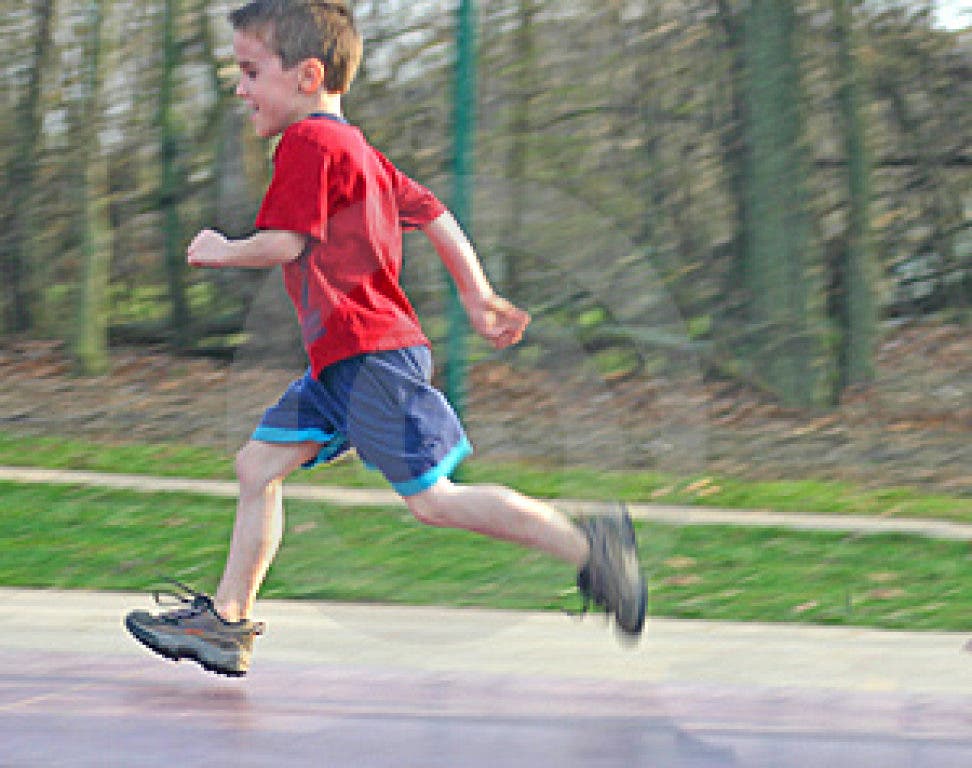
One of the most common and sometimes scary behaviors that younger children, children with attention-seeking behavior, and children with autism and developmental disabilities engage in is elopement. Elopement involves the child moving beyond a specified boundary or beyond an area of supervision. The safety concerns that arise when this happen are obvious, especially if the child is outdoors and near a road.
As with every behavior, before we discuss any type of intervention we must first analyze the function. What is the child getting by exhibiting this behavior? For elopement, some of the most common functions we come across are escape, attention, and automatic reinforcement. With escape, it means there is something or someone the child is trying to avoid or get away from. With attention, it means the child enjoys the attention they get from running away which usually includes the adult having to chase the child. With automatic reinforcement it means the behavior itself provides the reinforcement to the child (a.k.a they just enjoy running).
Find out what's happening in Westchasefor free with the latest updates from Patch.
In looking at how the function affects the intervention, let's start with escape. With escape we need to look at associating (or pairing) positive reinforcement with the area the child is supposed to remain in and the person the child is supposed to be with. The child needs to be able to access preferred items (positive reinforcers) in that area so he/she doesn’t just associate the area (ex. seated at table) with only task demands. Attention tends to be one of the toughest functions to deal with, as for safety reasons it is often necessary for the adult to follow the child. When following the child, however, verbals should be kept to a minimum. Time out following episodes of elopement is another procedure that has been used to treat attention maintained elopement. Also, using attention as a reinforcer for the non-occurrence of elopement for a specified period of time, starting with a short time duration and building up, can be an effective strategy. We could also look at introducing a program that reinforces following the direction of “stop” with attention and additional positive reinforcers. We would want to start this program in a safe area (ex. inside the house, therapy center) before graduating to outside. As far as automatic reinforcement goes, we may want to look at using scheduled running breaks, or using running within a safe area as a reinforcer for appropriate behavior.
With elopement we also need to examine some proactive strategies, involving simple environmental modifications. For example, if we are looking at a classroom setting, we probably do not want to seat a child who elopes in the seat closest to the door. In the home, we may need to add some door knob covers or some sort of door chime or bell that makes a noise every time the door is opened.
Find out what's happening in Westchasefor free with the latest updates from Patch.
While these are some guidelines on how to assess and treat elopement, if you have any questions or are interested in services in order to help reduce such behaviors, please leave a comment or contact Behavioral Consulting of Tampa Bay at 813-814-2000. Always remember that in the moment, the first priority is to maintain the safety of your child, but to decrease this behavior long-term, treatment strategies addressing the function of the behavior will bring the greatest success!