Schools
Horseback: More Than Just Riding
Just three miles from Woodland High School, Three Bears Farm is the largest, most advanced equestrian facility in the state, and a valuable community resource for young and old to enjoy.
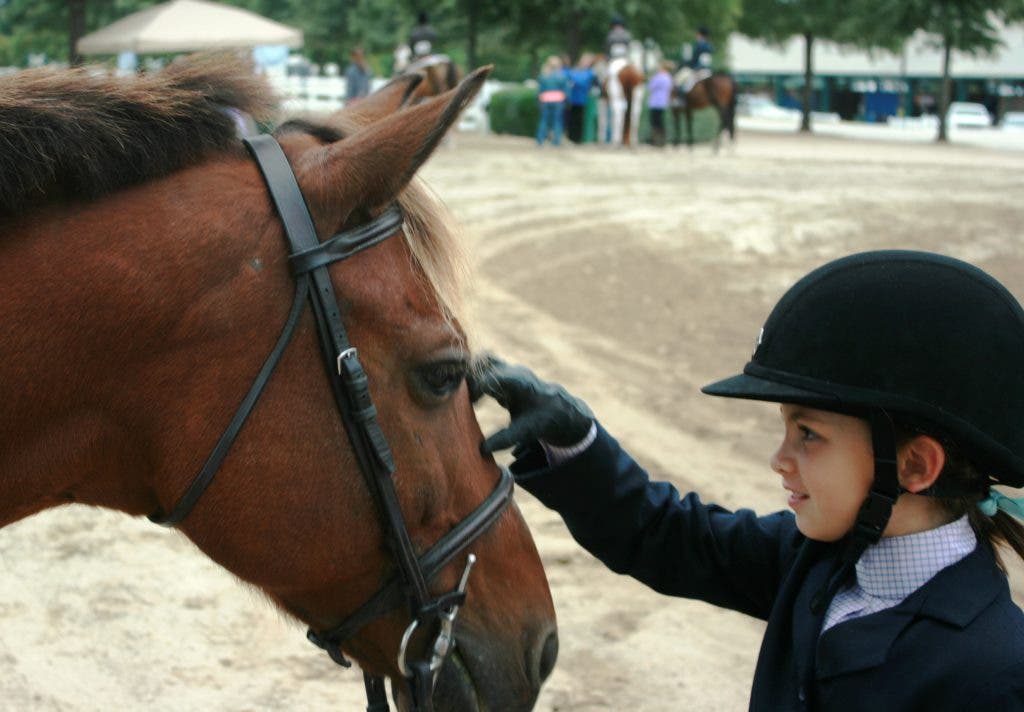


Most people are not aware, that just three miles from is the largest, most advanced equestrian facility in the state. Three Bears Farm is a horse riding facility which specializes in the hunter-jumper aspect of riding under the directorship of Trainer Sunni Dils.
is home to 28 high-quality show horses, which experience only the best care taking from Barn Manager Blair McBee. The facility is proudly owned by Mark Thompson and Jackie Sawyer, who also own at the airport.
Lessons are available to any and all ages. The horses vary from beginner-lesson ponies, which teach young children how to trot, to 3-foot jumping schoolmasters, experienced, well-traveled horses, who fully understand their jobs and responsibilities at a show. Boarding a personal horse also is a service available at the new, 18-stall barn. The instructors of the lesson program are qualified, experienced individuals who create a fun learning environment.
Find out what's happening in Cartersvillefor free with the latest updates from Patch.
Dils and fellow Trainer Sara Underwood frequently take their students to shows. These include small, local shows and large, out-of-state shows with much tougher competition. Of course, everyone wants to earn a blue ribbon, but the trainers at Three Bears Farm strongly believe and tell their students that shows are a learning opportunity and a place to, ultimately, have fun.
“I am thrilled to be a trainer at this facility. It is full of talented horses and riders who love the sport for the right reasons," Dils said. "I think that promoting a fun, yet competitive, environment is the most important part of my job, in addition to training the baby horses and educating the riders, of course!”
Find out what's happening in Cartersvillefor free with the latest updates from Patch.
So riders and trainers may gain additional training opportunities, once or twice a year, the farm hosts clinics. A clinic is usually a three-day event in which a highly-respected trainer comes for rigorous lessons each day. So far, the farm has hosted Olympian and silver-medalist rider Greg Best, and plans to have Jeff Cook, a highly-praised trainer from Ohio, in the near future.
There are many aspects of riding which are far below the surface of the naked eye. It is the only Olympic sport in which your partner and entire team is an animal. Animals, unlike water or soccer balls, have a mind of their own, and can lose mental or physical control as quickly as a human can.
Horses at their most mature age, only have a mental capacity similar to that of an 8-year-old human. Therefore, riders entrust their lives with an 8-year-old child. This relationship requires an astounding level of trust between the horse and rider that is not understood until one has experienced the bond.
Unlike people, horses never judge or act in a hostile manner for revenge. The sport is as much or more of a mental sport than it is a physical sport.
“Riding is a complete mind game. We must have 100 percent control of our human emotions, 100 percent of the time, on a horse," Rider Isabella Randall said. "Even when your partner is really testing your nerves, you must still only reward for the positive, and very rarely punish for the negative behavior. Luckily, most of the time your horse wants to please you, and that is what makes this sport so enjoyable.”
Math is involved at a fast pace, especially when galloping to a jump that is 4 feet tall and wide. A horse’s stride is 12 feet long, give or take, and a rider must gage from a long distance how to influence the horse’s stride to make the space up to the jump perfect, lengthen their stride or shorten it. If the rider’s judgment is off by a fraction, the jump could become dangerous.
This is the time when the horse must take responsibility, for despite brain capacity, they have keen protective, self-preservation instincts that humans do not. Riders must be able to use their legs, hands, fingers, eyes, upper body and even voice to communicate with their partners to judge pace, timing, rhythm and, ultimately, the guidance needed from the rider.
Three Bears Farm welcomes students and horse lovers of all ages to learn the fundamentals of not just riding, but horse care, management and responsibility. The staff believes that riding is only a small fraction of the work that goes into a horse.
“Three Bears Farm is a wonderful place to work. We really try to influence kids to care for their horse as well as they care for themselves," McBee said. "It is a sport that requires tremendous time and effort, and the riders must be dedicated. Many barns have a horse ready to ride when the client arrives for a lesson, however we let the client catch the horse, brush and tack the horse, of course with assistance the first few times!”
Horses must be fed, watered, brushed and loved daily. Believe it or not, horses are sensitive in body and mind. Each individual horse is unique in their needs, such as:
- Splint boots on their ankles for jumping and bell boots on their hooves for shoe protection;
- Bits in their mouth, pads for back preservation and fuzzy or leather girth to prevent rubs;
- Aluminum or steel shoes to influence lift and movement;
- Senior or sweet grain and hay;
- Running or standing martingale for a rider’s leverage and control and figure eight bridle or hunter bridle for more control; and
- Saddle fit.
Not to mention, the horse must then get along with his rider. A horse’s trust is frail, and they, unlike humans, retain bad memories much longer than good.