Politics & Government
Occupy Wall Street: Ideas for Change?
The effects of the movement are being seen across the nation.
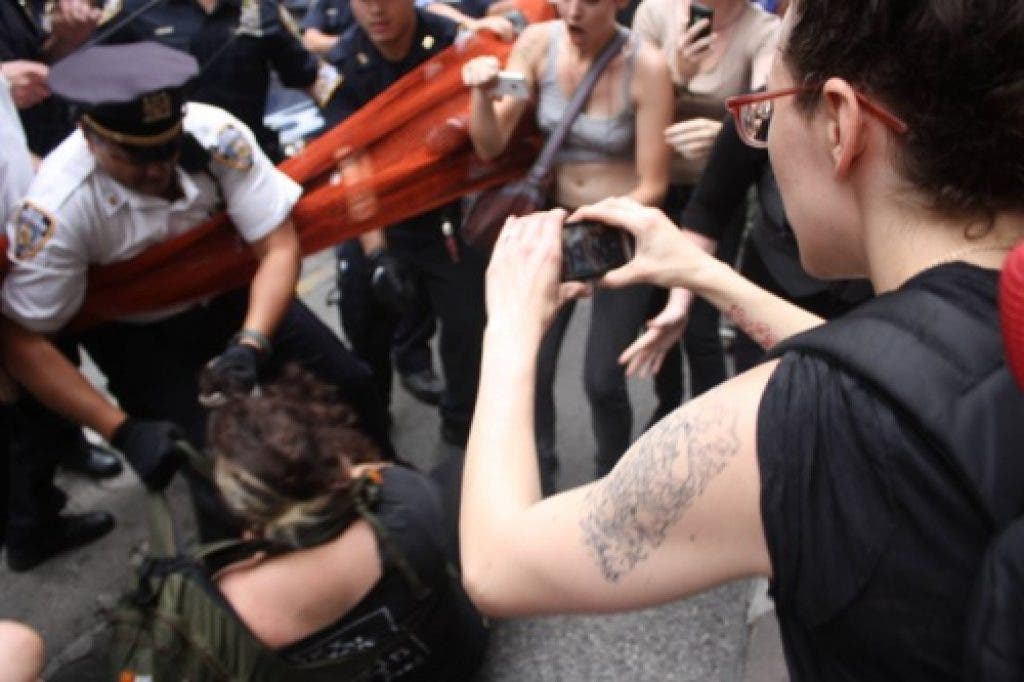


Few people had heard of Occupy Wall Street on Oct. 1, 2011. It became “news worthy” after four and a half straight weeks of protesting, and after 700 people were arrested while crossing the Brooklyn Bridge. Since then, many people have been asking: What, exactly, is Occupy Wall Street?
What do you think of the Occupy Wall Street protests? .
Occupy Wall Street is inspired by the Arab Spring, which is a movement to bring democracy to the Arab world. The protests in Tahrir Square in Egypt, especially, are the main source of inspiration for these protestors. The protests on Wall Street are nowhere near the caliber or importance of the Tahrir Square protests, however. The Occupy movement is based upon the statement, "The one thing we all have in common is that we are the 99 percent that will no longer tolerate the greed and corruption of the 1 percent.”
Find out what's happening in Cartersvillefor free with the latest updates from Patch.
Protestors are angry that got $100 billion in bailout money and a $1.9 billion tax refund from the IRS after handing out high-risk loans. The bank also got safety nets from government sponsored programs such as Freddie Mac.
The movement is receiving a lot of criticism from the media.
Find out what's happening in Cartersvillefor free with the latest updates from Patch.
When Erin Burnett, a reporter for CNN, premiered her show, she had a segment called Seriously?! She seemed to mock the movement, and talked to one man about his experiences in a slightly condescending tone. She also showed clips of people dancing, playing instruments and other side-show activities. Partisan politicians are also criticizing the movement, but they tend to support more conservative movements.
“To be fair, the reason why some mainstream news journalists, and many of the audiences they serve, see the Occupy Wall Street protest as incoherent is because the press and the public are themselves. It is difficult to comprehend a 21st Century movement from the perspective of the 20th Century politics, media and economics in which we are still steeped,” Douglas Rushkoff, a CNN reporter, wrote in his article Think Occupy Wall St. is a phase? You don't get it.
Occupy Wall Street might have a vital role in the 2012 presidential elections.
“I don’t think any American is impressed when they see Gov. Romney and all the Republican candidates say the first thing they’d do is roll back Wall Street reforms and go back to where we were before the crisis and let Wall Street write its own rules,” David Axelrod, President Barack Obama’s campaign manager, said in an interview on ABC’s This Week. Republicans tend to mock Occupy more than anybody else, but the way it started is almost exactly how the Tea Party started.
Tea Party protests started in 2009, and attracted many conservative Republicans. They stood for lower taxes and a smaller government. They started much like Occupy Wall Street exists now: an outcast group of people who had no clear opinions and who were mocked by the media. Now, there are politicians and even potential presidential candidates who are members of this conservative movement.
There are obvious differences between these two movements, however. The Tea Party members are older, predominantly white and live in rural areas. The Occupy Wall Street protestors seem to be younger and more racially diverse, and clearly more liberal. Both are angry with the way the country is being run, but have vastly different ways of handling it.
Being conservatives, the Tea Party protestors want less government intervention, including lower taxes. The Occupy Wall Street protestors, on the other hand, want higher taxes on the “corporate thugs” and more government regulation on Wall Street, along with various other things that are being protested.
"I didn't hear him say anything when the Tea Party was out demonstrating, actually spitting on members of Congress right here in the capitol, and he and his colleagues were putting signs in the windows encouraging them," Nancy Pelosi, the minority leader, remarked about Eric Cantor, the majority leader of the Republican party.
Police brutality has also become a problem in these protests. While the police have to do their job to keep the citizens of New York safe and maintain order, some say they have gone too far. There have been many reports of beating and mace being used, and one video of cops netting a group of girls and macing them has become rather popular.
“The police response has been overly violent and brutal. They maced five women. They collected them in a net and then maced them. They weren’t even warned. The captain who maced them then ran away to avoid being filmed on camera,” Eric (no last name given) told one reporter. Eric was allegedly beaten and kept in prison for 36 hours.
The protests have spread to other cities including Washington D.C., Chicago and Atlanta. All the branches of Occupy are still leaderless, but carry the same goals as Occupy Wall Street. Representative John Lewis of Atlanta, a Democrat, visited a protest on Oct. 8 in Atlanta and said that the protesters want to be heard.
"And at the same time they want to speak to America, speak to people in power, to officials of the American government, but also to the business community, especially Wall Street, to corporate America, to bankers. They're saying, in effect, that we bailed out Wall Street and now it's time for Wall Street and corporate America to help bail out the American people. People are hurting. They're in pain and they're looking for jobs. They want us to humanize the American government, but also humanize corporate America."
Rose Gudiel, a middle class woman from California, exemplifies how Occupy can affect more than just Wall Street. She had just lost a 2-year battle against foreclosure. Her friends, family members and other protestors decided to hold a protest at Rose’s house. Afterwards, Fanny Mae, the Federal National Mortgage Association, overturned the foreclosure. They refused to give details about it, but it is speculated that because of the support from Occupy Wall Street, they decided to not go forward with the case.
It is impossible to say whether or not the Occupy Wall Street movement will become a political entity or dissolve. One thing is certain: The economy is in trouble and something has to be done.
Americans are angry, and even if the movement fails, at least there is an additional group of Americans who have the ideas for change.