Crime & Safety
Missing Woman, Killer Identified In 33-Year-Old Cold Case
Georgia and federal authorities said Tuesday Henry Fredrick "Hoss" Wise murdered Stacey Lyn Chahorski in 1988.

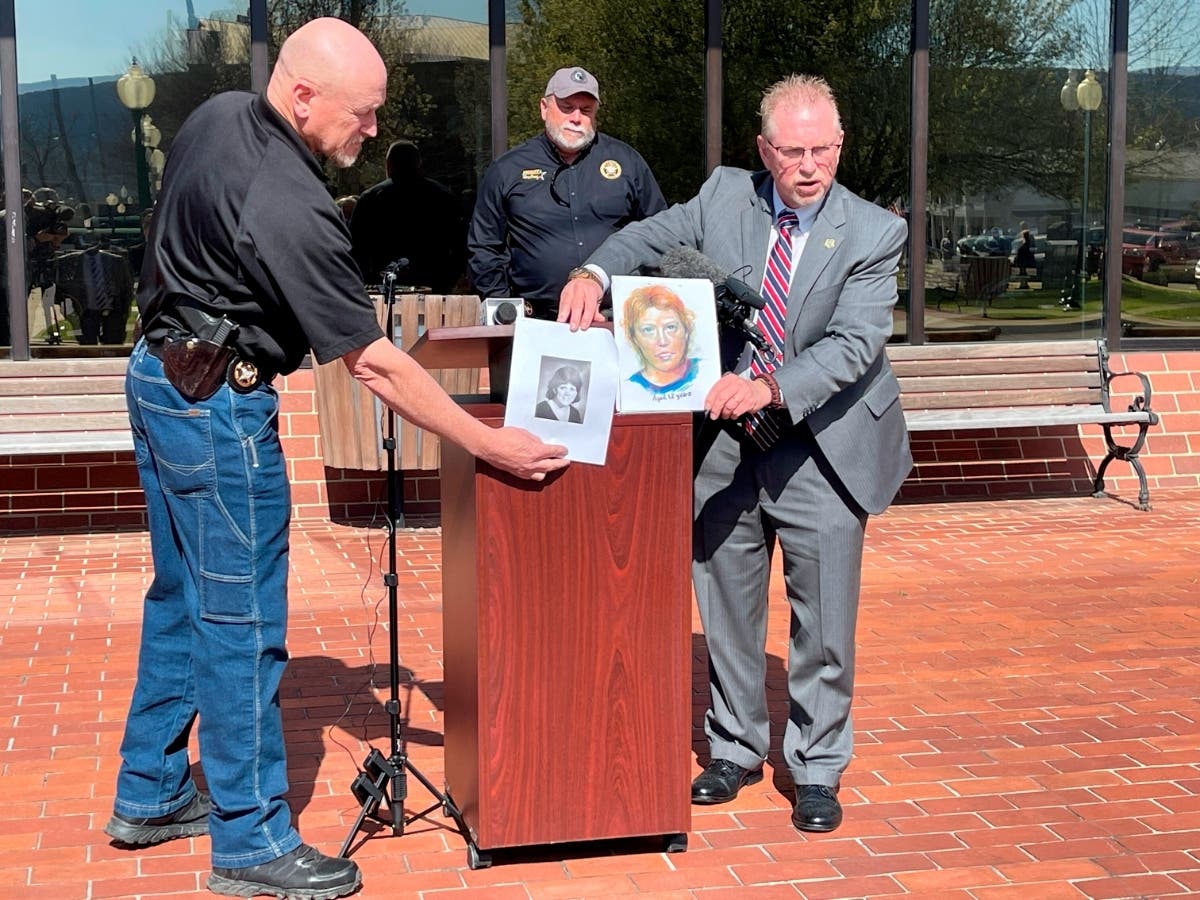
DECATUR, GA — After 33 years, Georgia authorities said the question of who killed Stacey Lyn Chahorski in 1988 has been answered in what might be the first case where forensic genealogy was used to identify both the victim and the killer.
Members of the Georgia Bureau of Investigation, the FBI and the Dade County Sheriff's Office held a news conference Tuesday at GBI headquarters in Decatur, revealing details about the case.
Keri Farley, the special agent in charge of the FBI’s Atlanta office, identified late truck driver Henry Fredrick “Hoss” Wise as Chahorski's murderer based on forensic genetic genealogy.
Find out what's happening in Decatur-Avondale Estatesfor free with the latest updates from Patch.
According to a GBI news release, Wise died in 1999 in a fiery stunt car crash Myrtle Beach Speedway. He would have been 34 at the time of Chahorski's death.
Wise had a criminal background, which included theft, assault and obstruction of a police officer in Florida, Georgia and North Carolina, the GBI said.
Find out what's happening in Decatur-Avondale Estatesfor free with the latest updates from Patch.
Through forensic genealogy, Chahorski was identified from her remains in January, Farley said. She noted this case is the first time the resource has been used to identify both the victim and the killer.
"Investigative genealogy is a relatively new process, but it has been used to help solve several cold cases throughout the country," Farley said.
The body of Chahorski, of Norton Shores, Michigan, was found in Rising Fawn around 2 p.m. Friday, Dec. 16, 1988, about 5 miles from the Alabama Stateline along Interstate-59, according to the GBI. Then, she was known as Rising Fawn Jane Doe.
The killer's DNA was found on the scene but could not be traced back to an individual for years, according to Farley. Eventually, a DNA match was made with a relative who cooperated.
A forensic artist crafted clay renderings and drew composites to recreate how she would have appeared, showing the kind of work that went into identifying the Jane Doe.
New evidence was uncovered in the mid-2000s after the case was reassigned, according to the GBI. After the evidence was sent to a Washington, D.C., FBI lab, analysts were able to create a DNA profile of the woman and enter it in the missing persons DNA database.
Following a second reassignment, a GBI forensic artist completed new clay renderings and composites for age progression.
The FBI was contacted, after which forensic genetic genealogy was used to identify Jane Doe as Chahorski.
GBI Special Agent Joe Montgomery notified the family. He said Chahorski's mother, Mary Beth Smith, was understandably overwhelmed to learn the news.
Chahorski's body was returned to her family, and she was buried in the Dade County cemetery.
The GBI said Chahorski would have been 52-years-old today.
"Let this serve as a warning to every murder, rapist and violent offender out there, the FBI and our partners will not give up," Farley said. "It may take years, or even decades, but we are determined to continually seek justice for victims and their families."
Get more local news delivered straight to your inbox. Sign up for free Patch newsletters and alerts.