Politics & Government
East Atlanta Animal Lovers Urge DeKalb To Lower 60 Percent Kill Rate
Task force seeks alternatives killing thousands of healthy animals each year in DeKalb County
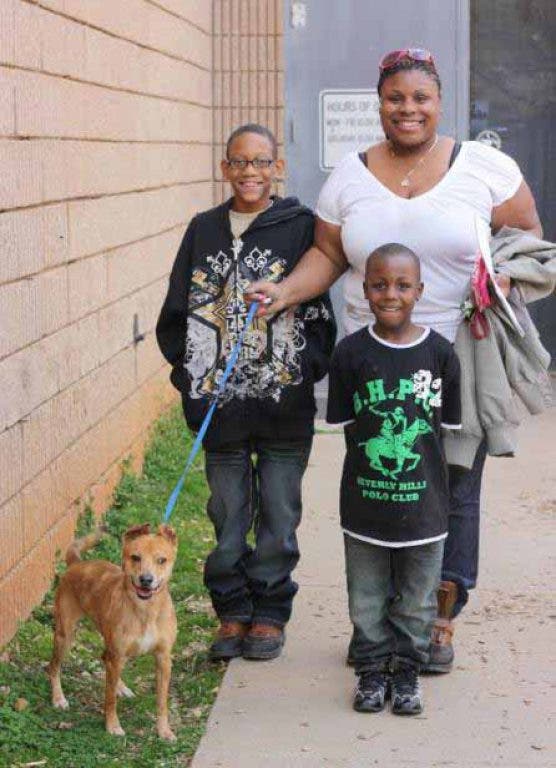


East Atlanta-area animal lovers were in the audience Tuesday to hear the DeKalb County Animal Services Task Force describe ways they plan to lower the 60 percent euthanasia rate at the county shelter.
Susan Neugent, a task force member, told a crowd of animal lovers who packed the Decatur library auditorium that the situation “is something that screams for change.”
Adair Connor and Misty Chouinard, professional dog walkers and pet sitters from Kirkwood, said they attended because the conditions at the DeKalb County shelter, which serves their area, deters adoption.
Find out what's happening in East Atlantafor free with the latest updates from Patch.
Connor, co-owner of the Paw'd Pipers, says one family went to the shelter to adopt two cats but the cages were so crowded, the children left sobbing.
"All of the lower cages were empty because nobody would look down there," said Connor.
Find out what's happening in East Atlantafor free with the latest updates from Patch.
But another DeKalb resident Gregory Slugocki said he's worked all over the country at shelters and he thinks the DeKalb shelter is run as well as could be expected given the money and space.
"The place is sanitary; dogs are well fed; the staff members are doing the absolute bes they can," said Slugocki. "There's not one person who does euthanasia who doesn’t go home and cry their eyes out."
DeKalb County Animal Services & Enforcement reported euthanizing more than 15,000 of the 25,662 animals taken to the shelter between 2008 and 2010, the task force reported. Only 10 percent of those animals were adopted, 12 percent were taken in by animal rescue groups, 8 percent reclaimed by owners, 3 percent were found dead in their cages and 7 percent could not be accounted for.
The task force is proposing a program that combines high volume/low cost spay and neutering program, ramping up animal adoptions, a policy to trap and neuter feral cats and increased contact with animal rescue groups, said Neugent.
The task force proposal of a “comprehensive and concurrently implemented program” is modeled after successful programs in Reno, Nevada; Richmond, Va., Terre Haute, Ind.; and Jacksonville, Fla., Neugent said.
Pit bull owners were pleased by a proposal that would remove the breed from a county zoning ordinance list of animals excluded as household pets, and rely instead on a county animal control ordinance that deals with dangerous dogs.
The zoning ordinance lists pit bulls, pot-bellied pigs and pythons among the creatures that can be excluded. Removing that listing would “allow pit bulls to be household pets,” Neugent said.
Currently, pit bulls may not be directly adopted from the DeKalb animal shelter, although some animal rescue groups do work with the animals. Pit bull owners said that the ordinance is difficult to enforce and unfairly maligns the breed.
“I can show you a dozen dangerous cocker spaniels and a hundred pit bulls who will lick your face,” said David Gartner of East Lake.
Other animal advocates criticized the condition and location of the county’s animal shelter, saying the location near the county jail isn’t welcoming to families who might wish to adopt animals.
Others argued for a law mandating that all pet owners spay or neuter their pets, and decried back-yard breeders who dumped animals at shelters. Rebecca Guinn of the and a member of the task force said that every national animal welfare group, including the Humane Society and the ASPCA, have “come down against mandatory spay and neuter” laws.
“You have to change hearts and minds,” said Guinn, arguing that such laws aren’t effective. She related a story in which she was working in a community program that offered free rabies shots. Of 60 animals, 25 were already fixed, and all but five of the rest signed up to have their pets spayed or neutered for free. “Those five people aren’t going to do it no matter what we do,” said Guinn.
Problems with breeders could be addressed with differential licensing, Guinn said.
Bryan Grant of Southeast Pet Rescue Railroad suggested a program to geotag stray animals, determine where areas of need are, and bring mobile vet services to that neighborhood and offer WalMart gift cards or other incentives to owners to have their pets spayed or neutered.
Other citizens complained that county animal control staffers seem to be unfamiliar with county laws. Still others urged for wider public education programs, including emblazoning garbage trucks with information on free or low-cost spay and neuter programs.
The county’s animal control budget is now $3.2 million, and Neugent said improvements could be made in efficiencies, such as changing the hours that pets may be adopted, or to get private dollars for programs.
Commissioners Kathie Gannon and Jeff Rader attended the meeting, and both expressed support the task force’s work. Rader said the commission has delayed staffing decisions until the task force submits its final recommendations.
The task force’s next hearing will be Tuesday, Aug. 30, from 6:30 p.m. to 8 p.m. at the Goodwill Career Center, 1295 Columbia Drive, Decatur. For more information on the task force, contact dila@dekalbcountyga.gov or visit www.dekalbcountyga.gov/astf to take an online survey.