Politics & Government
In Its Dispensation, Justice Is (And Should Be) Blind
But that doesn't mean the citizenry should be blind to justice system's machinations
I am a member of the Fulton County District Attorney’s Citizen’s CourtWatch program, which was designed by the DA’s office “to be the eyes and ears of the community in courtroom.”
(If you’re interested in this program, I encourage you to join us for our annual training session Saturday, March 19, from 9 AM – 12:30 PM. RSVP to Janet Martin, 404-699-5297.)
While the stated purpose of the DA’s program is one thing, I attend CourtWatch hearings to show community support for the victim, their family and the affected neighborhood.
I’m also a member of a smaller, grassroots Court Watch group, which hopes to accomplish much more. Yes, we go to court and represent our community in the courtroom and to support the victim, but we are also delving deeper: Exploring and educating ourselves about the criminal justice system in
Georgia; looking for things that citizen advocacy might actually help fix; and even Fulton County Superior Court judges.
Find out what's happening in East Atlantafor free with the latest updates from Patch.
On this notion of Court Watchers/citizens assessing judges, we have gotten major push back from some Fulton County judges, particularly Judge T. Jackson Bedford.
Bedford, who ascribes the most ignorant and prejudiced motives to us, implies we are puppets of Fulton County District Attorney Paul Howard, which is absurd. When we’re in court, we observe everything, from the judge to their courtroom’s bailiffs, and from the ADAs to the defense attorneys.
Find out what's happening in East Atlantafor free with the latest updates from Patch.
Bedford wants to know exactly what citizens know about evaluating judges’ performances, an ironic question from an elected judge. The challenge, Judge Bedford, is that ordinary citizens are tasked with doing just that do that every election cycle. From our re-election of Bedford, we must be really off-base.
This is a major issue in electing judges. We ordinary citizens wonder why an independent and impartial group of legal minds isn’t stepping up with definitive ratings or – better yet – a comprehensive and required questionnaire for judges and other elected Fulton County Court officers that would allow citizens to fairly and accurately evaluate them. What a difference that data would make, creating informed voters.
So far, we have no takers. While we understand that judges can retaliate against individual lawyers who’ve voiced opinions against them and then appear in their courtrooms, how can they retaliate against an entire group? And if that is the fear, then there is something truly wrong with the system.
In any case, that leaves us, as far as I can tell. We’ve observed the action in the courtrooms – from the judges, magistrates and the DA himself, to the ADAs, the public defenders and defense attorneys, to the courtroom staff — and how they all interact. And they are still on our radar for further examination. Our plan to examine everything, including these individuals.
But after our years of observing in the Fulton County Courtrooms, we’re now officially looking past the courtrooms actions, antics and surly bailiffs to see what else we can learn.
So, this grassroots Court Watch group recently met with Sheriff Ted Jackson, and toured the Fulton County Jail. Interestingly, the information we requested to be sent to us after the meeting never showed up. Disappointment at every turn.
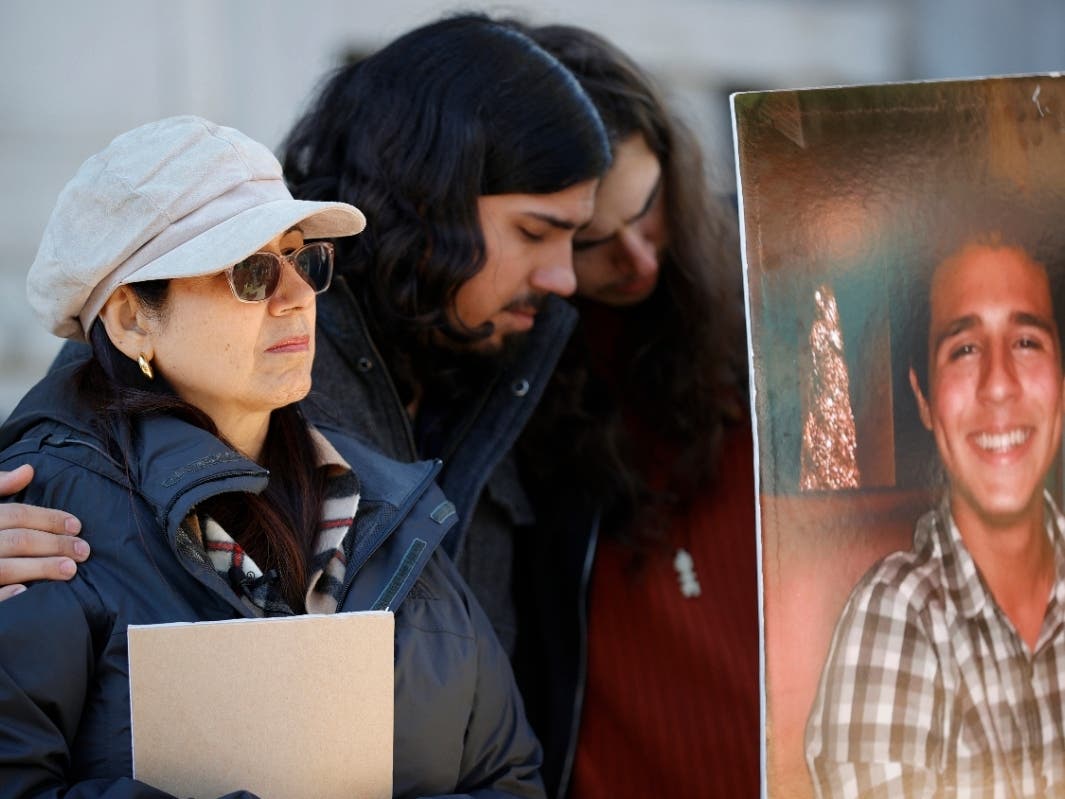
Around the same time as this expansion of our efforts, a local media outlet was writing a story about our group. The trial of Jonathan Redding, the young man accused of the killing of popular Southeast Atlanta bartender John Henderson, was coming up.
As the conversations about CourtWatch began with the reporter and others, I was feeling that my experience had clearly shown that the criminal justice system was broken, and that it should be audited beginning with the moment of arrest through the system, during probation – there’s always probation – and through prison and for several years after parole.
But all of these events came to a head – the most recent courtroom visit, the meeting with the sheriff, the tour of the jail, and the upcoming Redding trial – and has had me thinking a lot more.
And after all that thinking, I decided that I needed to revise what I said about the criminal justice system being broken.
I honestly don’t know enough to know if it’s broken. That’s why I got involved at this deeper, grassroots Court Watch level: to find out.
The system feels broken, but then so do most things that all come together in those courtrooms: failures of family, our schools, our society. They are all there sitting in the defendant’s chair, and on the benches with the crime victim and his/her family, friends and community.
And what I can’t get out of my head from our meeting at the jail is the faces of its inhabitants. Specifically, their youth. It’s also there in Jonathan Redding’s mug shot: he is accused of such brutal crimes, but he is so very young.
So I come back to what I know is a fundamental truth: The issues that I personally perceive as failures in the criminal justice system are societal.
As for that audit from the time an individual is arrested, through the whole process, and extending several years after parole from one of Georgia’s prisons? Maybe we’ll learn that this is exactly what the system needs. But I really don’t know enough to know.
Right now, I have to focus on the system because broken systems can be repaired or redesigned or replaced.
But I always come back to that fundamental truth. The issues are less with the criminal justice system itself than with our culture, and that the audit needs to begin at birth.
This isn’t the first time I’ve been one of a group trying to “make a difference” in the criminal justice system. Back in the waning days of the Franklin Administration – the Bad Old Franklin/Pennington Days – a group of South Atlantans got together to look into the juvenile justice system. That was my first time as part of a group looking deeper into the criminal justice system. We had great support: our District 1 Atlanta City Council Rep. Carla Smith and District 26 State Sen. Nan Orrock set up a meeting with some of the most active groups, institutions, and activist individuals working in the juvenile justice world.
The Georgia Office of the Child Advocate, the Barton Clinic, Voices for Georgia’s Children just to name a few. And you know what? I was so overwhelmed by what I learned that I had to walk away.
The problems, issues, ideas and possible solutions were so vast and required so much commitment on so many levels – human, institutional and, most of all, financial – it felt unfixable.
Solutions always come back to money, or the fact that there isn’t enough. Just in my time, I’ve seen generations lost to two key decisions – to de-institutionalize the mentally ill, and to felonize (yes, it’s a word, according to the Urban Dictionary) cocaine – because there wasn’t enough money for mental health treatment programs and for intervention and drug addiction treatment programs.
Today, there isn’t enough money for the early intervention, educational and support programs that could reach and help at-risk children. There isn’t enough to help young people who become addicted to drugs, or join gangs, or just make a mistake, one bad decision, and end up in that old revolving door. Once they’re in that door, there isn’t enough to pay for the housing they require, much less the educational, treatment and diversion programs they need.
Committed and creative people and groups and institutions are there, and all are ready with ideas and programs and solutions, but do they have the money to make a dent? Not that I’ve seen. Citizens would rather cut taxes or fund other programs than find the money for programs that help young people before they take the wrong path.
But I remain overwhelmed by their cause.
So as they do what they can, I do what I can. I’m involved in the Fulton County Citizens CourtWatch to demonstrate support of the victim’s family, friends and community. And I’m involved in the other Court Watch, the grassroots group of neighbors, to learn more about the criminal justice system and to see if we can identify specific issues that could be helped by community advocacy.
And because I know that the issues we might address will likely be systemic, not societal, it’s really like mending a hole in the Hoover Dam with duct tape.
But it’s something I can do, and I can’t just sit by and do nothing especially when I think of all of those very, very young faces at the Fulton County Jail.
Because I know that often there is another victim sitting in the defendant’s chair.