Health & Fitness
1818Blog: An Interview with Rep. BJ Pak (R - Lilburn), Part I: The Session
John Dunn interviews Rep. BJ Pak (R-Lilburn) in Part I of a two-part interview. In this installment: The coming session of the Georgia General Assembly

This is a corrected version of a previously published blog, which had some factual flaws in Mr. Pak's biography. My apologies to Mr. Pak.
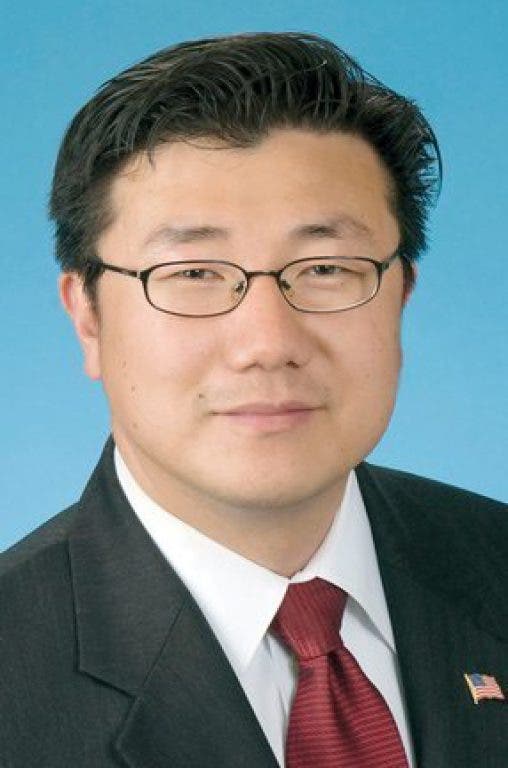
Republican BJ Pak is the State Representative who represents Lilburn and the unincorporated area of Gwinnett County known as Mountain Park. He is currently serving his second term in the Georgia House of Representatives, District 108.
Rep. Pak was born in Seoul, South Korea. His family immigrated to the United States when he was a child, first to Atopka, Florida, then to metro Atlanta. Atopka is the Seminole word for "big potato," which is ironic as the elder Mr. Pak, after working several years as a bag boy at a grocery story (and dishwasher at night) ultimately took a job with Frito-Lay. His mother worked as a cook and a cashier at a grocery store, until they had enough money to buy their own. BJ Pak earned his American citizenship in 1989.
Find out what's happening in Gwinnettfor free with the latest updates from Patch.
BJ Pak attended did his undergraduate study at Stetson University in Deland, Florida, and went on to attend law school at the University of Illinois, at Champaign. He works at Alston & Bird, doing litigation specializing in corporate compliance, as well as white collar defense.
He is married to wife Sandra. They have three children. They live in Mountain Park, and attend St. John Neumann Catholic Church.
Find out what's happening in Gwinnettfor free with the latest updates from Patch.
This week we will discuss with Rep. Pak the coming session of the General Assembly, his plans there, as well as how federal issues will have an impact on our state.
John Dunn: Last month there was a terrible tragedy in Connecticut involving a school shooting. You released a statement after the incident in which you said you vowed as a policy maker to bring more attention to the issue of mental health. Can you elaborate on what the General Assembly can do in that regard?
BJ Pak: First, I believe that mental health is a broader problem than just identifying people how may be prone to violent outbursts; although a tragic event like the one in Newtown causes all of us to ask, “who (or what kind of person) would do something like that?” It is a part of public health and social order. There are many individuals who suffer from mental illnesses that are homeless or are in jails. There are several things the State does already related to mental health. For one, the State already expends much money in funding those who care for mental health patients. We can do more in terms of training and supporting these professionals who identify, counsel, and work with individuals who have such issues. I think the focus should also be on non-profits and religious organizations, and how these social service organizations can play a larger role in helping to address this issue and not rely so much on state-owned institutions. As such, we can further fund education and provide support for family members who care for those who suffer from mental illness. Finally, we can look at laws related to involuntary commitment to see if it provides enough flexibility in getting help to those who need it.
JD: As a parent, how would you assess Gwinnett County Public Schools’ security? Is it time for legislation to enable local school boards to allow school personnel to carry concealed beyond resource officers, as they have in Texas?
BJP: I have not had any issues regarding security at GCPS. I went to a public high school where an armed officer was assigned to the school. I am not sure it was that effective in terms of reducing unforeseen violence at the school. I would assume that such an officer’s presence might have had some deterrent effect on would-be intruders. I just have not seen any data that shows how much.
With regard to the policy of allowing school personnel to carry concealed weapons, I would defer to the local school boards to make that determination. However, absent compelling state interests as to why they should not be allowed to carry a lawfully obtained weapon, I do believe allowing school personnel to carry permitted weapons would have a deterrent effect on any would-be intruders. Again, I do not know how much of an impact that would have, but this is an option we should study.
JD: BJ, you sit on the Code Revision Committee, Health and Human Services Committee, as well as the Non-Civil Judiciary Committee. What are your plans for the 2013 session?
BJP: Constituent service is the number one and the main aspect of the job. Helping our citizens solve any issues they may be having with the state government bureaucracy.
A second aspect is to stop bad or unnecessary legislation –or, at the very least, assist in improving the legislation during the committee process.
We have plenty of laws, and I believe there is an innate sense from legislators (especially the newly elected ones) that they need to introduce legislation or to pass a law to perhaps show voters that he or she did something in Atlanta. To a certain extent, I think I also fell prey to that thinking. My view has matured from my first term, however. I now view the legislative process differently. While legislation may be necessary to solve issues, not many laws that are passed are critical or even necessary. I am glad that the legislative session is only 40 days. I often joke that the shorter amount of time that the legislature is in session, the less damage we can do.
(At this moment in the interview I felt tears well up, but as this was a telephone interview, Rep. Pak could not hand me a tissue.)
JD: You have plans to assist the State Attorney General’s office. Can you expound on that?
BJP: I work with various elected officials and agency personnel in helping carry legislation that may make government more efficient. Due to my background, the Attorney General’s office sometimes asks me to consider carrying some legislation that solves a problem that they have. For example, the Attorney General’s office is charged with defending the constitutionality of laws we pass. Sometimes that is a heavy and difficult thing to do! Currently, there is no procedural mechanism in place for the AG’s office to receive notice of when the statute is being challenged on constitutional grounds. I believe the AG should have a right of notification and certain right to intervene when someone challenges the constitutionality of a state statute –particularly because the case can have precedential (binding or persuasive) effect on future litigation and cases. Other states and the federal government have such statutes requiring notice and a right of intervention. Georgia does not.
JD: It looks as though many of the issues surrounding the so-called “fiscal cliff” have been resolved, for better or worse. However, sequestrations still looms on the horizon. How will this impact our state?
BJP: The federal government is a huge direct consumer and/or subsidizer of many industries. The cuts caused by the sequestration rule would certainly impact the livelihoods of many businesses and citizens. The greater threat to our economy, however, is the uncertainty surrounding the deficit spending and the climbing national debt. Can we solve this issue or will the political gridlock prevent us from doing so? In other words, the market wants to know if the creditors are going to get paid full or are we going to default and pay them less?
I believe that without significant spending cuts, and continued quantitative easing, we are going to be facing massive inflation (the hidden tax) in the not-too-distant future. The Federal Reserve has kept interest rates incredibly low in an effort to increase lending and to indirectly boost consumer spending. I am not sure if this policy will work in light of the tax increases for 77% of Americans imposed just recently, and the additional costs associated with implementing Affordable Care Act (Obamacare). Based on my estimation, consumers (taxpayers) neither have the extra disposable income nor the intestinal fortitude to spend, based on credit.
In regards to Georgia, we can see what type of impact the government’s fiscal policy has had on us. Since our economy was so dependent on real estate and development, you see Georgia’s unemployment rate higher than the national average, and we have more failed community banks than we would like. With the on-going fiscal crisis, I think it means we will have a longer climb out than other states.
JD: Do you support Governor Deal’s refusal to establish state exchanges for ObamaCare, and why?
BJP: Yes. The state gets very little subsidy in establishing and running such an exchange (with future funding uncertain) in return for all the mandates imposed in running the exchanges (with more rules to come). It is an “under-funded mandate” federal mandate.
JD: Finally, can you briefly explain what the percentage of federal money does our state budget consist of? Is that permanent, and if not, how long would it take to reduce or eliminate federal monies?
BJP: We get slightly over 38% of our budget from the federal government. For FY2013, it was about $15 Billion. Unfortunately, our dependency on the federal money is permanent, unless the federal mandates are repealed and/or the state generates enough revenue on its own to meet the spending requirements. I don’t foresee either happening anytime soon.
In Part II of my interview with Rep. Pak, next week, we discuss the changing demographics of Gwinnett County, and how that bodes for the political make-up of county government and the legislative delegations.