What do gardeners do when a rainy week confines them indoors? Ok, besides fulfilling one’s nap quota. We busy ourselves with indoor gardening, of course.
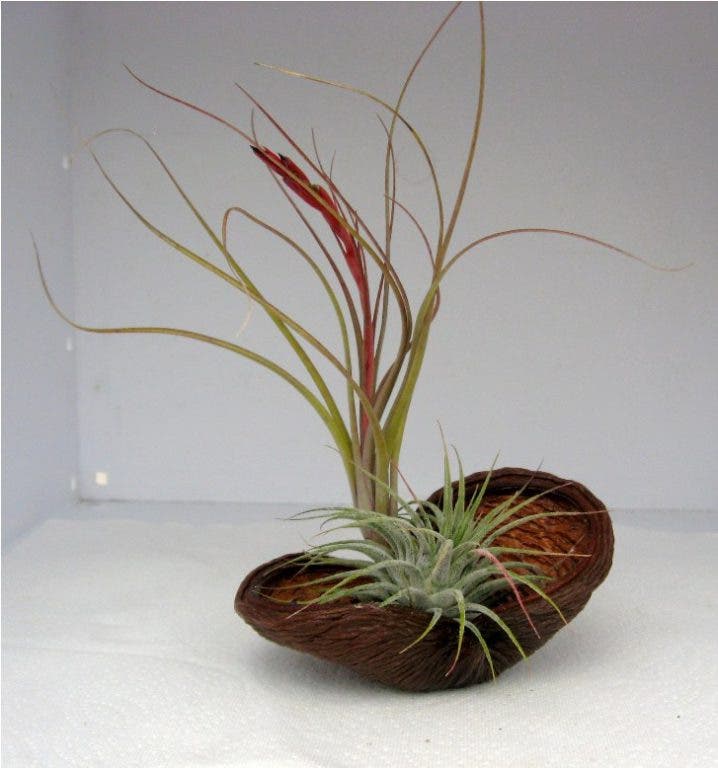
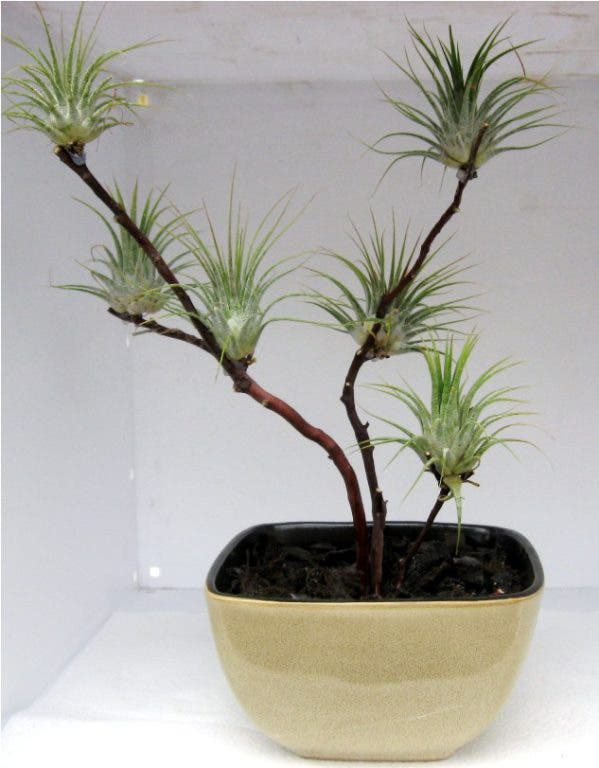
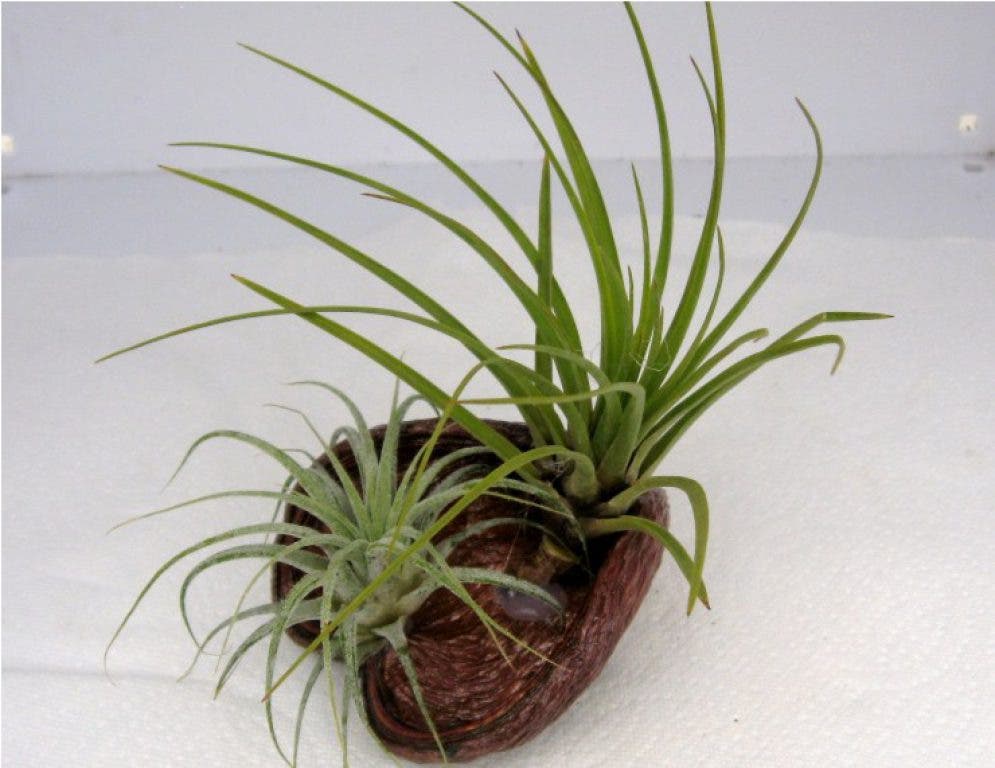
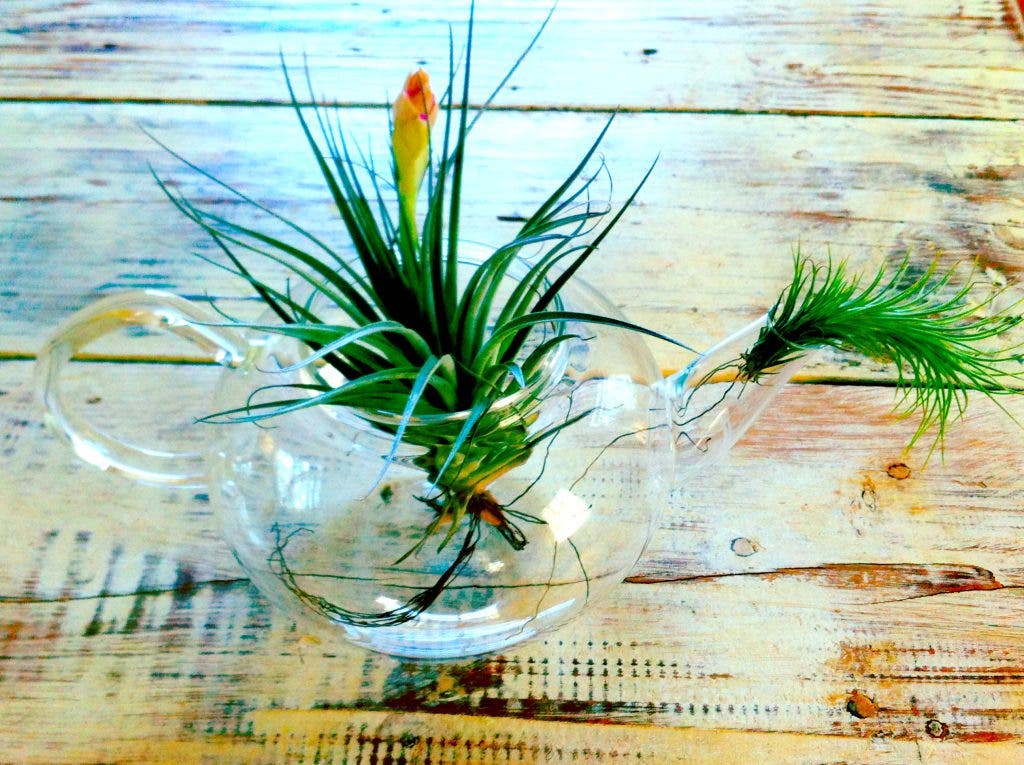
And as if I didn’t share my living space with enough plants, I’ve recently taken in a new group: photosynthesizing beauties, called air plants, in need of a forever home. (Read: I lack self control and bought more plants.) Looking more like a sea anemone than a plant, it’s no wonder why these members of the Tillandsia genus have easily triggered obsessions with seasoned plant fanatics and novices, alike.
Tillandsia species are epiphytes, meaning they grow while attached to trees or other objects. However, they’re not parasites. Instead, their wiry roots are used only to anchor them to a structure. Without true roots from which to draw water and nutrients, these plants derive their sustenance from the air, hence their common name, air plants. Equipped with a zillion microscopic cups, called trichomes, covering their surfaces, they are able to capture and utilize the moisture and nutrients that happen to land on their leaves. This feature earns them a top spot on my “Coolest of Cool Plants” list.
Find out what's happening in Midtownfor free with the latest updates from Patch.
Acquiring air plants is simple enough. If your favorite local plant shop doesn’t carry them, and your gardening friends don't have any "pups" to share, a simple inquiry into your search engine will reveal plenty of sources who will send them strait to your door. Air plants via air mail? How nice.
Although caring for air plants is new to me, here are a few tips I’ve received from people in the know.
Find out what's happening in Midtownfor free with the latest updates from Patch.
Watering
- For optimum performance and growth, air plants require a solid watering schedule of 2-3 times a week. Although, they will survive with less.
- When watering, it’s recommended to completely submerge the plant in water (anywhere from a minute up to a few hours), rather than mist, to ensure the undersides of leaves receive adequate moisture too. However, if your plant is in flower, avoid wetting the bloom for more than a few seconds. Otherwise, the delicate petals may disintegrate.
- You may use spring water or tap water, but avoid distilled water as it tends to pull nutrients from the plant’s tissue.
- Most importantly, the plant MUST be allowed to dry completely within 4 hours of each watering, regardless of how long your plant was submerged. If your plant shows signs of rot, it is most likely not due to too many waterings, but rather its inability to dry completely between waterings.
Lighting
- Air plants require bright indirect light. Being placed no further than ten feet from a south, east or west facing window is ideal.
- In an office setting, fluorescent tube lighting is usually adequate.
Fertilizing
- Although, not entirely necessary, regular fertilizing will increase plant vigor, including flower and offset production.
- Thoroughly mist or submerge your plants in a Bromeliad fertilizer (17-8-22) solution about once a month. Allow to dry. The next day, thoroughly water your plants with clean water to remove any residue that may have accumulated.
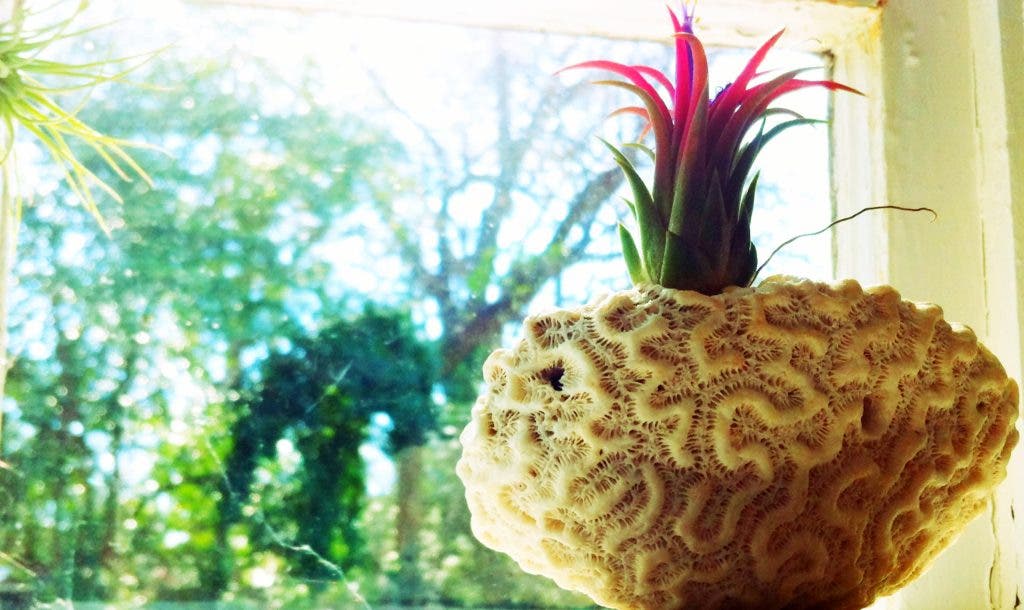
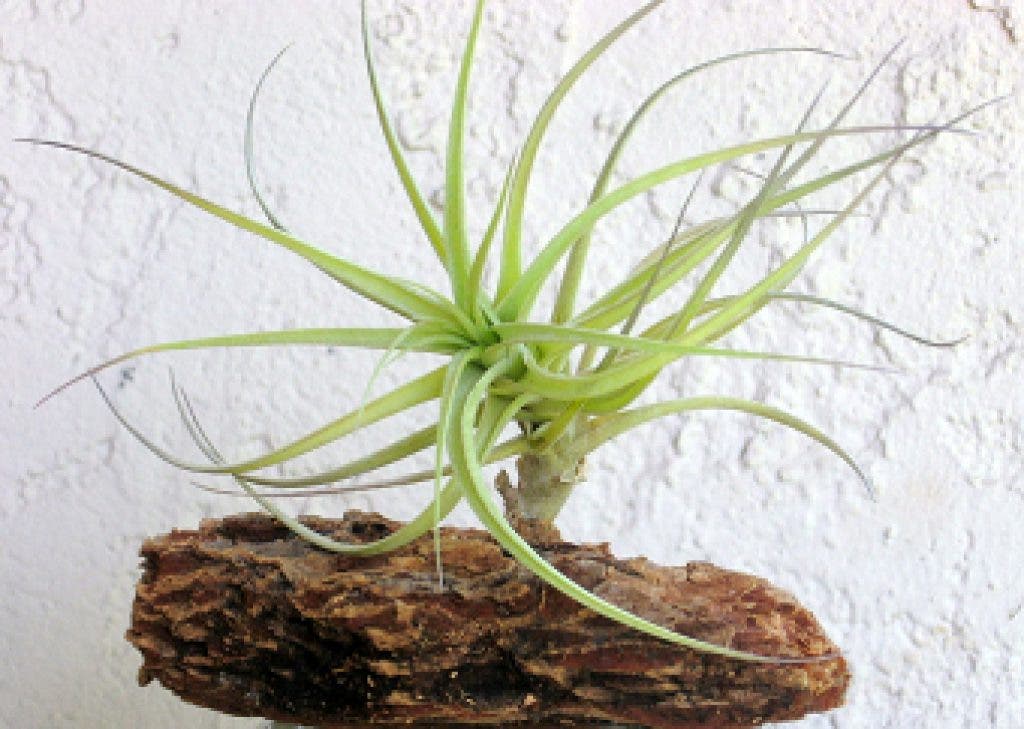
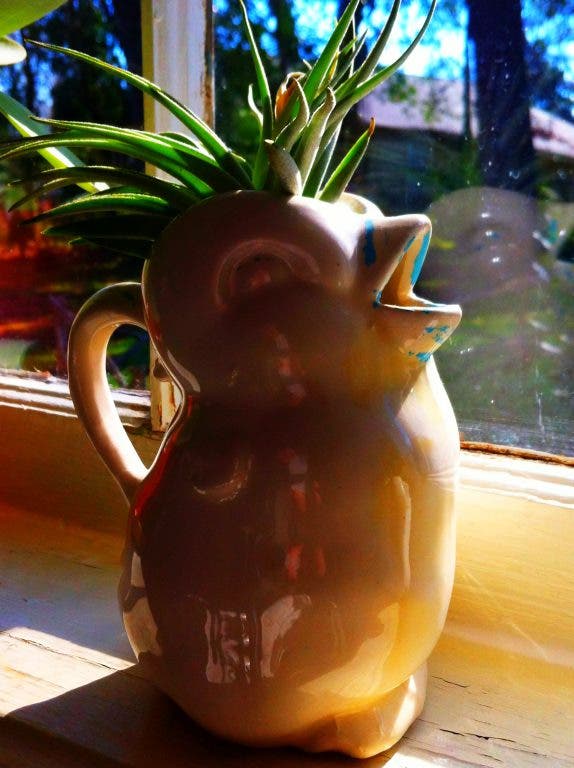
Great, now that we’ve got proper plant care under control, it’s time to get creative! Display them in a windowsill, on the dinner table or dangle them from a chandelier. You can even mount them to an object, like driftwood or coral, using wire (not copper; it’s toxic), clips or glue (Shoe Goo, Tilly Tacker and Goob are best). However, avoid mounting them to your ear lobes. Don't judge; I had to try.
Happy air planting!