Crime & Safety
Winter Indoor Fire Prevention
Simple measures to help prevent house fires during the winter and holidays.


The Cobb County Fire Department offers the following tips for winter safety.
Winter Heating Safety Tips
Never use a gas or charcoal grill inside the home. Portable electric generators must be used outside, never indoors or in an area that allows CO to collect.
Fire Prevention
If you use a real Christmas tree in your home, make sure to water it daily. Electric lights should never be hung on a dried-out tree. The potential for fire is drastically increased if the tree is dead and dry.
All lights and lighted window ornaments should be inspected every year to ensure cords are not worn or frayed. All candles should be used with care. According to the NFPA, the number of fires started by candles nearly doubles during the month of December.
Having smoke alarms in the home reduces the risk of dying in a fire by 50 percent. Check all smoke alarms in your home to ensure they are in working order. Vacuum dust from existing smoke alarms.
Find out what's happening in Northeast Cobbfor free with the latest updates from Patch.
You should have an alarm on every level of your home as well as one in each bedroom. If your smoke alarm uses regular 9-Volt batteries, remember to replace them two times a year. (Hint: change your batteries when you change your clock in the spring and fall). Test your smoke alarms monthly, and be sure your children are familiar with the sound of the alarm.
Almost 60 percent of all fatal residential fires occur in homes that don't have smoke alarms, so this may be the single most important thing you can do to keep your family safe from fires.
Because smoke rises, smoke alarms should always be placed on ceilings or high on walls. If a smoke alarm near the kitchen goes off while you're cooking, do not take the battery out of it - you may forget to replace it. Open the doors and windows instead.
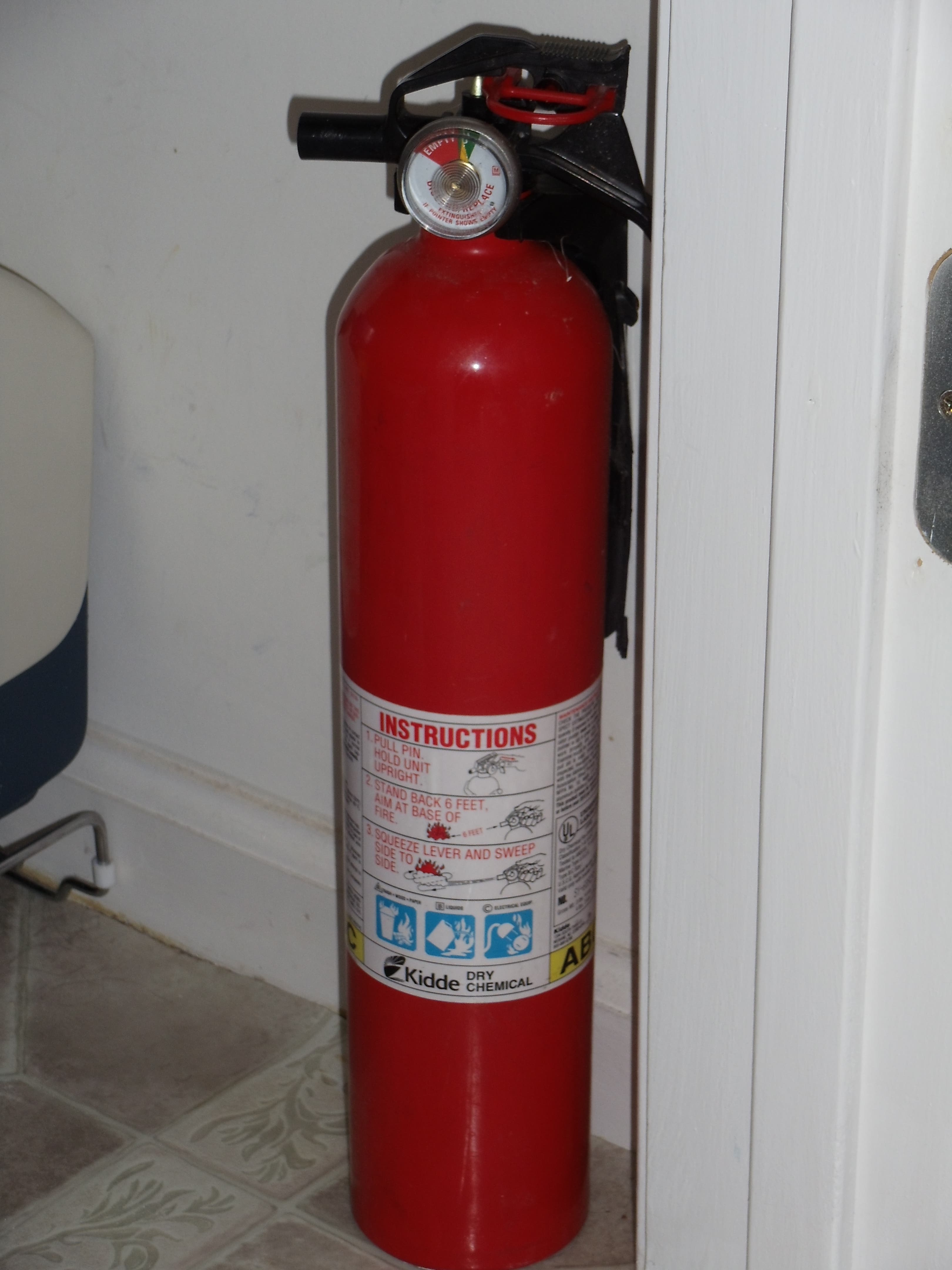
Keep fire extinguishers handy, they should be strategically placed around the house, at least one on each floor.
The kitchen should have an all purpose extinguisher, this can be used on grease and electrical fires. Fire extinguishers are best used when a fire is contained in a small area, like a wastebasket, and when the fire department has already been called. According to the NFPA, remember the word PASS when operating an extinguisher:
Pull the pin. Release the lock with the nozzle pointing away from you.
Aim low. Point the extinguisher at the base of the fire.
Squeeze the lever slowly and evenly.
Sweep the nozzle from side to side.
The best time to learn how to use the fire extinguisher is now, before you ever need it. If you have any questions, the local fire department can help. Fire extinguishers have gauges on them indicating when they need to be replaced and should be checked regularly to make sure they are still functional.
Plan In Home Escape Routes
Planned escape routes are a necessity, especially if a fire were to occur during the night. Go through each room in your house and think about the possible exits.
Find out what's happening in Northeast Cobbfor free with the latest updates from Patch.
You should have two escape routes from each room, in case one is blocked by fire. Inspect the room to make sure that furniture and other objects are not blocking doorways or windows.
Make sure that the windows in every room are easy to open and are not painted over or nailed shut - remember, these may be your only way out in a fire. Make sure that everyone in the house knows how to open all doors and windows.
If you live in an apartment building, make sure any safety bars on windows are removable in an emergency. Be sure to know the locations of the closest stairwells or fire escapes and where they lead.
If your house is more than one story, an escape ladder is an important safety feature, you should have one escape ladder in each upper-story bedroom. The ladder must be approved by an independent testing laboratory; its length must be appropriate for your home, and it must support the weight of the heaviest adult in the house.
Be sure the babysitter is familiar with your home, all escape routes and plans in case of fire.