Arts & Entertainment
Farmington Artist’s Retrospective Now on Display in Charlotte, N.C.
Metalsmith Gary Noffke is exhibiting a major retrospective of nearly 50 years of his work at the new Mint Museum of Art Uptown.
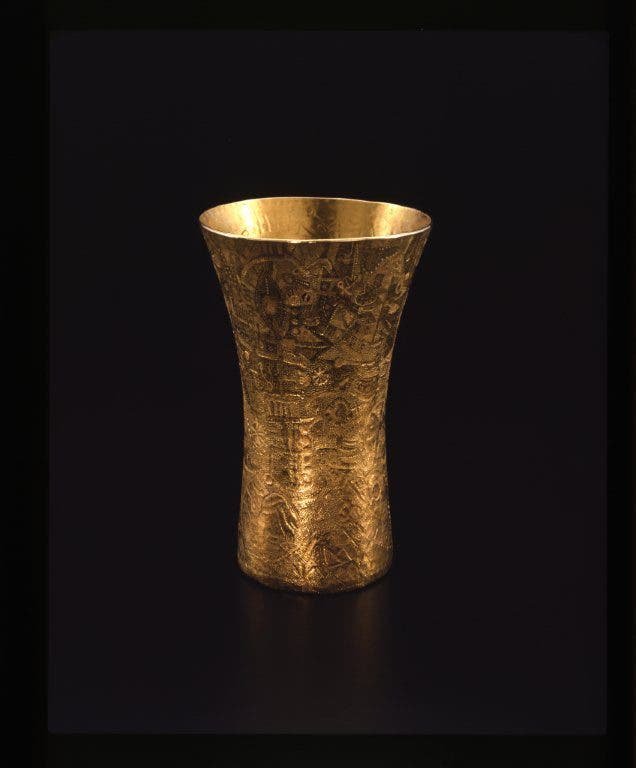


Metalsmith Gary Noffke, long-time Farmington resident, is exhibiting a major retrospective of nearly 50 years of his work at the new Mint Museum of Art Uptown in Charlotte, N.C. The show, titled “Attitude and Alchemy: The Metalwork of Gary Lee Noffke” runs through Sept. 11th. The Mint Museum of Craft + Design is located at 500 S. Tryon St.
On display are 130 pieces of Noffke’s art, including rings and other jewelry, choppers, knives, spoons, goblets, bowls, cups and even quirky cappuccino steamers.
“It took five years to get this show together,” said the former University of Georgia art professor in an interview in his rural home and studio.
Find out what's happening in Oconeefor free with the latest updates from Patch.
Noffke said he’s been making functional objects with his hands since he was a child growing up in Sullivan, Illinois. After earning an MFA in metalwork from Southern Illinois University, he moved to Georgia forty years ago to teach at UGA.
Metalworking requires physical labor, Noffke explained, adding that he utilizes a variety of tools including sledgehammers, blow torches and wooden mallets. Noffke’s studio is meticulously organized, so every tool is right at hand. He attributes his fastidiousness to his German heritage.
Find out what's happening in Oconeefor free with the latest updates from Patch.
To illuminate Noffke’s art-making process, the Mint replicated part of his studio, including his anvil, hammer and tongs, a tool bag and even an old decorated refrigerator and some vintage fishing lures from the wall. A photo essay and short video both document his creative process beginning with his raw materials to the finished object.
“I don’t think about what I’m making,” he said of his mindset. “I let the metal go where it wants to go. My process probably isn’t that different from the Etruscans (the ancient Italian culture B.C.,). I want my pieces to look like they were made by a person, not a machine.”
The surface details on Noffke’s objects are part of what makes them unique, one of a kind. They also reflect his off-beat sense of humor. On one gold cup, for instance, he depicts what he believes were his dog’s nightmares, full of boogiemen, odd symbols and funny references. On some highly textured pieces, he uses braille characters, including his signature initials in that alphabet for the blind. Sometimes he intentionally stamps the wrong date of creation, which he said he does just to confuse later art historians.
In the decade since his retirement, Noffke said his emphasis has shifted from surface design to form.
“I like making asymmetrical bowls and can shape any curve,” he said. “My hammer marks are on the inside of the bowl and the outside surface is smooth.”
Noffke has high praise for the curator of his show at the Mint, Allie Farlowe, who is the daughter of the late Athens artist Horace Farlowe. Farlowe also edited the Mint’s elaborate 140-page catalog of the show, including photographs of the work and supplemental materials about the artist and his technique. She stated that her goals with the show were “to capture the artist’s rebellious nature, to examine his methodology, his evolution of style and his impact on the field of metalwork.”
The alchemy part of the show’s title comes from the artist’s creation of his own metal alloys, including one he called "969" because he blended 3.1 per cent copper with 96.9 per cent silver to produce a more flexible metal.
Noffke said the show’s opening night last Spring was “a blast.” Friends from Georgia, Kansas, Illinois, Florida, Arizona, New Mexico and Colorado showed up to help him celebrate.
“It was sort of a harmonic convergence of friends,” he said.
There is no question that Noffke is an iconoclast, but this retrospective of his work shows he is faithful to his artistic vision. Noffke is passionate when he observes that his retrospective clearly proves that functionality in art isn’t dead, despite what some art critics have been claiming.