Health & Fitness
Video: Let Presidents Day Inspire You
Kids' ability to memorize the presidents can motivate you to build a better brain! Here are some at-home brain-building exercises to help.
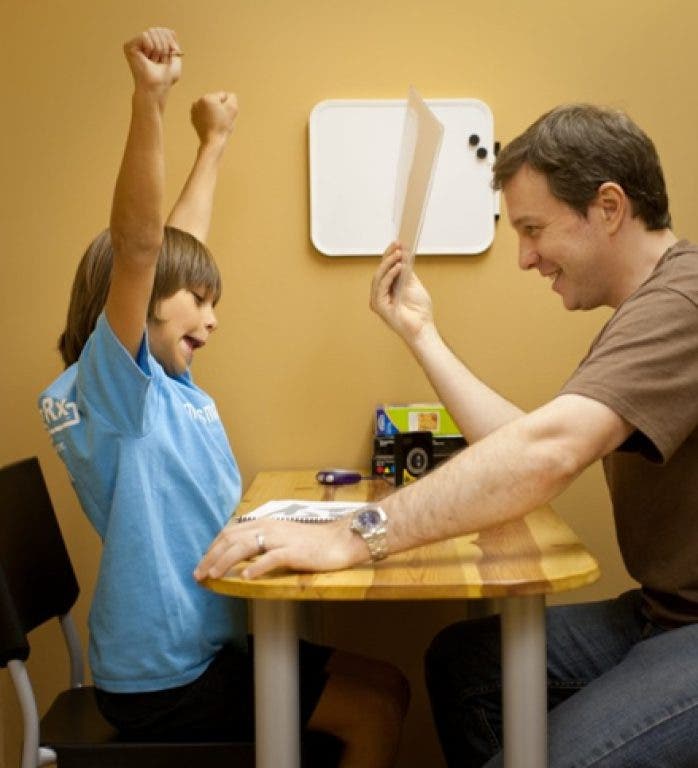
Kids’ ability to memorize the presidents can motivate you to build a better brain!
For many of us, Presidents Day represents just another day off, related vaguely to leaders from long ago. But for thousands of kids across the country, it’s much more than a brief reminder of George Washington, or a three-day weekend. For them, Presidents Day brings the perfect opportunity to share an accomplishment – the ability to quickly and perfectly recite all 44 U.S. Presidents in order, and from memory. They can do it forward and backward, often while blocking out intense distractions or performing other physical tasks.
This feat isn’t designed as an advantage in history class, but as a building block to a better brain. That’s because the training to master the presidential list simultaneously strengthens underlying cognitive skills everyone needs to think, reason, remember, learn, read, concentrate and pay attention. And by enhancing these, we actually become better learners with faster, more efficient brains.
Find out what's happening in Sandy Springsfor free with the latest updates from Patch.
LearningRx, a powerful and effective brain training program, was developed on these same principals of cognitive improvement. Learning to recite the presidents is one of the first challenges students master at LearningRx. To do so, they use a memory tool called a mnemonic – a colorful picture of all the presidents linked in a story-like list. Learning this way not only strengthens long-term memory, it helps boost visual processing skills, increase processing speed and strengthen attention.
At-home brain-building exercises help in similar ways. One method is to create paperless lists – simply imagine items connected in a colorful, memorable way. The funnier or more vivid the image, the easier it is to remember.
Find out what's happening in Sandy Springsfor free with the latest updates from Patch.
Ready to try? Let’s say you need to remember four items at the grocery store – toilet paper, carrots, cereal and chicken. So imagine yourself entering the store following an incredibly long roll of 1) toilet paper to the 2) carrots. The toilet paper is wrapped around the giant singing carrots, which are stuffed into an animated box of 3) cereal. The cereal is holding a flying 4) chicken by the leg. To add an item to the paperless list, simply extend the image. So to add cheese, imagine the chicken eating some cheese.
The list of presidents is learned using practically the same method, which also helps strengthen the three types of attention:
- Sustained attention is the ability to maintain alertness over prolonged periods of time
- Divided attention is a state where focus is spread across multiple subjects
- Selective attention is the ability to concentrate in the midst of distractions
Here’s a routine to help your child strengthen the three types of attention while working on basic math facts:
- Find an ability-appropriate math worksheet
- Time your child as he or she completes it as quickly and accurately as possible
- Ask the child to complete is a second time, but give warning you will use distractions on the next attempt. Start with mild distractions like tapping or humming. After he or she meets or beats the best time, add higher-level distractions like singing off-key or blaring the TV.
- Make it fun and reward effort and accomplishments. High-fives and verbal encouragement go a long way, as do small rewards like M&M’s or extra screen time.
- Next, add a task to strengthen working memory and divided attention. Explain that while he or she works, you’ll say three words that must be repeated immediately after finishing the worksheet. This will force a choice of which information to remember or ignore.
- Finally, combine the timed element, the distractions and the additional task to maximize the brain-building exercise.
These types of targeted attention drills are especially beneficial for those who struggle with attention deficits such as ADHD, because they not only enhance ability to pay attention, but helps multi-tasking and avoided unimportant distractions.
If you still need a little motivation to get working on improving your cognitive skills, check out the below videos of LearningRx kids who’ve mastered the presidential list. They’re pretty amazing, and there are lots more on YouTube. And remember, it’s more than just an impressive feat of memory – it’s a sign of a better, faster, more effective brain.