Politics & Government
Consultant Releases Recommendations for Sandy Springs Performing Arts Center
The City Council on Tuesday will hold a called meeting at the Heritage Bluestone Building to review the preliminary findings.


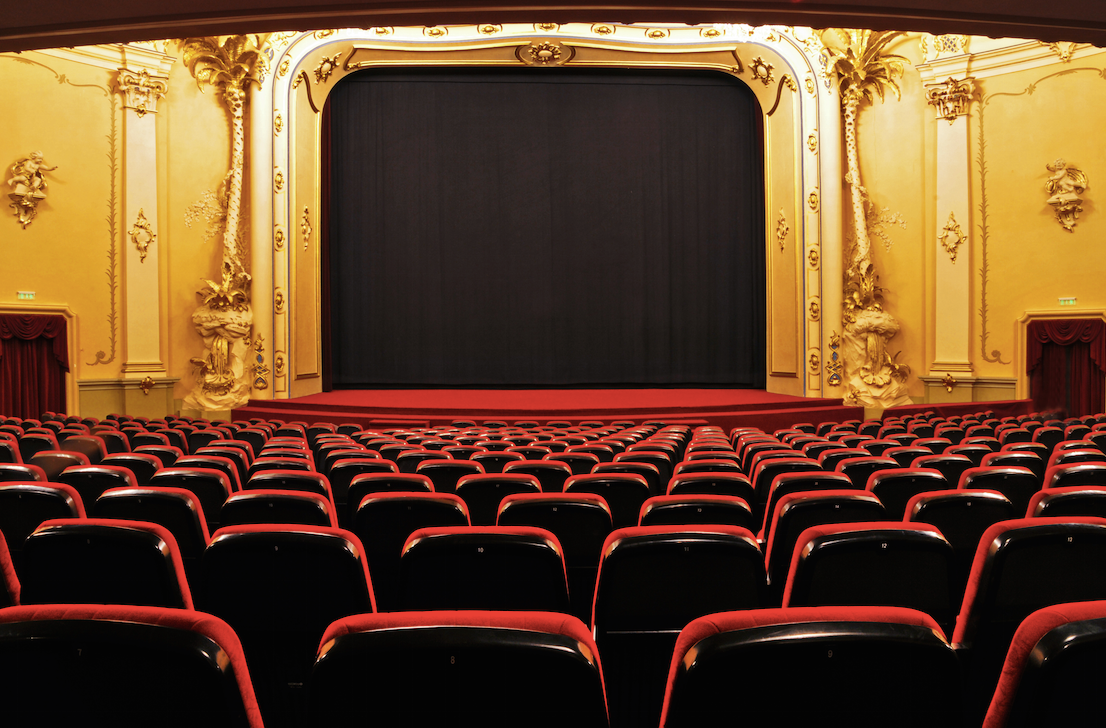
The Sandy Springs City Council on Tuesday will hold a called meeting to discuss its planned performing arts center.
The meeting will be held at 9 a.m. at the Heritage Bluestone Building, which sits at 6110 Bluestone Road.
City leaders will review programming and design of the performing arts center, which will slated to be constructed along with its City Center.
Find out what's happening in Sandy Springsfor free with the latest updates from Patch.
The city on Friday released a preliminary list of recommendations on the design and programming of the facility compiled by consultant Rick Davis.
For the design, Davis recommends:
Find out what's happening in Sandy Springsfor free with the latest updates from Patch.
- An “iconic” exterior and interior design that captures the essence of Sandy Springs, both historical and forward looking, and will serve as an identifying anchor feature for the new city center for decades to come.
- A spacious, tall, welcoming lobby – possibly serving both large and small halls – capable of serving as an event space in itself. The lobby and/or other public assembly and circulation areas should also be capable of displaying 2D, 3D and digital visual artworks.
- Adjacencies and flow between performance halls, lobby, and rehearsal/meeting rooms should allow for large-scale connected uses (e.g., conferences, galas, festivals, etc.) as well multiple discrete, simultaneous events.
- The large hall should have a seating capacity of 1,200-1,350 seats, based on scale of production and audience size estimates from user groups as well as income potential. This seat count range balances the needs of local and regional users with reasonable capacity for moderately-scaled presented (touring) performances.
- The small flexible hall should be sized at c. 5,000 SF (roughly 75x65 feet stage area with additional circulation/wing space) to accommodate riser seating of c. 300, seated dinner of c. 350-400, or standing reception of c. 475-500.
- The large hall should have a seating configuration/division such that an audience of 350-400 fills the center or main floor and feels “full,” with the capability to darken empty areas to create intimacy. Smaller local and regional groups would consider such an audience to be a success, at least initially, while still requiring the stage capabilities of the large hall.
- It may be advisable to explore a partial flat floor/removable seating area in the large hall (to include orchestra pit at floor level) for cabaret tables, dancing, and special events.
- The large hall should have stage space of c. 4,500 SF; proscenium c. 50’-60’ wide by 35’-40’ high; orchestra pit for 30-40 players for musical theater and dance performances; and a fly loft with a grid height of 70’+ to enable full and flexible deployment of lighting, scenery, projections, masking, and audio technology.
- The large hall should have excellent sightlines and a feeling of intimacy.
- The large hall should have an attractive orchestra shell capable of deployment in full stage or half stage formats.
- The large hall should have adjustable acoustics, “wet” to “dry,” using mechanical (e.g., drapes/baffles) and/or electronic systems (e.g., Constellation).
- The large hall should have in-house sound reinforcement suitable for large-scale amplified concerts (e.g., rock, jazz, musical theater) as well as smaller works, and should support HD-quality film sound, as well as allowing the efficient load in and take out of a medium sized touring sound rig.
- The large and small spaces each need to be acoustically isolated to create quiet canvases for all the performers to play on. The main spaces must also be isolated from each other and all other performance and assembly spaces so that concurrent use will be possible.
- The large hall (and, if practical, both halls) should be equipped for state-of-the-art digital projection for film and broadcast-concert programs, as well as corporate meeting needs.
- The small hall should have end-stage riser seating that deploys automatically, including seat backs. Provision should be made for partial deployment and additional risers to create alternate seating plans (e.g., thrust, arena, etc.).
- The small hall should have a floor-to-grid height of at least 24’, whether to a tension-wire grid or catwalk system, with room to stand above and allow some theatrical rigging. This height does not allow for flying scenery, but does allow hanging scenic elements, speakers, lighting, etc.
- Both halls should have adequate in-house lighting equipment for maintaining a “repertory plot” to serve most needs with modest additional gear for special uses. The planning team should consider cost-benefit analysis of moving-light packages to reduce the required number of fixtures and labor costs. The large hall should also allow the efficient load in and take out of a medium sized touring lighting rig.
- Both halls and at least one rehearsal room should have sprung stage floor installations for dance, or be provided with modular, removable dance floor systems (e.g., Harlequin).
- Dressing rooms, “green rooms,” and assembly/warm-up spaces should be provided for both halls – some overlap is possible – for near-maximum intended artist forces, e.g., c. 150 for large hall and c. 35-40 for small hall, with a mix of large and small rooms.
- Back of house storage & technical spaces will be provided for all the spaces, with efficiencies of sharing spaces to be investigated during design.
- In view of probable high demand for arts education programs and camp activities, provision should be made for rehearsal halls and meeting rooms to be used as classrooms/teaching studios, including instructional technology and safety/security considerations. If possible, consider providing a small number of small soundproof music practice rooms/teaching studios.
Davis also provided a list of recommendations on the center’s governance. He recommends the city “immediately” establish an advisory board or council, which would participate in the design review process and “begin developing broad operational guidelines, strategic goals, and accountability standards for the eventual operators of the PAC.”
(Photo credit: Shutterstock)
Get more local news delivered straight to your inbox. Sign up for free Patch newsletters and alerts.