Schools
GCPS Aims to Conserve Gas, Monitor Prices
Practices in place help third largest transporter of students in the country conserve fuel.
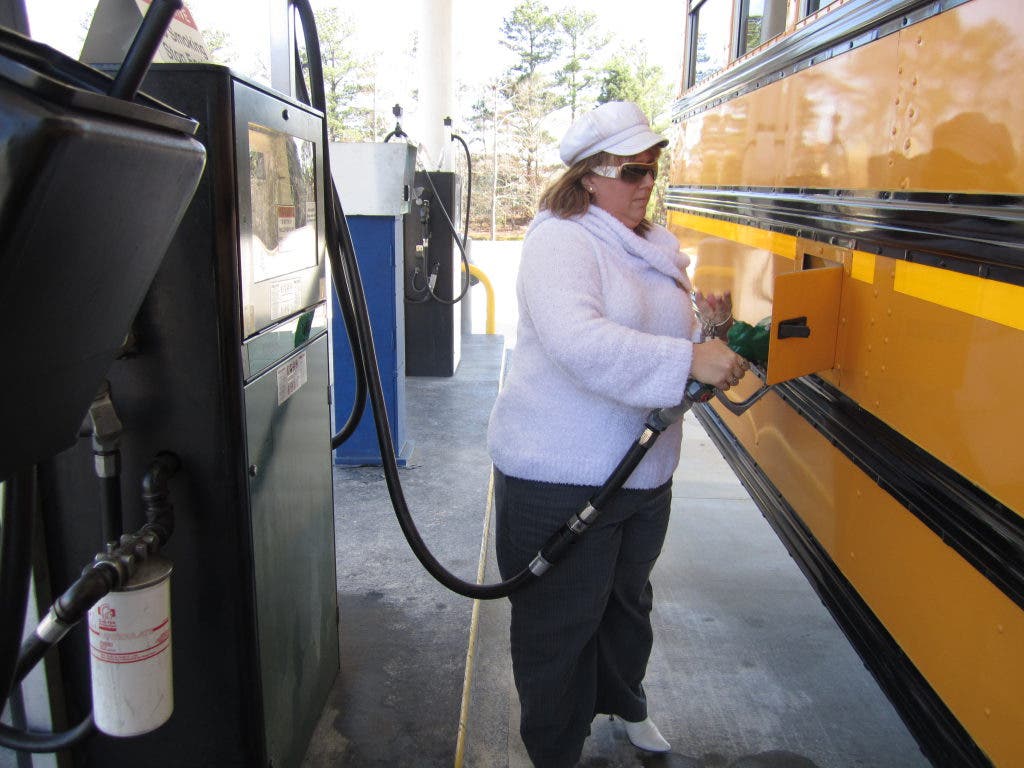


As the average price of gas creeps up each day, motorists can turn to carpooling, public transportation and alternative means of transportation to conserve fuel. Gwinnett County Public Schools (GCPS) also has practices in place to help save gas.
“We have several conservation practices in place,” said Jorge Quintana, a GCPS spokesperson. These include “no idling centralized parking lots to prevent school buses from traveling long distances, shortening routes where safe and possible, and making sure that preventive maintenance is done in order to provide for maximum fuel efficiency,” according to Quintana.
The district operates 1,834 buses with 181, or 10 percent, of the buses running in the Brookwood, Shiloh and South Gwinnett Clusters. With a total system wide budget of $1.76 billion for the current fiscal year, $8.3 million is earmarked for fuel.
Find out what's happening in Snellvillefor free with the latest updates from Patch.
This fuel makes it possible to transport more than 119,000 students twice a day, making GCPS the third largest transporter of students in the nation, according to the school district. The buses run 7,534 routes each day with 47,267 stops twice a day. Another interesting fact is that the buses drive more than 130,800 miles per day, which is more than 30 round trips to Los Angeles. Totaled together Gwinnett’s school buses drive more than 23,500,000 miles per year – and that’s with the summer off.
The Gwinnett County government and GCPS have a joint agreement for bulk fuel purchases, according to Quintana, with Gwinnett County managing the contract.
Find out what's happening in Snellvillefor free with the latest updates from Patch.
“They do negotiations for both organizations, allowing us to save on the consumption of fuel,” Quintana said.
In addition, GCPS and the county share a network of fueling stations spread throughout the county so buses don’t have to travel far to fill up their tanks.
Glenda Porter, a Snellville Middle School transportation supervisor, said she tells the 30 school bus drivers she oversees to stay above a half a tank.
"The pumps may be down, there may be a school emergency," she said. "You never know what’s going to happen."
Missy Griner, a transportation team leader who substitutes for drivers in the South Gwinnett Cluster, said she fuels her bus up every three to four days. The bus is a newer vehicle which holds 100 gallons and takes about eight minutes to fill. The older buses hold 60 gallons of fuel and need to be filled every other day, Porter said.
Bus drivers have a special key, enter the odometer reading and a pass code prior to filling up. The school district's transportation office can then monitor gas mileage for each bus, Porter said.
“Every time that gas prices go up and we see a trend, we have to plan for it,” Quintana said. “For the next school year, we have to budget accordingly. That is something that we can’t control."
“In many cases," he added, "that means you have to cut your funds from something else in order to make up for fuel costs.”