Health & Fitness
The Intent of Student Scholarship Organizations versus the True Practice of legal language


When it comes to the creation of rules and laws, there is the Intent and how they are truly Practiced.
Most Americans assume educational laws should be a bipartisan issue that we “all” agree on, with no selfish intent. Yet, the actual practice of educational laws is partisan and differs from the original intent of reform.
The 2011 U.S. Supreme Court case of Arizona Christian School Tuition Organization V. Kathleen M. Winn; justified nonprofits to redirect taxes from the State back to donors. These STOs became the model for Georgia's Student Scholarship Organizations (SSOs), to reduce tuition at private schools with private donations.
Find out what's happening in Virginia Highland-Druid Hillsfor free with the latest updates from Patch.
Representative Earl Ehrhart (R – Powder Springs) tells Patch when it comes to this case:
“that no less an authority than the United States Supreme court ruled in ACSTO that the moneys given as donations to a 501c3 in these organizations ARE NOT tax money. They are credits and their is a huge distinction thereto. It is no different than the positive tax consequences someone receives when they give to the United Way or to their church or mosque in a tithe. Do the opponents really want to say that these contributions are not subject to the laws of the land as if relates to tax law?”
Find out what's happening in Virginia Highland-Druid Hillsfor free with the latest updates from Patch.
Yes no taxes goes directly to religious private schools, but donors have to contribute to a SSO, before they can get their Georgia income taxes back as a tax credit. This process is maintained and created by the government, to redirect tax dollars from the Georgia Treasury.
U.S. Rep. Trent Franks (R – Arizona) who sponsored the first STO private school tax credit law in 1997, does not hide his intentions for his law. Rep. Franks tells the Arizona Republic:
“liberal activists . . . have sensed their autocratic grasp on America's education system slipping and have spent the past 14 years doing everything within their power to derail this revolutionary scholarship tax credit program...With this (ACSTO) decision, I hope those attacks will end, and the scholarship tax credit approach will now be enacted across the nation.”
It is cleaver to misuse the intent of a law, but not revolutionary to push a bureaucratic voucher program by the government.
Rep. Ehrhart tells Patch there are “thousand of kids who are no longer in failing schools or systems who are benefiting from the law in Georgia. These are the children that the opponents of this program hate so badly that they would destroy it rather than have their precious status quo made to look bad.”
Why does the code word “failing schools” only apply to public schools, are there not “failing” private schools? Private schools are “independent” of state and federal laws, like the requirement to take standardized exams, but public schools have to by law. Private schools do not have to show statistics for public accountability, nor show they are “failing.”
Where are the statistics to prove if public school students that transfer to private schools, are doing better under SSO scholarships? Those statistics are confidential, a state educational secret.
When it comes to “opponents” protecting their “precious status quo,” this exists in all public and private human organizations. Why do we have lobbying in America, if not to protect the status quo?
Private education costs money. Just because you pay more in education, does not always mean you get better service.
Hondas are better made than an American-made Mercedes. German-made Mercedes are better made for driving on the Autobahn with no speed limit, and many Germans own them. We pay for the status symbol, the brand name; not a better made vehicle. Same applies to education.
Rep. Ehrhart tells Patch:
“The opponents of this program tell these kids who have only one educational opportunity in their life to succeed; to wait we will fix it just hold on. Well if you are that parent perhaps you are tired of waiting and want an option to choose what is best for your kids. Tell me you can with a straight face tell a parent in APS with the cheating or Dekalb county or Clayton with loss of Accreditation that they just need to be patient with the system. Fat chance, and neither would the opponents with their own children.”
Good point. Low-Income or Under Middle Class family only “educational opportunity” outside of public schools, are charter and private schools; which costs money directly from parents.
Educating a child, is not like reproducing an iPad or inanimate object. The costs vary, depending on the child's understand of the subject or their need for more training.
A Lower or Under Middle Class family's income dictates, their “educational opportunity.” Until private schools reduce their costs, then more will go to the cheaper choice of public schools.
Of course, if the intent of SSOs is a government tax credit subsidy for private schools. The cost of private schools may go down, but parents will still pay more out-of-pocket.
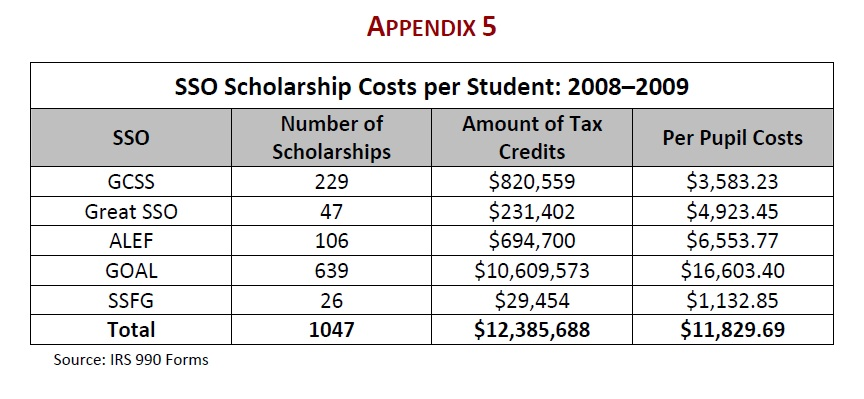
In my previous blog article on costs. If it costs $11K-23K a year to attend a Georgia private school; how can the Lower Middle Class afford this “choice?”
The U.S. Census considers Lower or Under Middle Class families that make less than $20K-62K a year. If a private education costs over 25-35% for a family only making $39K a year; how can they pay for their rent, food, mortgage, fuel, utilities, clothes etc?
Of course, if private and charter schools are the only “choice” in future and they are still “failing” children, will they tell parents “be patient” too?
When it comes to cheating and accreditation, this is a byproduct of the good intentions of educational reforms, which focused heavily on zero tolerance rules, exams and performance. Where education, should operate like a business.
President Bush's No Child Left Behind reform of zero tolerance and inflexible laws, enforced that “all” students graduate and learn the same way, like an assembly line.
Is the intent of these SSOs and charter schools to defund public schools, driving out their competition, much like a business does?
Other than “choice” by draconian educational policies and other noble causes for reform. Many do not agree on the original intent of these SSO laws.
Jen Darland with the Arizona Education Network, a nonprofit advocating for public education tells the Arizona Republic:
“It is a myth that diverting state funds for private-school tuition helps poor children....The poor children in our state overwhelmingly attend public schools, which have borne the brunt of the state's gaping budget deficit. Poor children have seen their elementary schools closed. Poor children attend schools that have been forced to cut teachers, librarians, counselors and programs, such as PE, music and arts education.”
Herbert W. Garrett executive director of Georgia School Superintendents Association tells Patch, “the new language that is included in the bill that actually passed the General Assembly (as a part of HB283) mandates that the SSO’s 'consider' the financial need of students who apply for the scholarships (i.e., vouchers), but there is no requirement that financial need actually be USED to qualify; the SSO people want to be able to give the money however they wish.”
The new 2013 law H.B. 283 reads, “In awarding scholarships or tuition grants, shall consider financial needs of students based on all sources, including the federal adjusted gross income from the federal income tax return most recently filed by the parents or guardians of such students, as adjusted for family size.”
Rep. Ehrhart tells Patch “As for the canard about the intent of the scholarship being only for low income students, it just is not the case. It is for children and families who have financial need. I think I would know as I wrote the bill and know my own intent.”
If any student's family is in “financial need,” they can apply for a scholarship. What if a family making over $186K a year (the U.S. Census Top 5% income earners) is in “financial need,” misuse SSOs to reduce their tuition?
Other than if the intent of SSO laws was for low-income public school students or those with “financial need.” Some have different intentions for SSOs.
Rep. David Casas (R – Lilburn) the co-sponsor of H.B. 1133, told parents in meetings that the bill’s language was intentional to use “enrolled” not “attending,” so students would be eligible for scholarships.
The Southern Education Foundation (SEF) transcribed Rep. Casas intentions for SSOs from YouTube:
“I just want to touch on one thing that has hit a little controversy and has been on the news—it’s a word in the bill called 'enrolled.' I had an AJC reporter call me when she was going to run the story and she asked me three times, 'Well, aren’t you trying to destroy public schools with this bill?' And of course this answer is, 'No, this is not about public schools, this isn’t even about private schools. This is about parents. You’ve got your p’s confused.' And, well, she didn’t run that part. Then three times she asked me, 'Isn’t there a loophole that you think people are taking advantage of?' I said, 'No, there is no loophole, there is absolutely no loophole. That was deliberately put in there. And you’ll see more details in the presentation as to what ‘enrolled’ means.”
“Some people felt a little bit weird about that; felt it was a little dishonest that they would take their child, enroll them in a public school and not have them actually attend, but all of a sudden they actually qualify for a scholarship. I’m telling you, we deliberately put the wording in there for that. And when the AJC reporter said, 'Don’t you think that’s just wrong?' I said, 'Well actually, I do think we need to change it.' And she was like, 'Oh good.' And I said I think we should delete it and open it up to every student. Every kid in Georgia should be able to have an ability to get a scholarship. Well, she didn’t like that answer and she didn’t run that part of the story either.”
After H.B. 1133 was adopted in 2008, some existing private school parents enrolled their children into public school, but would not attend them.
One parent wrote a SSO an email that the NYT reported saying:
“I recently contacted you about having some trouble enrolling/registering my child in a public school while he is going to a private school...A principal told us he cannot attend two schools at the same time, which is simply not true because public and private schools have nothing to do with each other. But we need to have my child enrolled in a public school in order to qualify for the student scholarship program.”
In 2011, AJC found 81 cases in one Georgia county of existing private school parents, enrolling their children into a public school to be "eligible” for scholarships. Sue Derison, the Forsyth County system's director of information found 48 private students enroll in 2008-2009 in Forsyth County, 72 in 2009-2010, and 81 for 2011.
Steve Suitts, of SEF tells NYT “The law was passed under a certain promise...There is no evidence it’s going to those purposes. The kids who were supposed to benefit are not benefiting.”
Senate member of Education and Youth Fran Millar (R – Dunwoody) tells the AJC, “Before we expand the program, we probably need to make sure we’ve got it running right.”
Millar insisted on third-party audits of SSOs to limit abuses, like existing private school parents receiving tax credits from donations for their tuition.
When it comes to the intent of the law, where some SSOs urged existing private school parents to enroll their child in public schools without attending them. Millar tells AJC:
“That was not my understanding of how it was supposed to work, nor do I believe that was the understanding of a majority of the Legislature...The intent was that these kids who were attending public school – to give them another option because it wasn’t working out for them.”
Senator Millar tells Patch when it comes to the intent of SSO, “I believe I have covered this topic and all sides felt transparency has been increased. No income restriction proposed”
Rep. Ehrhart when it comes to claims that SSOs intention was only for low-income students tells Patch “The hack journalists at the NY times and the opponents of the program continue to peddle that lie. I am fascinated by their ability to read my mind and tell me what my intent really was and what I have really meant to say each time I have been asked that for the last six years.”
Other than the problem with the intent of the law. How are facts used to justify SSO laws on both sides of the argument? The intent of picking different measurements in statistics, gives different results justifying favorable results, which school bureaucracy is better.
Dr. Kevin Welner, a professor of education at University of Colorado when comparing better schools tells Patch:
“charter and voucher research (for SSOs), as well as research comparing public schools and various types of private schools, has consistently shown comparable distributions in measured outcomes. These studies generally use regression analysis to attempt to control for incoming differences among students.”
“For example, controlling for those differences, a study may look at the mean and the distribution of test score outcomes of students who attend charter schools compared to neighborhood schools. Several studies have also used oversubscribed voucher lotteries to attempt ‘randomized field trial’ research. What this overall body of research shows is means and distributions between sectors that are disturbingly comparable. There are no magic beans hidden in the school choice policy basket.”
“Instead, research points us to best practices that can be exercised whether the school is private, charter, or neighborhood public. Children learn when they have opportunities to learn. The richer those opportunities, the more children are likely to learn. We will close achievement gaps if we close opportunity gaps...opportunities to learn can also be enhanced by addressing everything from segregation (in housing as well as between schools and within schools), to school funding inequities, to between-school differences in teacher experience and training and in other resources such as technology, safe buildings, textbooks, working bathrooms and class size, to discipline practices that push kids out of school, to the availability of rich, engaging learning opportunities in neighborhoods and communities.”
If all schools had the same resources and was not a partisan issue then all public, charter and private schools would be better. The problem is we do not live in that world. American education is economically segregated, based on income and funding.
The good intention and actual practice of reform laws, always differ. If a law was never written down and always remained just a unwritten rule, people will do wrong. If a law or practice is written down, people abuse the language of the law.
As the old saying goes “You are damned if you do, damned if you don't.” In either case, if you do or don't create a rule or law by managers or lawmakers; people will abuse the system either way.
Why create a rule or law, if it will be broken or made an exceptions for some? For liability from a lawsuit. To keep your job as a leader. To keep your upper managers or voters happy. Even to justify punishment.
The intent and practice of any rule or law never aligns right, because of the human element and the ordered chaos called life.
The good intention of reform laws, is what some call a Noble Cause Corruption. This is a fundamental principle in police ethics, which becomes a “ends-based” solution behind the intent of the law.
Traditional corruption is when a public or private official, abuses their power for personal gain.
Noble Cause Corruption is that the ends justify the means, where law enforcement are given too much power to make the community safe. Suspending the Constitution and violating laws to accomplish the mission to do something about bad people or in education failing students; instead of serving the greater good and losing one's moral compass.
This ethic applies to some laws and leaders that think they are not doing anything bad, because they are benevolent by their self-deception of appearing morally good. Turning doubts about their laws as a badge of honor, to justify their quest to solve the problem. Same applies to educational reform.
In most cases, we find the cure and noble cause for a rule, law or reform just causes more issues, then solving the original problem. Maybe we need to look at the intent of the law and how it is truly practiced, and make sure both are aligned the same.