Politics & Government
Draft Marijuana Legalization Law Allows Up To 30 Grams, 5 Plants
Gov. JB Pritzker and Democratic lawmakers announced the text of a bill legalizing the use of recreational cannabis starting on Jan. 1, 2020.


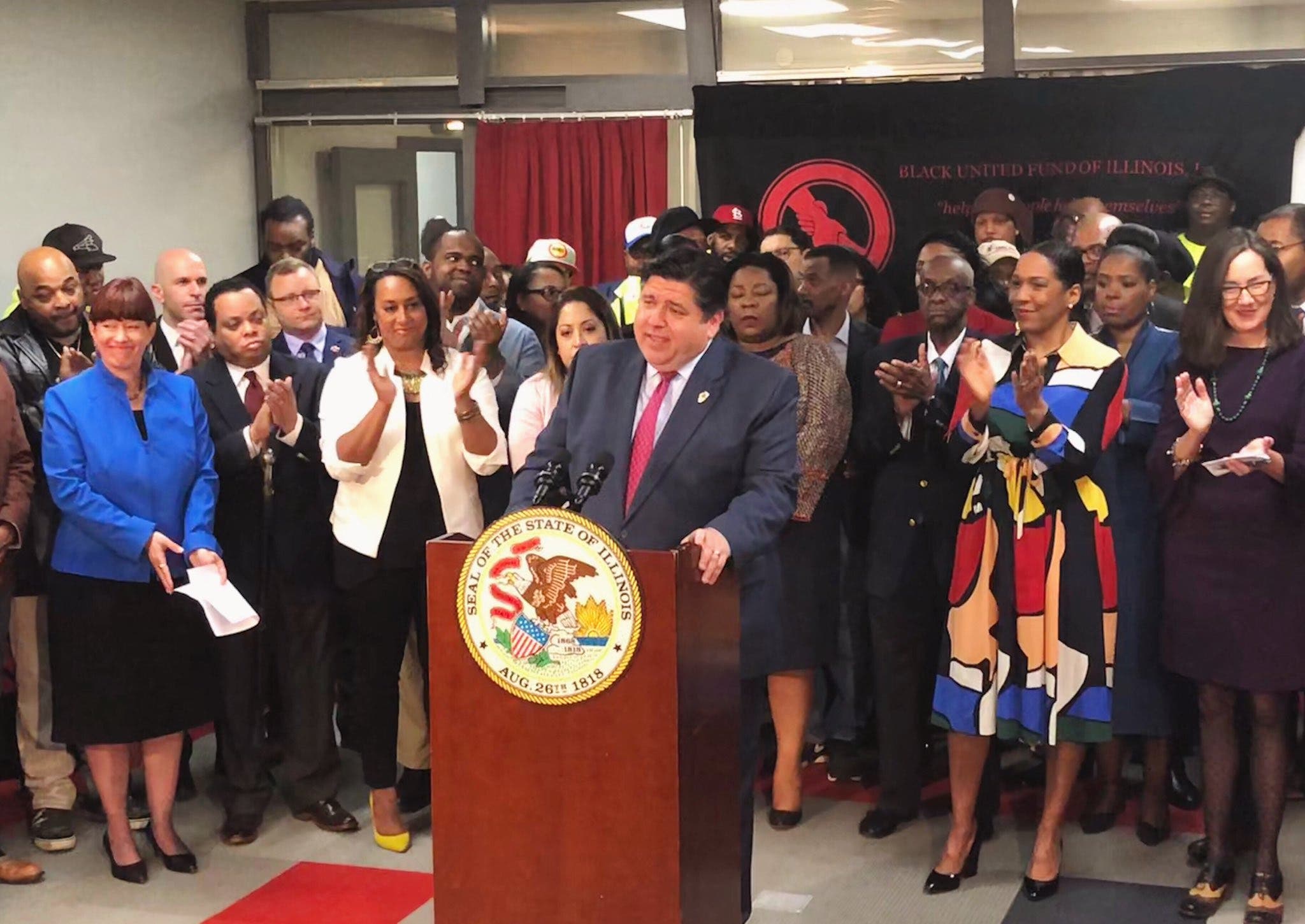
CHICAGO — Illinois Gov. JB Pritzker and state lawmakers announced an agreement on proposed legislation to legalize the recreational use of marijuana for adults in Illinois at the start of next year. At a press conference Saturday with Democratic lawmakers in Chicago, the governor announced the Cannabis Regulation and Taxation Act would be filed Monday as an amendment in the Illinois Senate.
The draft law allows for those 21 and older to purchase cannabis products from licensed dispensaries. Residents would be able to possess 30 grams of marijuana flower — the dried, green, leafy substance — and smaller quantities of items containing concentrated THC. Non-Illinois residents would be allowed to have half as much. The proposal also allows for households to grow up to five plants under limited conditions, including that it be kept out of public view and away from any minors in a separate, locked room.
Pritzker campaigned in the Democratic primary and general election on a promise to push for legal pot and included in his first budget proposal an estimated $170 million in revenue from marijuana licensing and other fees. The latest draft of the bill was crafted following meetings by six working groups convened by the governor's office. Pritzker said his key priorities in the legalization bill were reinvesting in areas that have most suffered from discriminatory drug policies, expunging records of those with minor cannabis convictions and promoting participation equity in the new business sector.
Find out what's happening in Across Illinoisfor free with the latest updates from Patch.
Local governments would have one year after the passage of the bill to be able to ban dispensaries without the permission of voters. After that, any measure "significantly limiting a cannabis business establishment's location" must be put to the voters in a referendum and approved by a majority. No unit of local government "may unreasonably prohibit home cultivation and use of cannabis" as permitted under the act, according to the bill.
Illinois law currently allows for legal medical cannabis for patients with qualifying conditions, and the possession of under 15 grams of cannabis for personal use is decriminalized.
Find out what's happening in Across Illinoisfor free with the latest updates from Patch.
“From the outset, I made clear that any plan for adult use cannabis had to prioritize social justice and equity," Pritzker said. "The approach we’re taking starts righting some historic wrongs and opening up access to this new market with a $20 million loan program that will help qualified applicants from impacted communities.”
Existing funds from the state's medical cannabis program would finance the loan program through the Department of Commerce and Economic Opportunity. The framework also would issue licenses for "social equity applicants," according to the governor's office. The application scoring process would award points based on factors such as "majority ownership by residents of disproportionately impacted communities, majority ownership by those who have arrests or convictions eligible for expungement and those who have a majority of employees who have been disproportionately impacted." Such applicants would receive 25 out of 200 possible points, with bonus points also available for in-state companies and those with labor peace agreements.
The legislation is aimed at limiting consolidation in the industry, so no one entity would be able to own an interest in more than three cultivation centers or more than 10 dispensing organizations, according to Pritzker's office.
A quarter of the money from the initiative would go to a new grant program called "Restoring Our Communities." A new board with 22 appointed members would manage the distribution of the money. It would identify "ROC Areas" where applicants would be eligible to apply and receive state funding due to suffering the most from discrimination. In a release, the governor said he welcomed "additional feedback and insight" during the debate.
Another 20 percent of the revenue generated would be devoted to public health efforts through the newly formed "Adult Use Cannabis Public Health Advisory Committee," which will be overseen by the Department of Public Health. The draft law also contains mandatory warnings and restrictions on labeling and advertising. For instance, no packaging may show images likely to appeal to children, no ads can be placed near schools or playgrounds and packaging must be child proof.
The bill also sets up a streamlined process for expunging convictions for misdemeanor or class 4 felony convictions under the Cannabis Control Act. It requires state police to identify and work with local prosecutors to automatically expunge the records of any qualifying individuals. Existing state law already requires civil law cannabis citations to be expunged, although Patch has found some law enforcement agencies have not followed the requirements of the existing law. Anyone who picked up additional charges must ask a judge for expungment separately.
“This legislation puts social justice first by acknowledging the damages to overpoliced communities during prohibition,” said Sen. Toi Hutchinson, of Chicago, the bill's chief co-sponsor. “The expungement program is the most ambitious and comprehensive in the nation, creating a mechanism for erasing hundreds of thousands of offenses. It creates investment in the overpoliced communities through the ROC program, and it creates a low-interest loan program as well as a social equity applicant status, so that communities of color can reap the benefits of legalization.”
Sen. Heather Steans is filing a 521-page amendment (see below) to Senate Bill 7. Steans and fellow North Side Chicago Democrat Rep. Kelly Cassidy announced plans to hold the first hearings on a legalization plan more than two years ago.
“This bill stems from an inclusive process that entailed community meetings, town halls, and legislative working groups,” Steans said. “In spite of having a wide variety of views, most of us wanted the same basic things – social justice, safety for our kids, and revenue for our state. I think we’ve done a good job of balancing these three goals.”
Cassidy said the bill was "long overdue" and a "giant leap in the right direction."
“Prohibition hasn’t worked,” Cassidy said. “We wanted to create a safe, legal and comprehensive regulatory system that protects patient access and allows adults to use cannabis while keeping it out of the hands of children. We wanted to address the years, the decades of unfairness in the ways that our drug laws have been enforced.”
Tax rates under the proposal would depend on the level of THC, the psychoactive ingredient in cannabis. If the level of THC is below 35 percent, the excise tax would be 10 percent. If the level is above 35 percent, the tax rises to 25 percent. All "cannabis-infused" products would be taxed at 20 percent of the purchase price. In addition to the state tax, local governments could add their own sales tax to transactions involving cannabis. The Illinois Department of Revenue has not yet issued a revenue estimate for how much money a recreational cannabis program will generate. According to the governor's office, the new law is expected to cost about $20 million a year to administer.
A report last year from the Illinois Economic Policy Institute and the Project for Middle Class Renewal at the University of Illinois at Urbana-Champaign estimated $1.6 billion in recreational marijuana would be sold in Illinois, creating over 23,600 jobs at more than 2,600 businesses and generating more than $500 million in revenue for the state and $20 million for local governments.
Opponents of legalization held a press conference at the Thompson Center in Chicago Monday.
"This is not your grandfather's THC or 'pot,'" said Rep. Marty Moylan, a Des Plaines Democrat. "Cheech and Chong would really disagree on how this is being done. This THC drags you buy the arm and doesn't let you go."
Moylan, who has sponsored a Illinois House resolution opposing recreational use, said the proposal backed by the governor was a handout to billionaires and the plan would result in "getting more people on drugs" and children becoming addicted to cannabis.
Kevin Sabet, a former White House adviser and the founder of the nonprofit group Smart Approaches to Marijuana, which supports continued prohibition, called for Illinois lawmakers to join Moylan and vote against legal pot.
"The consequences of this bill are far reaching and will have devastating impacts on citizens, communities and youth. Numerous studies and data from other states have shown that this is not a good move for Illinois," Sabet said in a statement. "It won’t bring in the revenue promised, while ushering in new, costly regulatory burdens, more hospitalizations, increased drugged driving incidents and unregulated, highly potent pot products."
If the legislation manages to win approval, Illinois would become the 10th state to allow the purchase of cannabis for recreational use. It would also become the first to have legalized the commercial sale of the substance as a result of legislative action rather than in response to a referendum from voters.
Related:
- Pritzker Hopes To Legalize Marijuana Soon After Being Sworn In
- Marijuana Tax, Betting Big Part Of Pritzker's $39 Billion Budget
- Senate OKs Bill To Let Cannabis Companies Use Banking System
- No Cook County Charges For Possessing Up To 30 Grams Of Marijuana
- Police Chief Opposes Pot Legalization, Pens Letter To Pritzker
- Marijuana Legalization Hearings, Support Coalition Announced
Get more local news delivered straight to your inbox. Sign up for free Patch newsletters and alerts.