Politics & Government
Trump Signs Order To Close Dept. Of Education: See IL Impacts
The department underwrites the loans that enable people to attend college, with about 42 million people nationwide currently having them.


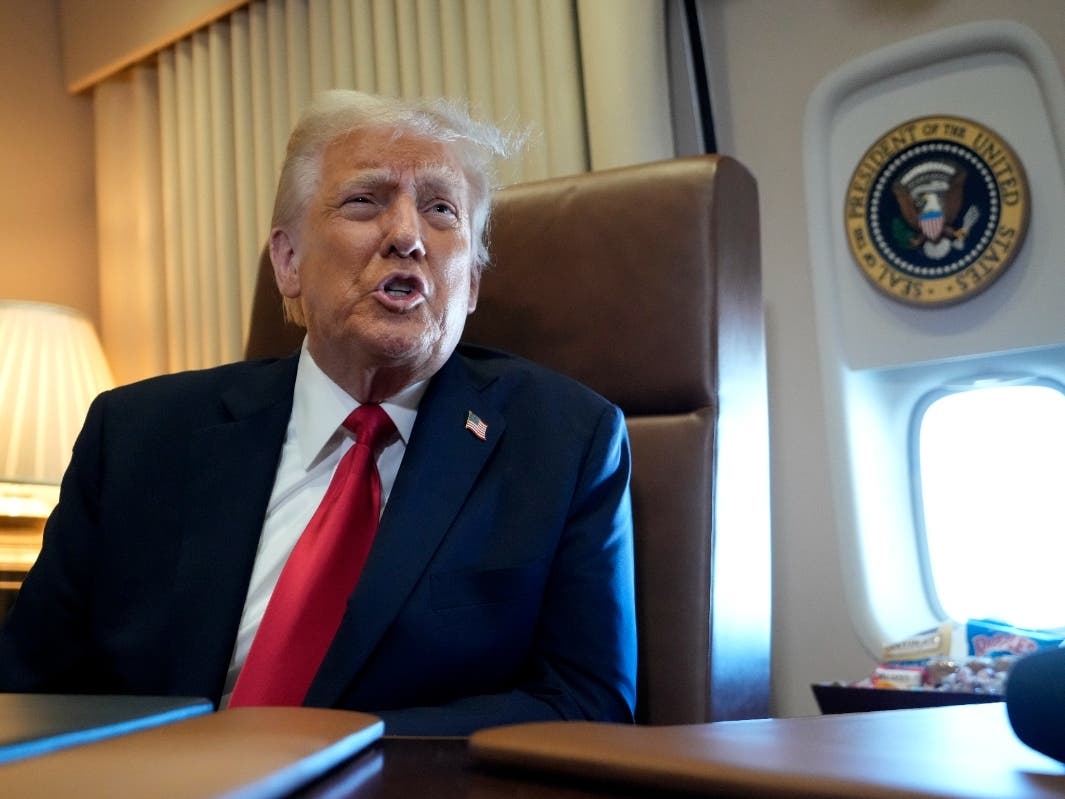
ILLINOIS — President Donald Trump signed an executive order Thursday that calls for the elimination of the Department of Education, according to multiple sources, including the Associated Press. The order, signed at 3:30 p.m. and followed by a public event, fulfills a campaign promise to eliminate an agency that Trump has decried as wasteful.
However, dismantling the department will likely be impossible without an act of Congress, which created the department in 1979.
According to a White House fact sheet, the order will direct Education Secretary Lind McMahon “to take all necessary steps to facilitate the closure (of) the Department of Education and return education authority to the States, while continuing to ensure the effective and uninterrupted delivery of services, programs, and benefits on which Americans rely.”
Find out what's happening in Across Illinoisfor free with the latest updates from Patch.
According to a draft of the order previously obtained by CNN, the order reads, "The experiment of controlling American education through Federal programs and dollars — and the unaccountable bureaucrats those programs and dollars support — has failed our children, our teachers, and our families."
Here are some ways Illinois residents could be affected by the closure of the Department of Education:
Find out what's happening in Across Illinoisfor free with the latest updates from Patch.
What Happens To Student Loans?
One of the Education Department’s functions is underwriting the loans that enable millions of people each year to attend college and graduate school. The agency also manages the approximately $1.6 trillion student loan debt portfolio.
About 42 million people nationwide have federal student loans, including about 1.6 million borrowers in Illinois. The loans, underwritten by the Education Department, allow millions of people a year to attend college or graduate school.
Borrowers in Illinois carry an average debt load of $39,055. Statewide, student loan debt is about $62.3 billion, according to an analysis of publicly available data by Education Data Initiative researchers.
“We call on Congress to oppose this blatant attempt to siphon public dollars away from students and families and into the pockets of the wealthy through tax breaks and private school vouchers,” Illinois Federation of Teachers President Dan Montgomery said in a statement. “Dismantling the Department of Education will destabilize working families and reward the rich and powerful at the expense of our students. The stakes could not be higher: A free, high-quality education for every student is not just a pathway to a livable future, it is the very foundation of our nation."
Even if the Education Department were eliminated, borrowers would still have to repay their loans, Betsy Mayotte, president of The Institute of Student Loan Advisors, a nonprofit that helps borrowers navigate the repayment of their debt, told NBC News.
"President Trump's executive order is no more legal than his other actions intended to dismantle the Department of Education," Illinois Attorney General Kwame Raoul said. "Decimating the department's workforce, then signing today's executive order while simultaneously directing the continuation of critical programs and services, is ludicrous."
The most logical agency to assume management of the debt portfolio would be the Treasury Department, Mayotte said.
Or, the Justice Department or Department of Labor could carry out some Education Department functions, according to a blog post by The National Association of Student Financial Aid Administrators.
Another alternative is the privatization of the federal student loan system, which some Republicans have proposed.
What Happens To Public Schools?
Most public school funding comes from the local level, with the federal government providing an average 13.6 percent of the funding for public K-12 education nationwide in the 2021-2022 school year, according to an analysis by USA Facts of National Center for Education Statistics data.
About 10.6 percent of public school funding in Illinois comes from the federal government.
Gutting federal funding for public schools would hurt some states worse than others, Kevin Welner, the director of the National Education Policy Center, told Axios.
States with larger numbers of lower-income families that receive higher shares of Title I funding would be hurt the worst, Welner said, noting they “don’t have the same capacity to step in and make up that difference.”
“In wealthier states, we would probably see some reduced spending for students and some increased state allocations,” he said. “In states that are already financially strained, because they just have less wealth, this could result simply in less funding and fewer resources for the students.”
Becky Pringle, the president of the National Education Association, said in a post on Blue Sky that students would be directly harmed.
“It will drain resources from the most vulnerable, skyrocket class sizes, make higher ed more expensive, strip special ed services, and gut student civil rights protections,” Pringle said. “We won't let this happen.”
The Associated Press contributed reporting.
Get more local news delivered straight to your inbox. Sign up for free Patch newsletters and alerts.