Politics & Government
‘It’s Just An Inquiry,’ Blue Island Mayor Tells Residents Nervous About Data Center
Although premature, Blue Island residents voiced their opposition to a possible data center before the city council.


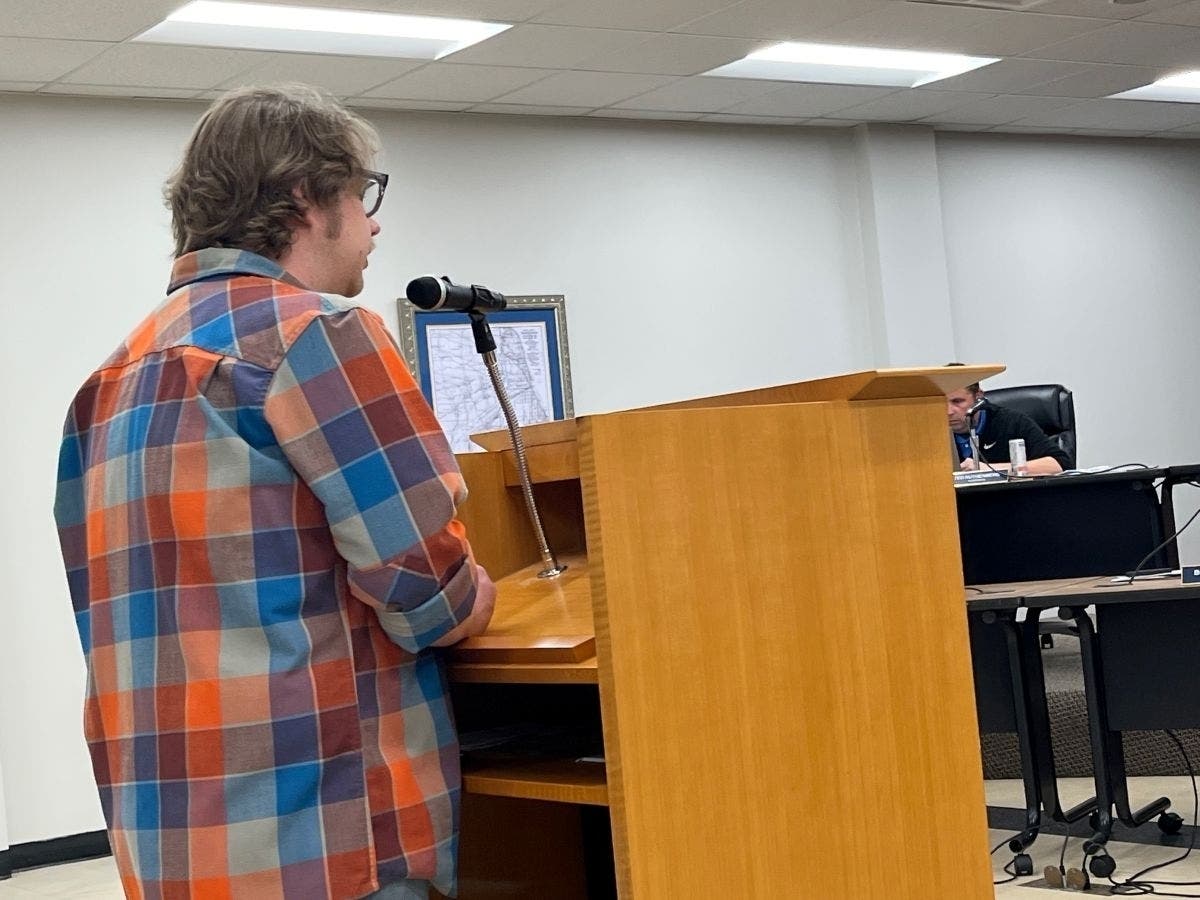
BLUE ISLAND, IL—Blue Island Mayor Fred Bilotto once again repeated his statement that the city received an inquiry from an investment firm about building a data center on the site of the former Metro South Hospital, which closed in 2019.
“I'm starting with the statement that I read at the last two meetings. I'll read it again,” Bilotto told residents at the April 28 city council meeting. “The former Metro South hospital site is privately owned at this time. No proposal written or anything has been submitted to the City of Blue Island.”
Vowing total transparency, Bilotto said any proposal, for a data center or otherwise, will be required to go through a fully transparent public review process.
Find out what's happening in Alsip-Crestwoodfor free with the latest updates from Patch.
“The city has only received a general inquiry regarding our development process …,” Bilotto said. “This includes evaluation by the planning, zoning, city council and multiple opportunities for public input. No decisions have been made because nothing has been submitted.”
The mayor added that he was committed to protecting and strengthening Blue Island’s future.
Find out what's happening in Alsip-Crestwoodfor free with the latest updates from Patch.
“And be aware there are certain things in my position I cannot say,” Bilotto said, then added cryptically, “but hopefully [through] my comments you can read between the lines.”
The Puyallup, Washington-based Builders Capital currently owns the 12-acre parcel on which the 555,000-square-foot property sits at 12935 Gregory St., after calling in a $44 million note from Lockwood Development. The data center will be located near city hall, the town’s business district, the train station, and a residential neighborhood.
A data center is a building that houses significant amounts of information technology equipment, such as servers, storage and networking hardware, to run the digital world.
Although comments may be premature now, the mayor stated, it didn’t stop various residents from voicing their opposition at last week’s city council meeting.
Blue Island resident Marie Mindeman suspected that Builders Capital went searching and selected the blighted hospital property on Gregory to produce the highest returns for the least amount of investment.
“I recognize that this again may be premature, but I would like to kind of give you some items to think about … issues like generator pollution, sound pollution, intense heating of water, and other issues that I feel should be looked into first,” Mindeman said.
Mindeman further cautioned city council members “to reject what appears to be a hastily projected, opportunistic proposal to cash in on what some consider an underserved, diverse community, and urge the investors to instead consider a more community-centered proposal.”
“Hospitals and health care don't make investors rich. Data centers do that—money that won't be coming back to Blue Island. It goes to investors,” Mindeman added. “The development company is going to throw you some attractive crumbs.”
In addition to concerns about energy and water consumption, pollution, and possible influx in cancer rates, resident Alex Del Santo cited AI being used to replace human jobs and for government surveillance.
“Lastly, I just think that the lack of regulation for such a booming industry should be the biggest red flag for a development entering into any city or state,” Del Santo said, pointing out that Michigan has begun introducing legislation regulating data centers. “We have regulations on almost every element of industry, and AI does not have them. I have written to my state officials about this.”
A resident named Dasha told the city council that she lives directly across the street from the former hospital. As a direct neighbor, she said she was concerned about long-term noise pollution from the 24/7 cooling system and the massive strain these facilities put on the local power grid and water resources, especially given the current state of Blue Island's infrastructure.
“When Metro South closed, we lost a community hub that brought hundreds of people downtown every day to support our local businesses,” Dasha said. “A data center, by contrast, is an industrial fortress with very few permanent jobs. We need to ensure that whatever replaces the hospital, let's make sure the redevelopment serves the people of the island and not the data industry.”
Ald. Joshua Roll, whose 7th Ward encompasses the hospital property, told Patch he’s heard more about the data center from his constituents than any other issue during his five years on the city council.
“Almost universally, the sentiment has been concern and opposition,” Roll said. “Regarding last week’s public comments, my overall impression was that the community was very aware of the issues generally, and that they had specific and valid concerns that spanned a broad range from economic to quality of living to regulatory.”
Currently there are 228 data centers in nine markets in Illinois, putting the state in the United States in data center development. Up for consideration is the Illinois Power Act, which the Illinois Environmental Council claims establishes nation-leading guardrails on data centers that will minimize data center impacts on Illinois residents’ utility bills, climate and water. The proposed bill is also said to drive a competitive “race to the top” for responsible data center investment.
Each chamber of the Illinois General Assembly has its version of the bill, SB4016 and HB5513. The Illinois Senate and House are both said to be working on a compromise bill.
Get more local news delivered straight to your inbox. Sign up for free Patch newsletters and alerts.