Batavia Church History, Music and Architecture Tour
Saturday, October 15, 2011
1-4pm.
Find out what's happening in Bataviafor free with the latest updates from Patch.
Admission is free with a required ticket
For additional information contact: Leigh Tracy 630-406-0729 leightracy@sbcglobal.net or any one of the four churches on the tour.
Find out what's happening in Bataviafor free with the latest updates from Patch.
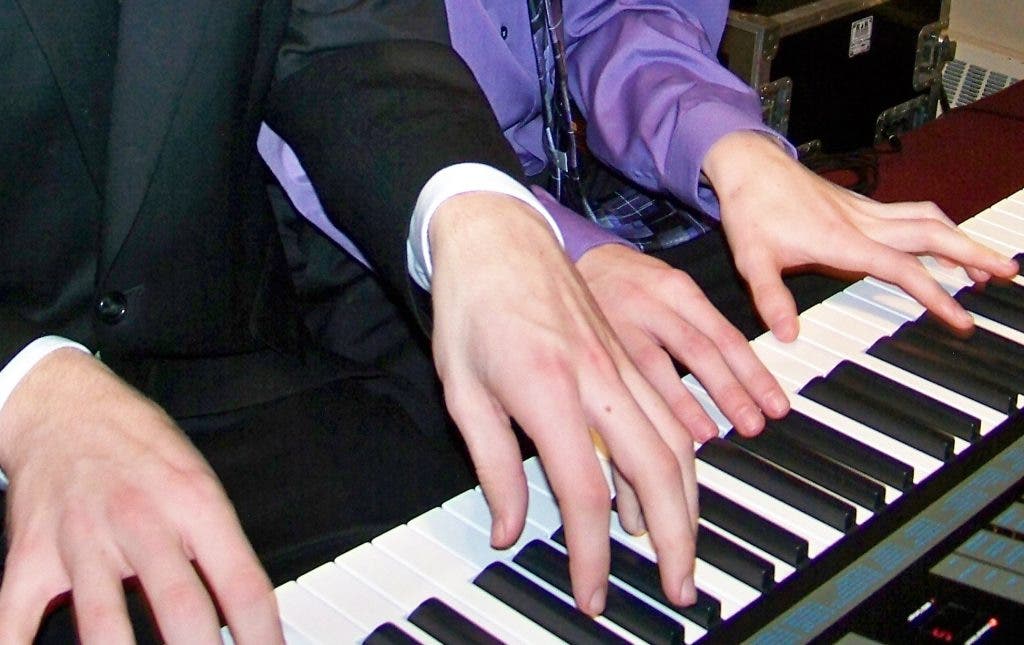
Batavia has a rich religious history and many examples of fine church architecture. A great deal of art is created and enjoyed in our churches. Much of this is in the form of music performed by accomplished organists, choirs and soloists. The Batavia Arts Council seeks to bring community focus to this history, music and architecture, and promote a common understanding and appreciation of this significant community asset. This walking tour will feature the four churches within close proximity on Batavia Avenue. The event is sponsored by three Batavia organizations, the Arts Council, Historical Society, and Ministerial Association.
The tour will start at Bethany Lutheran, proceed to the United Methodist Church, then to Calvary Episcopal, and end at the Congregational Church. There will be a stop at each church for a 15-20 minute presentation focusing on the unique history and architecture of the church followed by a music performance. We will end the afternoon with a reception in Paxton Hall of the Congregational Church.
Admission to this event will be with a ticket available at no cost. More information is available on the Batavia Arts Council website http://www.bataviaartscouncil.org/. Tickets are available at each of the host churches, other churches in the community, and at the Batavia Depot Museum.
The history of Batavia closely parallels the development of its churches. Many prominent citizens were instrumental in establishing the churches of Batavia. As John Gustafson points out in his book Historic Batavia, “we can learn a great deal about the peoples in early Batavia as we study the churches of Batavia.” By the fall of 1832 (following the Black Hawk War) this area was open for peaceful occupation. There was a tide of immigration. Congress passed the Preemption Laws making land available to settlers eager to move to the area. Batavia’s first settler and founder was Christopher Columbus Payne in 1833. Schools and churches soon followed. The first school and church came with the building of a multipurpose building to serve both purposes in 1834. The four churches on this tour are examples of what was built on this portion of the Illinois frontier.
Bethany Lutheran Church at 8 S. Lincoln Street is the youngest example of church architecture on the tour. The Swedish Bethany Lutheran church was organized in 1872. This is sometimes called the year of the “Great Migration” in which many Swedes came to Batavia to cut stone to be used in the rebuilding of Chicago after the great fire of the previous year. Pastor Steven Srock, Director of Music Beth Lawniczak and church member Judy Stintsman will be participating in this event.
Batavia United Methodist Church at 8 N. Batavia Avenue is celebrating its 175th Anniversary in 2011. The first services were held in 1836 in the home of William VanNortwick. The first building constructed by the Methodists in 1852 is still standing on First Street. It was also later used as a school called the McWayne annex. The current sanctuary was built in 1887, a gift of Captain Newton and Reverend Gammon, whose homes still stand opposite one another at the corner of Batavia Avenue and Wilson Street. Pastor Michael Stoner, church historian Scott McCullagh and church member Dan Van Haften will be performing important roles in this tour.
Calvary Episcopal Church at 222 S. Batavia Avenue was first organized in the home of Mrs. James C. Derby in 1842. The first church building was constructed on land donated by Joseph McKee in 1855. That building was destroyed by a tornado. The first service in the current building in 1880 was in a Batavia limestone building donated by John VanNortwick. Rector Fr. Michael Rasicci, Senior Warden Steve Morgenstern, Organist Steve Smith, Director of Music Matt Dingels, and church members Wynette Edwards and Pat Hoefler are all playing prominent parts in the tour of their church.
Congregational Church of Batavia at 21 S. Batavia Avenue celebrated its 175th Anniversary 2010. Founded as the Church of the Big and Little Woods in August 1835 in the cabin of Thompson Paxton, this church was founded first as a Presbyterian church. The congregation constructed a building in 1840 on Batavia Avenue. The current sanctuary was constructed in 1856. It is an example of colonial New England architecture fashioned in Batavia limestone. Pastor David Foxgrover, Director of Worship and Music Vicki Linich, members of the Chancel Choir, Organist Gene Ton, Joe Blomquist and a Brass Ensemble, and Church Archivist and Arts Council board member Leigh Tracy will all be leading the tour and program at the Congregational Church.