Health & Fitness
WALKING WITH NATURE: Walking the DuPage River Greenway in September
"Nothing gold can stay," according to Robert Frost, so this is the time to walk the DuPage River Greenway and enjoy the proliferation of goldenrod.
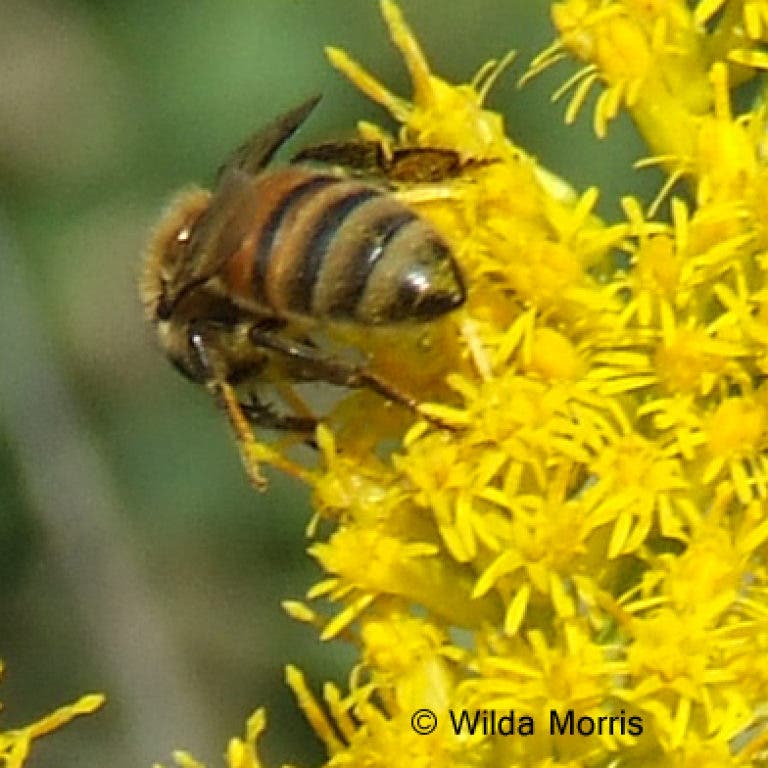


Scientists are predicting that the trees will not provide their usual brilliant display of fall colors, but you can get your fix of gold by walking the DuPage River Greenway. This is the season for goldenrod, and it is drought-resistant.
Goldenrod might have been selected as the national flower had it not been falsely accused—and convicted in the court of public opinion—for causing hay fever. The guilty party is the sneaky little green blossom of the ragweed which blooms at the same time. It manages to hide behind its taller, more flamboyant neighbor in the field. Goldenrod is by pollinated by insects, so its pollen is sticky. Ragweed pollen is wind-blown, causing 10-20% of the U.S. population to sneeze. You need not worry about allergies from goldenrod pollen unless you handle the plants or stick your nose in them.
Find out what's happening in Bolingbrookfor free with the latest updates from Patch.
Goldenrod, a member of the aster family, is native to the U.S. There are 100 or more species, many of which are difficult to distinguish from one another. Where you find goldenrod, you often find small bluish or lavender asters. This has led to a folktale which, in common with other folktales, exists in several versions. The basic story is that two little girls were best of friends and did not want to ever be separated. Either one of the girls was golden-blond and the other had beautiful blue eyes or (as in a Cherokee version), one wore bright yellow and the other, lavender. They went to a good witch, herbalist, or wise woman (again depending on the culture in which the story is told). She turned one of them into goldenrod; the other into the lavender-blue aster so they would be together forever.
Find out what's happening in Bolingbrookfor free with the latest updates from Patch.
Saladin (Salah al-Din Yusuf), who conquered Jerusalem for the Muslims in 1184 and fought Richard the Lionhearted in the Crusades, is credited with having introduced goldenrod into the Middle East because of its great medicinal value. Over the centuries, in various parts of the world, goldenrod has been used to counter a wide range of ailments, including sore throat, cough, inflammation, boils, asthma, diarrhea, measles, toothache, and kidney stones. The Latin name for goldenrod is Solidago, which means “whole” or “to make whole,” is probably a reference to its healing qualities.
Goldenrod has also been eaten—tossed into stews or soups, kneaded into bread, or chomped by people traveling on foot or wagon across the prairie. Bees make a dark sweet honey from its nectar. After the Boston Tea Party, when the American colonists vowed not to drink tea imported from England, they made “Liberty Tea” from goldenrod. In a later century, goldenrod was a popular flavor for candies.
The tall stem of the goldenrod has been used by some to dowse for water. Thomas Edison developed an extra tall goldenrod from which he extracted rubber. Had chemists not developed synthetic rubber, goldenrod might be farmed for that purpose.
Right now, the Greenway is bright with goldenrod but, as the poet Robert Frost wrote, “Nothing gold can stay.” That’s a good reason for walking the DuPage River Greenway soon. I hope to see you there!
© Wilda Morris