Health & Fitness
WALKING WITH NATURE: Walking the Gateway Wetlands in February
What does a pregnant Mallard crave? At what age can a Mallard get a pilot's license? What do you call a Mallard herd, err. . . flock?


“In all-lack Winter, / Dull of sense and of sound, / We huddle and shiver. . . .” according to the nineteenth century English poet, Christina Rossetti. But winter isn’t totally devoid “of sense and sound,” as I learn again and again as I walk around the Gateway Wetlands.
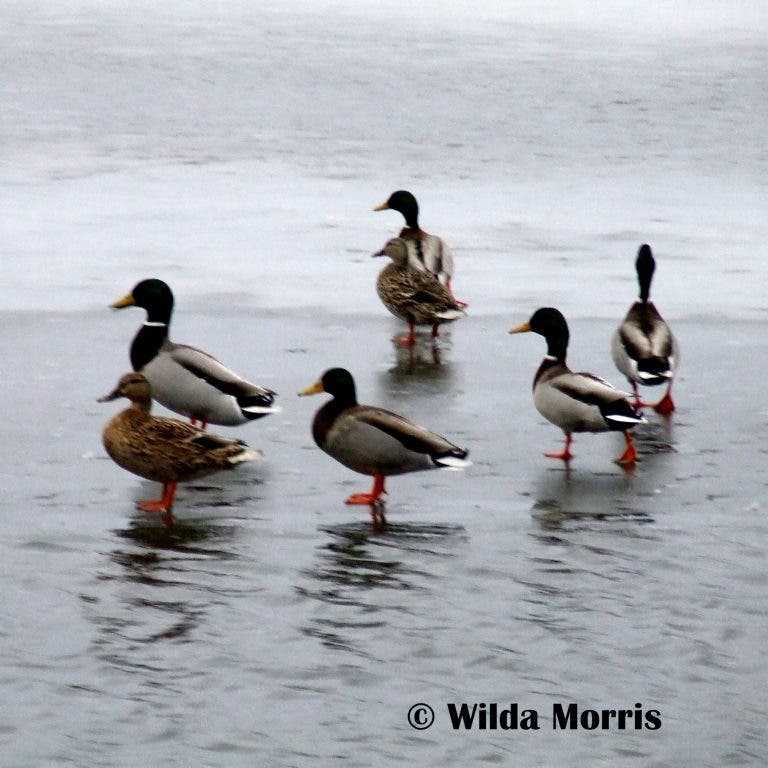
A few days ago, I found evidence that Rossetti was wrong as I approached the pier on the big pond at the Gateway Wetlands. Twenty-two Mallard ducks had convened. Mallards are familiar to most people living in the Midwest—in fact they are familiar to people living in many places around the globe—but there is a lot about them that many of their admirers don’t know.
Are you aware, for instance, that a female Mallard (called a hen), changes her eating habits during pregnancy? The diet of the nonlaying hen is 37% animal matter and 63% plant matter. What does she crave during the time she is laying her eggs? Not pickles or ice cream, but meat and calcium; almost 72% of her diet then is composed of animal matter, and less than 30% comes from her salad or cereal bowl.
Find out what's happening in Bolingbrookfor free with the latest updates from Patch.
Hens need calcium during the laying season so their eggs will have strong shells and they need protein for strength and endurance. Mother Mallard will lay from 1 to 13 eggs in a clutch (the average is nine). She lays just one a day. The combined weight of these eggs generally amounts to more than half of her body weight (and pregnant humans think they have it bad!). Mother Mallard needs a lot of protein to give her enough energy not only to produce the eggs, but also to incubate them for about a month.
The male (called a drake) eats a diet enhanced with more animal products during the breeding season. The “animal matter” eaten by ducks includes snails, beetles, dragonflies, crustaceans, worm, insect larvae and caddisflies.
Find out what's happening in Bolingbrookfor free with the latest updates from Patch.
The drake is an absentee dad. Mallards generally mate in late fall or early winter, and stay together until she lays her eggs. Then the fickle father abandons her to the task of incubating the eggs and raising the ducklings. Fortunately for Mom, the ducklings can swim as soon as they are born. About twelve hours after her last duckling has pecked its way out of the egg, she leads her brood to the water.
A Mallard gets his or her pilot’s license between three and four months of age. By then, it has lost the fluffy yellow and black down with which it was born. As a juvenile, the Mallard is rather drab in color, more like its mother. By the time it can fly, the gender of the duck is obvious.
Mallard drakes are quite colorful, with their shiny green heads, bright yellow beaks, and white rings around their necks. Females are more drab, since they have to stay out of sight while nesting. Predators include skunks, raccoons, raptors, snakes, crows and turtles.
Both drake and hen have a patch of speculum feathers on each wing. These feathers are an iridescent purple-blue with white tips. Once the hen is sitting on the nest, the drake joins with other drakes, sometimes finding another hen on the side (sometimes forcibly). The drakes soon begin to molt, replacing their worn feathers with new ones. They cannot fly for about a month until their new feathers come in. For a while, during what is called the eclipse molt, the drakes are drab and look very much like the hens. Before the fall mating season, they are outfitted with bright new feathers. The females also molt, but not until their brood has fledged.
And did you know that the loud and distinctive “quack” is only made by the hen? The drake utters either a high-pitched whistle or a nasal call, or just remains quiet. Actually none of the Mallards I saw this month made much noise. There was just a little warning chatter when they finally decided I had come too close.
The Mallards were walking on the thin ice that covered most of the pond last week. They did not seem to be too worried about my approach, but when I went onto the pier, they went a little farther out on the pond. Closer to the center, the surface was not frozen, so some went for a swim. I was able to take quite a few photos before they flew away. By then, the sun was getting lower in the sky. I was chilly standing there in the wind and was envious of the Mallard’s warm winter coats and internally heated feet!
In a recent “Pickles” cartoon in the Chicago Tribune, the grandfather referred to a “herd of ducks.” Maybe you laughed at that, but did you know that a group of Mallards in flight are called a flock or a flush, but when they have landed, they become a sord? That is a little ironic, because, according to www.thefreedictionary.com, the word “sord” comes from the Middle English “sorde,” from the route word “sorden,” which means “to rise up in flight.” The online “Field Guide to North American Birds,” give several other options: including a "battling", "daggle", "doppling", "lute", and "sword" of mallards (see http://identify.whatbird.com/obj/87/overview/Mallard_Duck.aspx). Note that “herd” is not on the list.
Whether in flight, on the ground, or in the water, Mallards are beautiful birds. Come walk around the Gateway Wetlands. If you see the Mallards, you may agree with me that Christiana Rossetti was wrong; winter isn’t necessarily “dull of sense and of sound.”
© Wilda Morris